Tying sustainability into asset management rather than tacking it on as a separate issue can reduce risk and add value, especially given the elevated energy costs facing building operators, according to an expert at a sustainability standards organization.
“Energy affordability and sustainability, in my world — there’s no distinction,” Breana Wheeler, director of operations at the Building Research Establishment, or BRE, said in an interview. BRE is the international building science center behind BREEAM, a sustainability assessment methodology for master planning projects, infrastructure and buildings.
Energy affordability is both an economic and environmental sustainability issue, Wheeler said. When the two are intertwined at an organization, “it’s not viewed as a nice to have, [it’s] about basic risk management and value creation strategies. Being able to plan in advance, being really thoughtful about when an asset is acquired. There’s a whole investment case.”
These conversations are even more important for older buildings, with 80% of buildings today expected to be standing in 2050, according to BRE. It’s also important in the context of adaptive reuse, which is gaining momentum across U.S. markets as owners reposition underperforming assets, respond to changing demand and extend the lifecycle of existing buildings.
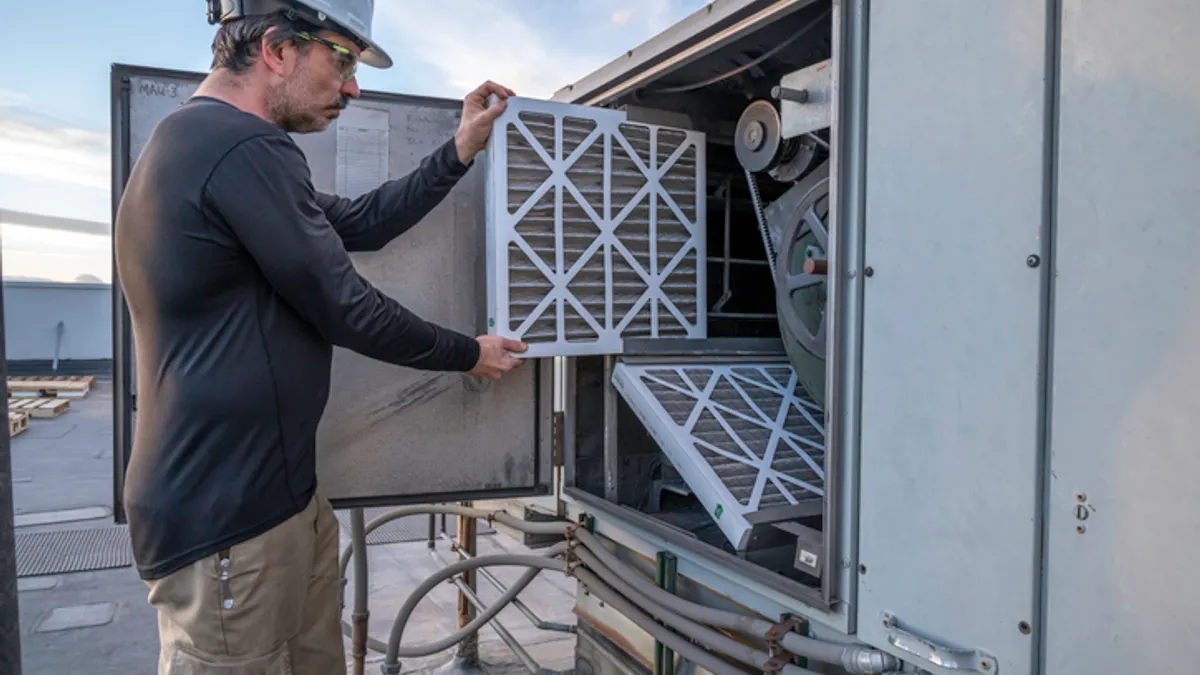
By operating on the basis of planning, facilities teams are less likely to make decisions based on expediency, Wheeler said. When building systems break, it creates an urgent demand to get them working again. In situations like that, contractors or facilities staff may try to replace the system with a like-for-like replacement to get it remedied as fast as possible. But that kind of action can hamper efforts to implement more efficient systems that save money over the long-term, she said.
To help building operators connect sustainability with asset management, BRE in September launched BREEAM Refurbishment and Fit Out Commercial Version 7, a set of standards aimed at helping owners, occupiers and project teams assess and improve performance across renovation and retrofit projects, from major refurbishments to interior fit-outs.
The refurbishment portion of the standard focuses on replacement of building systems and other core system-focused projects. The renovation side focuses on the interior as a starting point, like tenant space, and radiates out from there, according to Wheeler.
“Some tenant spaces are very self-contained; others are bigger in nature and actually can touch those other core systems,” she said. “The easiest way to explain is refurbishment is about outside-in, and the fit-out is about inside-out. And depending on where your starting point is, the standard really helps scale that and scope it.”
The new standards place a greater emphasis on energy performance, whole-life carbon, responsible material selection and circularity, using a four-part modular structure covering building envelope and structure, core services, local services and interior design, BRE said in a release. This enables assessments to align with project scopes of work while reflecting the different responsibilities facing owners, occupiers and the varying replacement cycles of building systems, according to the organization.
Focusing on these pillars can help to align asset management and portfolio managers with the flow of upgrades over a holding period, so that when equipment breakdowns happen, organizations are prepared to make smart decisions, she said.
“I think there’s an understanding that a building owner has a hold period, and there’s going to be interventions at certain points. Is the planning as robust as it should be? No,” she said. “And I think more importantly, for those organizations who are looking to specifically decarbonize [their] buildings, this is a real challenge.”
Even if an organization has decarbonization plans, when equipment or systems go down it can be hard to make the right decision on whether to replace, repair or upgrade an asset, she explained.
“You have to have a plan for that, and you have to think about that, and you have to think about [making changes] in various stages. Because it’s not practical for the most part in these buildings to remove tenants,” Wheeler said.
The BREEAM standards can help to make those connections between sustainability planning, asset management and property management, so that when these things happen and systems go down, “they can pull it off the shelf and say ‘We got a plan for that. Here you go. This is what I want you to do,’” she said.
“We’re really hoping that through our standards, we’re helping put that cycle together to say, this is actually part of asset management. This flow between how your building is performing, how you’re going to intervene, and planning that out,” she said. “The standards help set that performance, but the certification really helps bring it through that whole longer life cycle for our customers.”
Owners can renovate their buildings and attract occupiers at a more manageable cost if they align incremental building system and space upgrades with leasing cycles, but these measures can also help to protect buildings against physical climate risk and protect them from volatile economic conditions, according to Wheeler.
“Most building owners now are doing physical climate risk assessments … and that really has skyrocketed in adoption,” she said. “We’ve always had that as a focus [of the BREEAM standard], but in 2020 or 2021, [it] was not a widespread practice. Fast forward to now, and it’s absolutely fundamental for most owners at this point.”
While not every building is going to undergo massive efforts to protect from these risks, like raising a foundation three feet up so that it’s not flooded, owners can make smaller renovations that can help protect assets, she said.
For example, operators may move critical systems off the first floor or look at how sites drain to prevent flooding and potential damages to neighboring properties, which could present litigation risk.
“Resiliency is definitely becoming a critical part of the conversation,” said Wheeler, noting that no building is an island and that building owners and operators must look at how their property interacts with the local community.
“How do building owners band together to make sure they’re going to protect neighborhoods? “We found that with retail, when there’s emergency events, neighborhood retail centers become centers for response,” she said. “So setting up places where you can charge your phone or get information, those are things that don’t require the building to change as much. But from a management perspective, for buildings to understand themselves and the context of a community, there’s quite a bit that can be done.”
Improved resiliency, lowered energy costs and the premium for green facilities mean that the business case for sustainability measures still pencil out, despite federal headwinds that may have shifted how they are advertised, Wheeler said.
“Semantics don’t matter. That’s where the shift really has happened has been: pencils have been sharpened,” she said, explaining that corporate commitments have taken a step back or been muted in some instances. “For the folks or the companies who kind of took the do-gooder kind of route, yeah, that stopped. But the business case was always there. It just forced us to be much more thoughtful about how we get this stuff done, and the economics are pretty clear.”