Safety remains a concern as the use of batteries spreads throughout the economy but they’re getting safer, Christopher Rahn, a professor of mechanical engineering at the Pennsylvania State University, said in an interview.
Lithium-ion batteries pose the greatest fire risk because they have high density and use a flammable solvent. But manufacturers are getting better at shipping packs with fewer bad cells, said Rahn, who serves as co-director of the Battery and Energy Storage Technology Center at Penn State. “If you’re going with a well-known supplier, like LG Chem, they do a lot of testing to weed out the weak cells,” he said.
Battery management systems are getting better, too, he said. “They make sure you don’t over-charge, don’t over-discharge,” he said. “They make sure they’re working normally and, if anything’s abnormal, they alert you so you stop using the pack. That can help prevent a thermal runaway event.”
Manufacturers are also getting smarter about how they control propagation, whether cell-to-cell, pack-to-pack, module-to-module or container-to-container.
“The individual cells have different types of materials between them so they don’t propagate to a module-level event,” said Rahn, who’s worked with research teams to develop algorithms for monitoring battery health.
At the module level, manufacturers are improving venting to enable gases to escape more effectively. “If there's anything burning and it needs to vent hot gases, you give them an exit from that module,” he said.
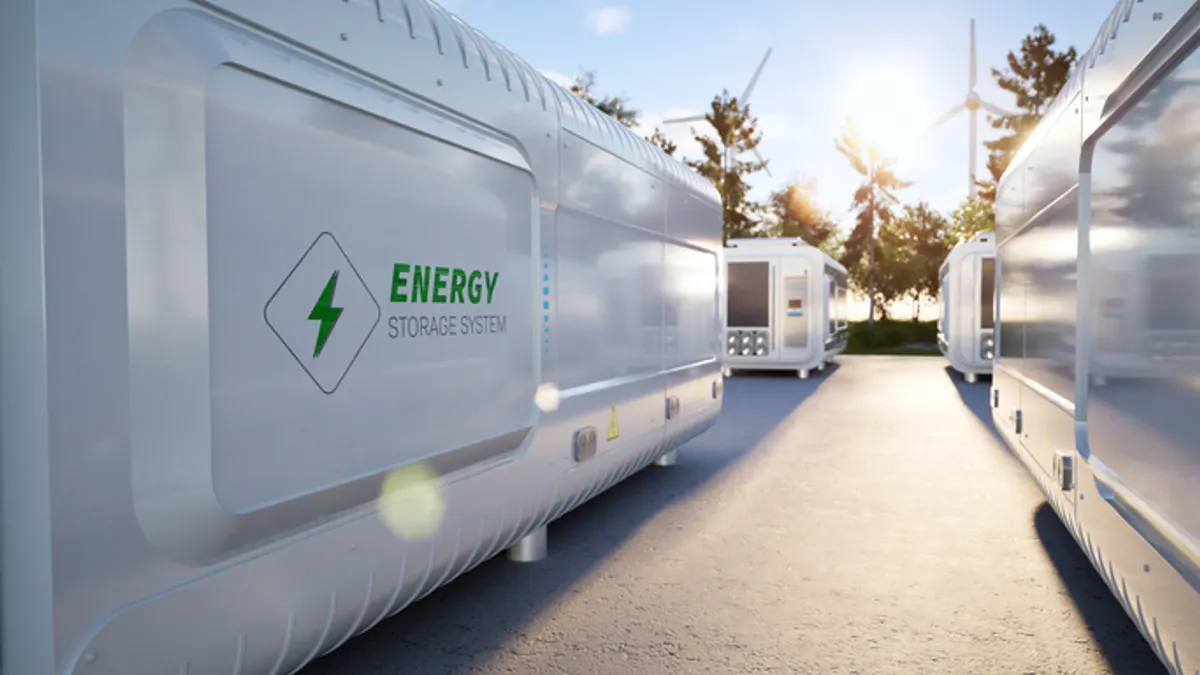
And at the container level, battery system suppliers are spacing containers further apart during set-up. “If there’s an issue with one container, it doesn’t affect the other ones,” he said.
“So, there are three levels of safety, and all of that is maturing,” Rahn said. “The technology of the cells and the quality of manufacturing, the ability to detect when there are anomalies and the ideas and concepts of how to prevent propagation are all maturing."
Manufacturers are also investing more resources into alternatives to lithium-ion, which remains the go-to battery despite its risks because its high density makes it the most efficient rechargeable battery on the market.
Rahn said he’s seeing manufacturers release more batteries that have aqueous, water-based chemistries, which are considered safer because they don’t rely on a flammable solvent. That means the market is seeing new approaches to traditional lead-acid batteries but also improvements to nickel-zinc batteries to lengthen their lifespan and to iron-air batteries, which use rust conversion to store and discharge energy.
He’s also seeing greater use of lithium iron phosphate batteries, which have a lower density than lithium-ion but are less likely to have a thermal event.
“So, there’s a spectrum,” he said, “everything from very high-energy density lithium-ion that would typically be used in vehicles through lithium iron phosphate, which is less energy dense but has a safer chemistry, to aqueous chemistries like lead-acid, nickel-zinc and iron-air.”