Battery-power startup Form Energy’s announcement earlier this month that it secured a $750 million capital infusion could signal a step forward in the commercialization of low-cost, long-duration energy storage.
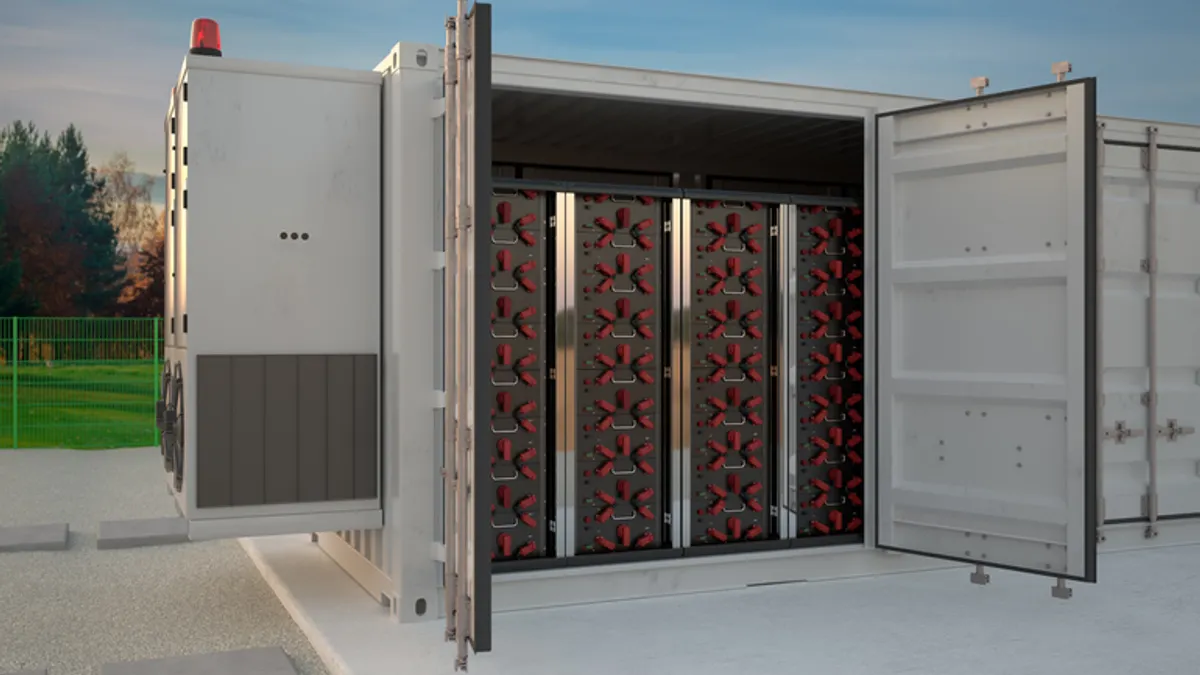
The company produces an iron-air battery that it says can discharge more than 100 hours of power before needing to recharge, expanding options for facilities trying to optimize on-site energy systems. A facility that uses on-site solar to meet part of its power needs, for example, can use the batteries to cover extended periods of insufficient sunlight to keep the system generating power.
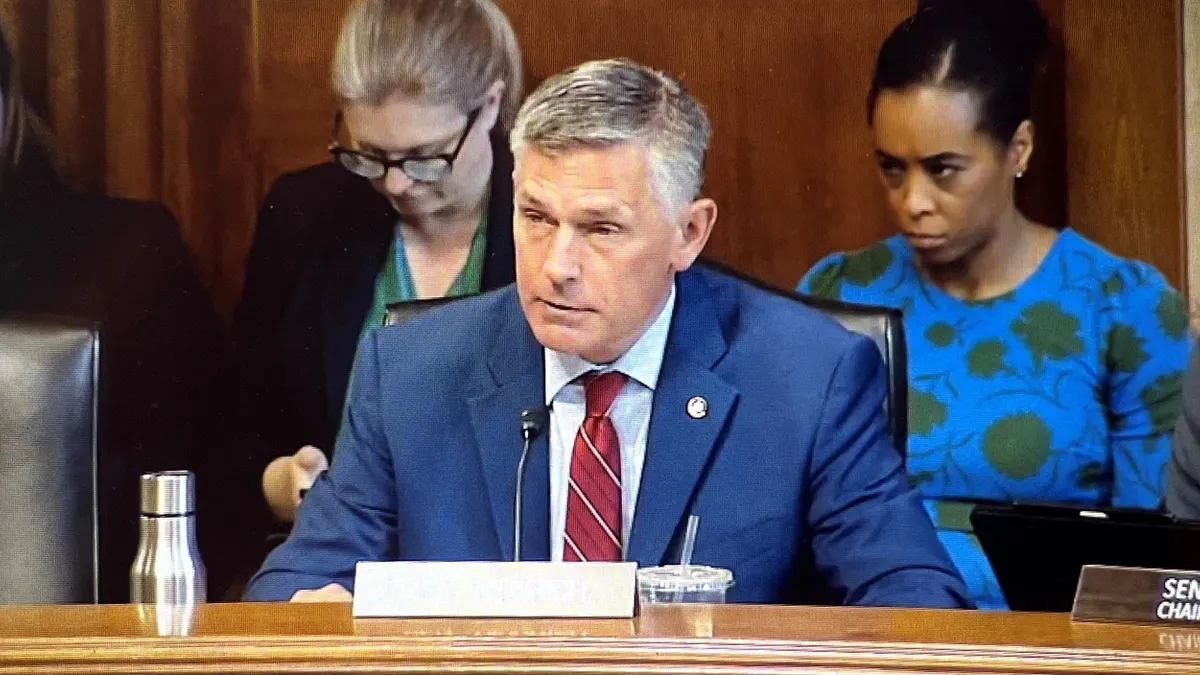
But the real value would be its low cost, says Christopher Rahn, a professor of mechanical engineering at Pennsylvania State University.
“You can make any battery system discharge more slowly,” Rahn told Facilities Dive in an interview. “But I think what is important is cost, and that’s dollars per kilowatt hour, especially for this [stationary on-site] application, where they’re not as worried about how big it is or how heavy it is. They’re really worried about cost.”
A TechCrunch analysis of a $1 billion project that Form Energy is working on with Google and regional utility Xcel Energy to produce 30 gigawatt-hours of battery energy at a data center in Minnesota suggests the all-in capital cost for the batteries is approximately $33.33 per kilowatt-hour. Form Energy said five years ago that it expects the cost to drop to $20 per kWh.
At those cost levels, there’s an economic case for the batteries, Rahn said.
“The numbers I’ve seen for lithium-ion in a packaged form is around $100 per kWh,” he said. If Form Energy can offer a battery that discharges at $50 per kWh, “that could really be competitive. That means for that same application, to get 100 hours of energy you could spend $100 per kWh and do lithium-ion or you could spend $50, half as much, and get the same performance for that very slow discharge rate.”
Physical scale could be an issue, though, he said. “If you want to do, say, 10 kW for 100 hours, then you need a lot of capacity,” he said. “You need a lot of batteries.”
Iron-air batteries have also been known to offer lower efficiency over their lifetime, partly because of the release of hydrogen gas during battery discharge, according to research published in Renewable and Sustainable Energy Reviews. Their round-trip efficiency of 40% to 50% means that for every 10 MWh of energy stored, only 4-5 MWh are returned on discharge, Energy Digital reported.
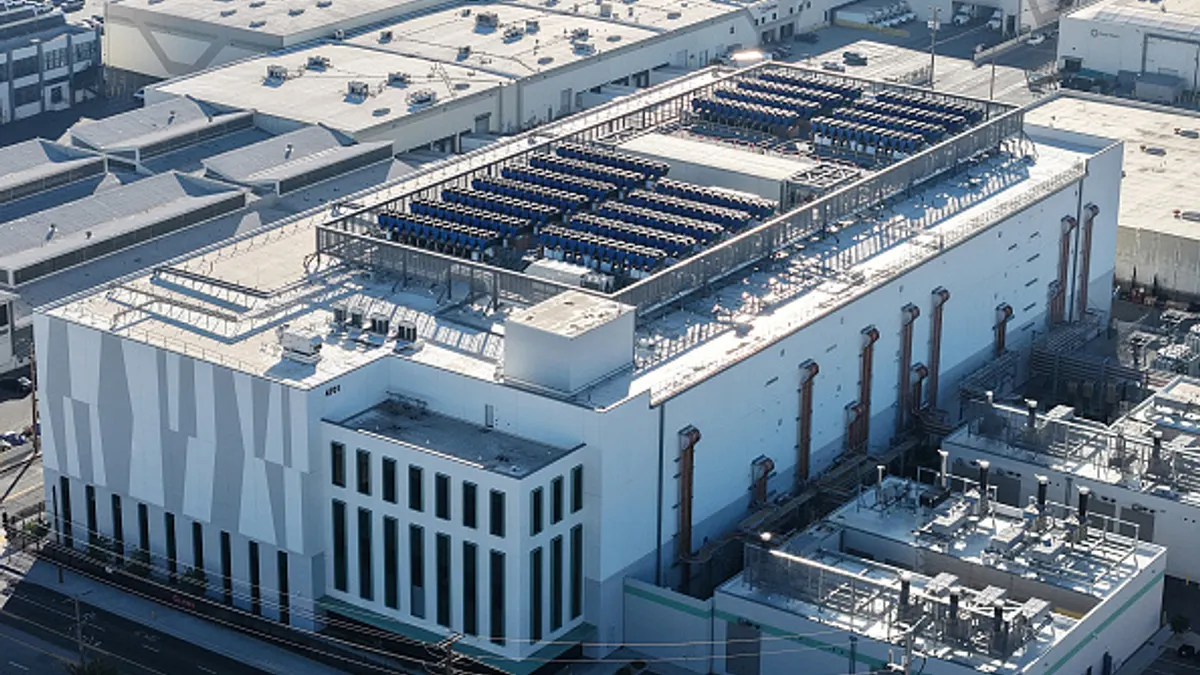
The project that Form Energy is working on with Google and Xcel, to help power one of the tech giant’s data centers, in Pine Island, Minnesota, would be the world’s largest battery.
“The new plant in Minnesota will be big enough to deliver 300 megawatts of power and store an enormous 30 gigawatt-hours of energy, making it the largest battery by capacity that’s been announced so far,” a Fast Company article says. “By comparison, that’s more storage than all of the battery projects built in the U.S. in 2024 added together.”
The Google-funded battery plant would help Xcel cover new demand created by the data center by providing 1,900 MW of new clean energy: 1,400 MW from wind, 200 MW from solar and 300 MW from the battery system.
The battery component, Xcel said in a statement when announcing the project, will help it from a resilience standpoint, “providing firm capacity and strengthening grid reliability when it is needed most, even over multiple days.”
Iron-air batteries are sometimes referred to as rust batteries because they convert the natural rusting process of iron metal into energy using what’s called reversible rusting. As air enters into a battery cell containing an electrolyte and iron and air electrodes, oxygen converts the iron metal into rust, releasing energy. When an electrical current is introduced into the cell, the rust converts back to iron, releasing oxygen and storing energy. Repeating the process creates a durable source of energy, according to a Form Energy information page.
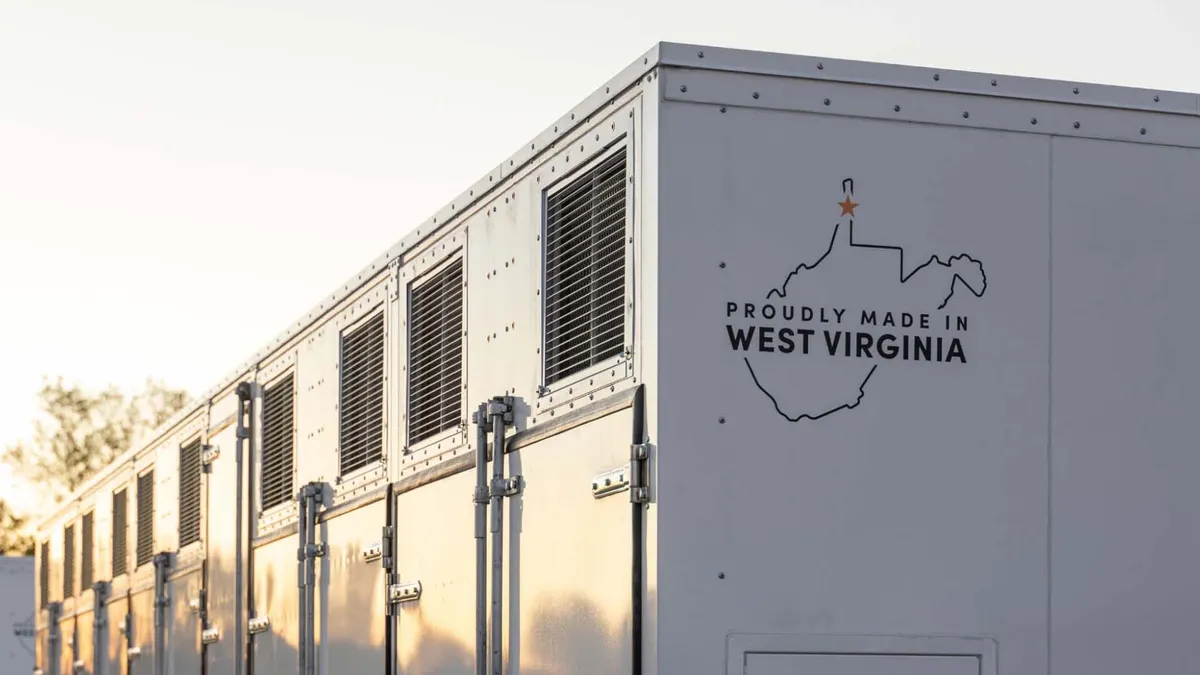
The company’s $750 million infusion brings its total capital raised to $2 billion since it launched in 2017, giving it the resources to scale up its manufacturing facility, located in Weirton, West Virginia. “Proceeds … will be used to accelerate Form Energy’s manufacturing scale-up,” the company said.
Including the Google-Xcel project, the company has an 80 gigawatt-hour order backlog that it aims to tackle with the new resources. Two other big projects on backlog are from AI infrastructure company Crusoe and renewable energy company FuturEnergy Ireland. “These agreements underscore the growing role of multi-day energy storage in supporting rising electricity demand,” Form Energy said in a statement.