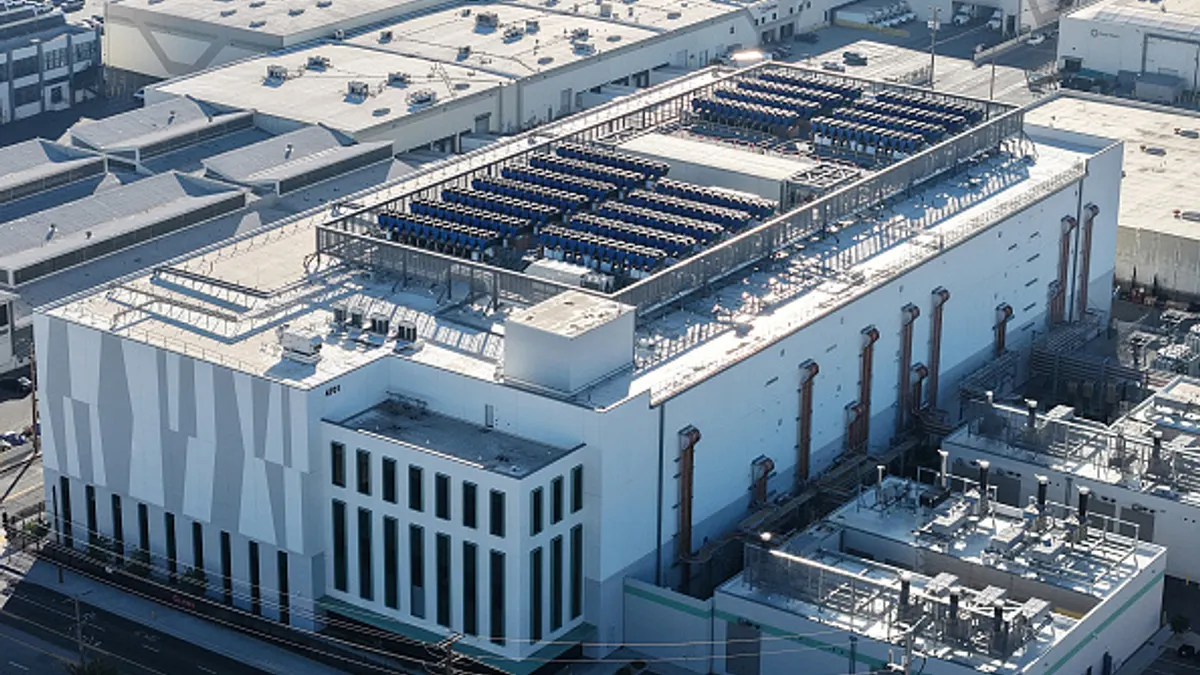
Many organizations with enterprise data centers, including banks, hospitals and universities, operate energy‑intensive cooling systems. Retrofitting these systems for heat reuse promises major savings while helping organizations meet sustainability and efficiency goals.
Globally, retrofitting data‑center cooling systems for heat reuse has the potential to save billions annually by replacing traditional heating sources with already-generated waste heat and reducing both energy costs and carbon emissions.
For facilities managers, this opportunity sits squarely within their operational domain.
“When it comes to heating and cooling, it’s the facility manager’s sweet spot,” says Paul Quigley, chief strategic relations officer at AIRSYS, a manufacturer of cooling systems for data centers, telecommunications networks and other high‑density digital infrastructure. Facilities managers have “a huge opportunity to make a substantial impact on their budgets by re‑purposing the wasted heat from their data centers into their daily operations.”
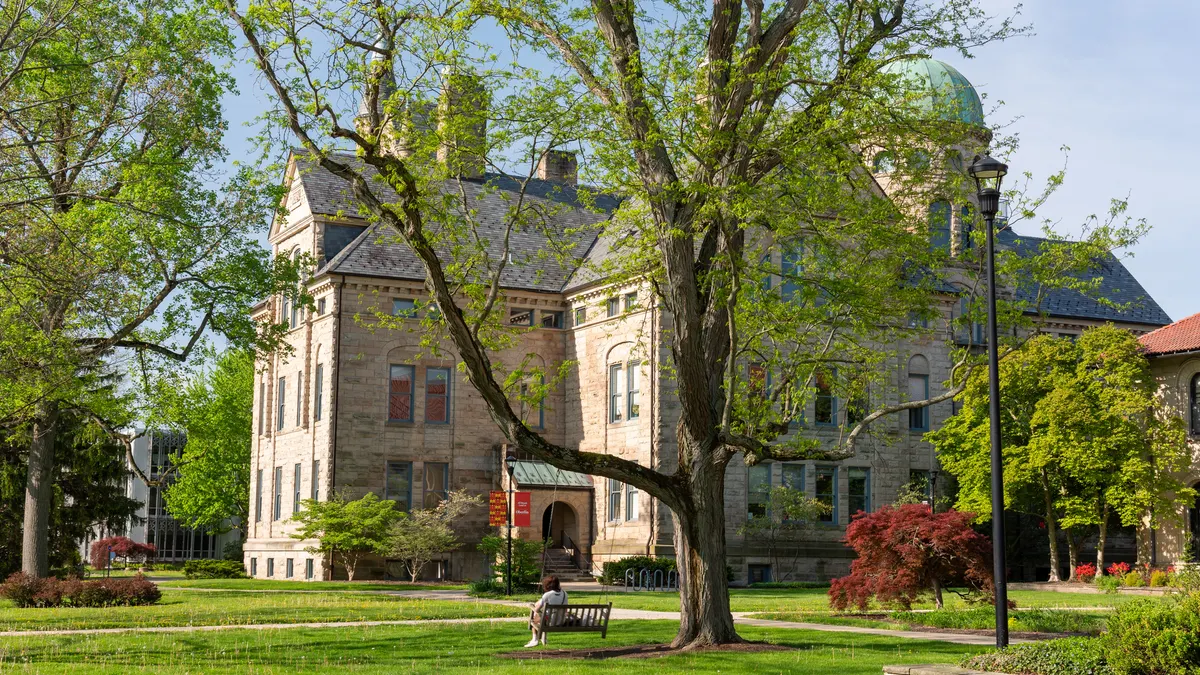
The opportunity is particularly clear on campus environments, where the disconnect between wasted heat and real‑time heating demand is pronounced, Quigley told Facilities Dive.
“They’re currently ejecting heat from their data centers up into the air while at the same time consuming a lot of natural gas to create hot water for all of the dorms, the cafeterias and things like that,” he said.
Facilities managers, he said, have an opportunity to repurpose this wasted heat and make an impact on institutional budgets.
Although heat reuse has yet to catch on widely in the United States, a number of pilot projects are underway.
Some universities in New York are stepping up their efforts, and the University of Virginia is implementing a program, says David Gardiner, president of David Gardiner and Associates, a Washington-based decarbonization advisory firm. Rice University is turning data center waste into electricity and MIT captures heat from research compute clusters to reduce steam‑plant load, he said.
Gardiner also noted opportunities in food and beverage facilities and pharmaceutical facilities that rely heavily on low‑ to medium‑temperature heat. Hotels are also strong candidates, he said, given their daily hot‑water and laundry demands.
There are dozens of heat‑reuse projects underway in Europe, which has been encouraging the practice for years. In the United States, many projects are still in initial steps as organizations try to understand the technology and the public sector puts incentives in place.
Virginia recently became the first state to pass legislation aimed at reusing data‑center heat. Passed this year, the Virginia Acts of Assembly, Chapter 591, requires the state’s energy department to study the issue and recommend next steps. New York has begun offering financial incentives to accelerate data‑center heat‑reuse adoption. Through the New York State Energy Research and Development Authority, data centers can apply for grants of up to $2 million to fund projects that recover and reuse waste heat from data‑center operations.
Despite the growing interest, awareness remains a barrier, Gardiner said.
“The biggest barrier of all to heat reuse in enterprise data centers is just simply an educational barrier,” he said. “There's very little understanding, even in the data center community.”
Facilities managers, he said, can be powerful advocates for these projects, helping their enterprises understand the benefits and move toward implementation.
Quigley advised facilities managers to begin evaluating opportunities now. “Implement an inquiry panel, begin a study immediately — before it becomes mandated,” he said. “There are amazing solutions out there that not only can realize an immediate ROI, but also support ESG goals.”
But understanding that return on investment will remain a challenge unless operators start measuring the right things, Quigley says. "You cannot manage what you refuse to measure. The industry has spent fifteen years optimizing power usage effectiveness, which tells you how efficiently you deliver power to the rack and absolutely nothing about what happens to that energy afterward. Energy Reuse Factor is the metric this conversation actually turns on, and most U.S. operators have never calculated it once. Their European counterparts are already reporting it."
The technology isn’t without challenges, however. An ASHRAE technical committee’s guidance recognizes the potential for heat reuse, but legacy computer room air conditioner and computer room air handler systems and raised-floor systems weren’t designed for heat capture, according to the specialists, who cited ASHRAE Technical Guidance 9.9 and other publications. And capturing heat for re-use from rear-door heat exchangers and liquid loops can be costly and require a disruptive process, the specialists said.
Ultimately, Gardiner said, awareness is the catalyst in the U.S. “Once people are aware of all those benefits, then they can get serious about planning and try to figure out how to make these projects happen,” he said.