Dive Brief:
- U.S. electrical manufacturers moved on from incandescent light bulbs when industry groups and the federal government collaborated on higher lighting efficiency standards years ago, so they oppose legislation that recently passed a Senate committee to allow incandescent bulbs back on the market, Eric Bursch of the National Electrical Manufacturers Association says.
- “U.S. manufactures have invested billions of dollars in a successful transition under the current standards to LED technology,” Bursch, NEMA’s director of government affairs, told Facilities Dive. “Our members no longer make incandescent bulbs. That hasn’t been the standard for a few years.”
- The Liberating Incandescent Technology Act, S. 1568, introduced by Sen. Mike Lee, R-Utah, would reverse provisions in a 2007 law signed by President George W. Bush directing the U.S. Department of Energy to require that general-use lightbulbs meet minimum lumens per watt. The law put an end to the most common types of incandescent bulbs by making the standards too high for them to meet. Specialty incandescent bulbs can still be sold.
Dive Insight:
Foreign manufacturers will be the beneficiaries of the LIT Act if it passes, because they’re in the best position to produce the bulbs, Bursch said. “It would hurt U.S. manufacturers,” he said.
The impact on U.S. manufacturing was one of the main concerns at a hearing on the legislation Sept. 17.
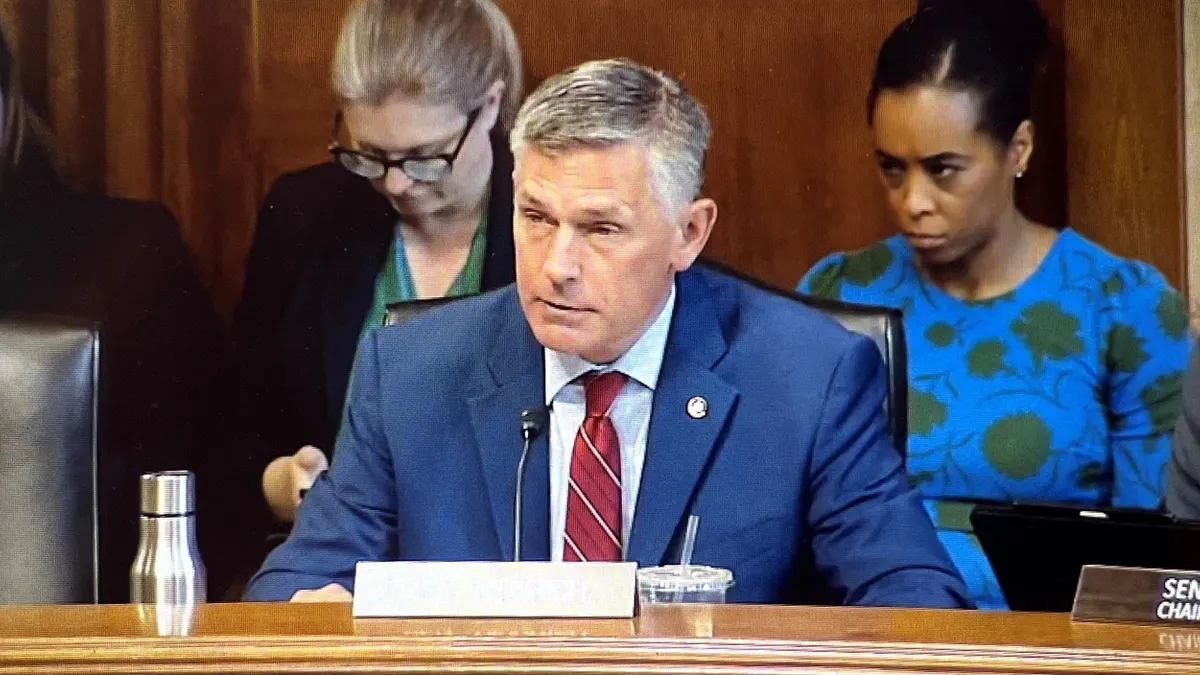
“If we don’t have manufacturing here, then where does it come from?” Sen. Catherine Cortez Masto, D-Nev., said at the hearing. “Are we getting these from China? Are we opening the door to China manufacturing … while we’re trying to bring manufacturing back here?”
Replacing legacy lighting systems with LEDs is one of the first steps facilities managers take when they retrofit their buildings to make them more efficient, Timothy Unruh, executive director of the National Association of Energy Service Companies, said in a webcast last year.
LED lights “produce extra savings that can help cover the other projects” that buildings need, like HVAC replacement, he said.
Facilities managers will pay more if the return of incandescents puts more pressure on utility grids, Bursch said. “LEDs are just so much more efficient than incandescents that by putting them back out there, you’re going to add unnecessary demand to the grid,” he said.
The LIT Act passed the Senate Energy and Natural Resources Committee, which Lee chairs, in a split vote, 11-9, on Sept. 30. A companion bill, H.R. 3341, has been introduced in the House, but no action has been taken.
DOE supports the bill. “In general, we should have more efficient technologies,” Alex Fitzsimmons, associate deputy secretary at DOE, said at the Sept. 17 hearing. “But our principle has been, if that comes at the expense of regulating a product out of the market that some consumers want, then that we don’t support.”
The close committee vote suggests the bill will face difficulty moving to a full Senate vote before the end of the year, because lawmakers prefer to move legislation on a unanimous consent basis, Bursch said.
“The back and forth on it made it seem less likely that it could be added to packages at the end of the year,” Bursch said.
The American Lighting Association also opposes the bill. In a joint letter with NEMA, the organization says that changes in lighting fixtures over the last several years to accommodate LED bulbs could lead to fires if incandescent bulbs are used in them. “Fixtures redesigned for this lower heat output are not rated to operate incandescent lamps and therefore could catch fire if used with those outdated lamps,” the letter stated.