


Hotel Tech-in is Hotel Dive’s regular feature that takes a closer look at emerging technology in the hospitality industry.
A tech company is using artificial intelligence to power air conditioning and heating systems in hotels, with a model that is more efficient and sleek than traditional HVAC systems.
For the last four years, AAIR has been developing an intelligent HVAC system via AI and machine learning technologies designed to optimize temperature, humidity and fresh air in guest rooms, said Trevor Schick, president of Texas-based AAIR Products.
The product, dubbed “Intelligent HVAC,” can lead to up to 30% more in energy savings compared to traditional HVAC systems, reducing energy costs, which can consume up to 6% of a hotel’s operating budget, per Energy Star.
Intelligent HVAC was built in part to “fill a gap in the market” for hospitality and residential projects, Schick told Hotel Dive. Following two years of design and one year of testing, AAIR launched the product about six months ago and installed its first hotel system in Tennessee in October 2025.
How it works
Using interior and exterior sensors, Intelligent HVAC can detect changes in humidity, while not changing a hotel room’s internal temperature. Unlike traditional AC systems, the technology is designed to meet comfort levels rather than simply staying at a fixed temperature point, Schick said.
The product is also integrated with building management systems, allowing managers to “pre-condition” a room based on what time a guest is expected to check in. Schick explained that turning up an AC system at full speed is costly for owners; running fans at a slow speed, and more consistently, is cost-efficient and better for guests’ comfort.
“[Traditional HVAC] uses a lot more energy, and it degrades the user experience of the guests walking in, because they have a loud system, they feel the cold air blowing across the room,” Schick said.
Better for guests and hoteliers
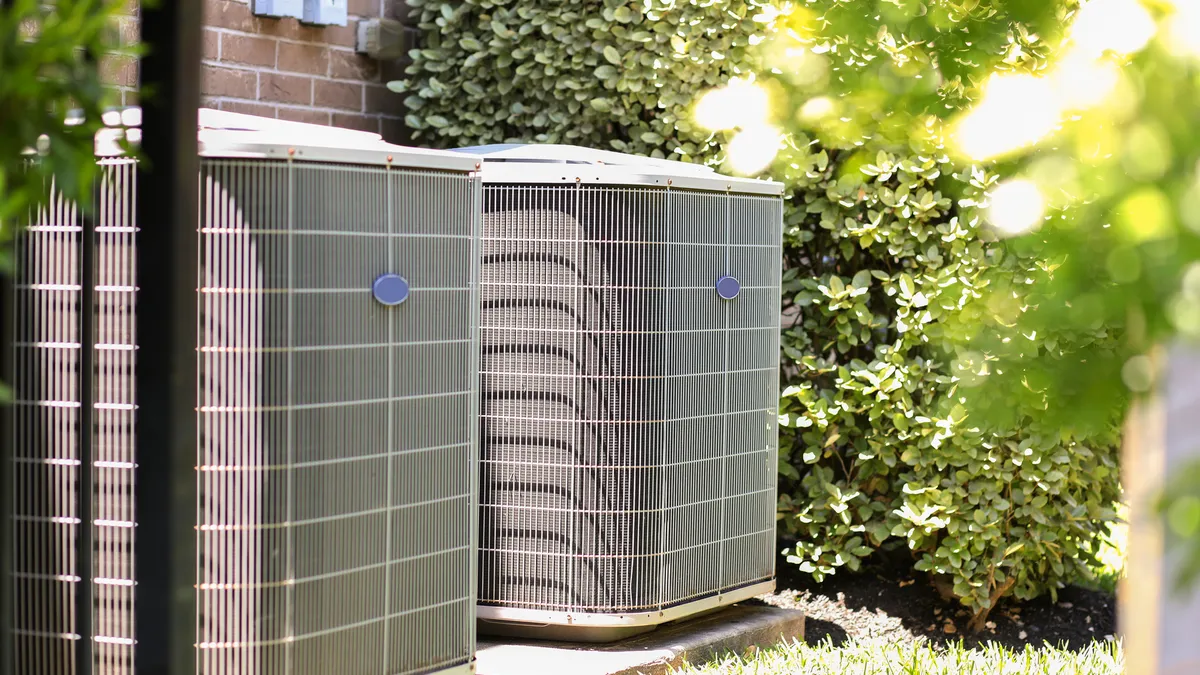
Additionally, the product measures around 14.3 inches by width, which helps hoteliers save space in rooms. It replaces the standard “3-by-3-foot boxes found in a corner” of a room, according to Schick, usually in a closet, known as Vertical Terminal Air Conditioner, or VTAC, as well as the large units situated underneath windows, known as Packaged Terminal Air Conditioner, or PTAC.
“What we did was develop a through-wall system,” Schick said. “So our product is flush to the wall, so you're not taking up any of the interior space of the room. It fits in between the studs in the wall.”
In addition to being more compact, the units are also quieter than the louder PTACs.
They make a similar amount of noise as VTACs, Schick said. For hotel owners with a VTAC system already installed, AAIR can retrofit its AI-powered HVAC system in its place.
Hotel owners with extra capital, who are looking to save space in guest rooms could opt to knock down a VTAC closet to free up space for a coffee table or nightstand, Schick said.
Better for the environment, too
In addition to up to 30% in energy savings, Intelligent HVAC uses less refrigerant, a chemical compound considered a pollutant used in cooling systems, compared to traditional solutions. The product uses only 24 ounces of refrigerant, “which is very little” compared to other systems, Schick said.
“With refrigerants, one, you have to make them, which is a chemical process, and two, you have to dispose of them at the end,” he said. “We're taking that down to a very minimal amount, and being able to do that is important to us.”
Additionally, the product’s efficiency will improve over time and incrementally increase year over year as it understands patterns better and gets smarter through machine learning, Schick said.
“At the end of the day, that's what I think the value we bring,” he said. “It's not just operational efficiency, it's not just experience — it's bringing all those pieces together.”
Schick noted that oftentimes, hotel owners and operators have to choose between something that is cheaper, faster or better quality. But with the Intelligent HVAC, “you can get all three.”
“We're looking at saying, ‘I can give you a better product that's less expensive, it'll be a higher quality experience for people, and by the way, I can get it up faster, and get a better user experience,’” he said.