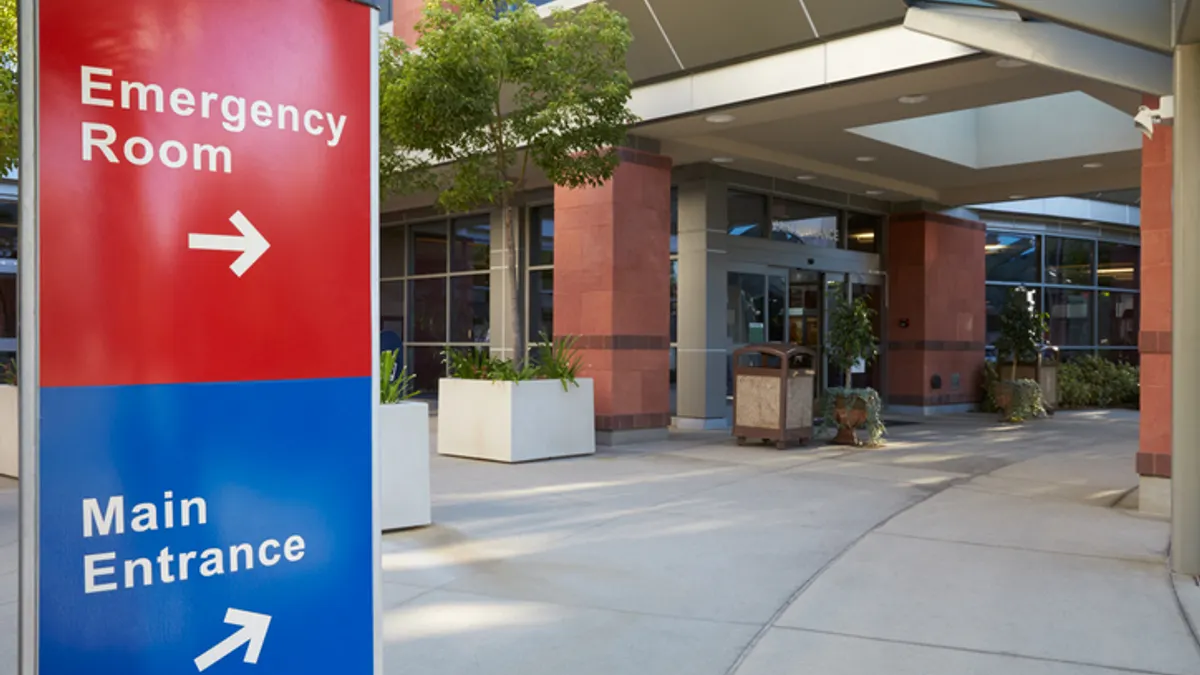
California hospitals will need automated weapons-detection equipment at certain entrances under a requirement taking effect next year.
The law, AB 2975, requires the systems at a hospital’s main public entrance and the entrances to the emergency department and the labor and delivery department, if the latter has a separate public entrance. Hospitals also must have staff members who’ve met training requirements to operate the systems present when the entrances are in use. Signs must let people know the systems are in place, and the facilities must offer alternative weapons detection options for people who don’t want to go through the automated screening.
Healthcare facilities managers can expect to see impacts of the law spreading to other states, Marilyn Thaxton, North America marketing manager at metal detection and security system company CEIA USA, said in an op-ed in Campus Security Today.
The law’s “influence extends well beyond state lines,” Thaxton wrote in the March 6 piece. “Multi-state health systems are already aligning procurement and policy decisions to avoid fragmented approaches.”
No other state requires hospital weapons detection screening, although several states are considering legislation that would address hospital violence in other ways, according to an analysis by Isotec Security. North Carolina requires a police officer to be stationed in emergency rooms.
“In the absence of OSHA rulemaking, states are continuing to take the lead,” a blog post by attorneys at Epstein Becke Green states. “Facilities would be wise to adopt a comprehensive plan incorporating not only compliance measures, but evidence-based measures to prevent and respond to incidents of violence.”
Violence costs hospitals more than $18 billion a year, the American Hospital Association estimates.
Based on a study the association conducted with the University of Washington last year, hospitals each year spend about $3.6 billion on violence prevention — including maintaining and training security staff and making security-related facility changes — and about $14.6 billion after violence, including for medical care for injured people, work-loss compensation and replacing damaged infrastructure, among other things.
“Violence is a major public health problem,” the AHA report says. “The impact … is seen within the broader health care system [in] staff turnover, absenteeism, loss of productivity, high insurance and workers’ compensation costs.”
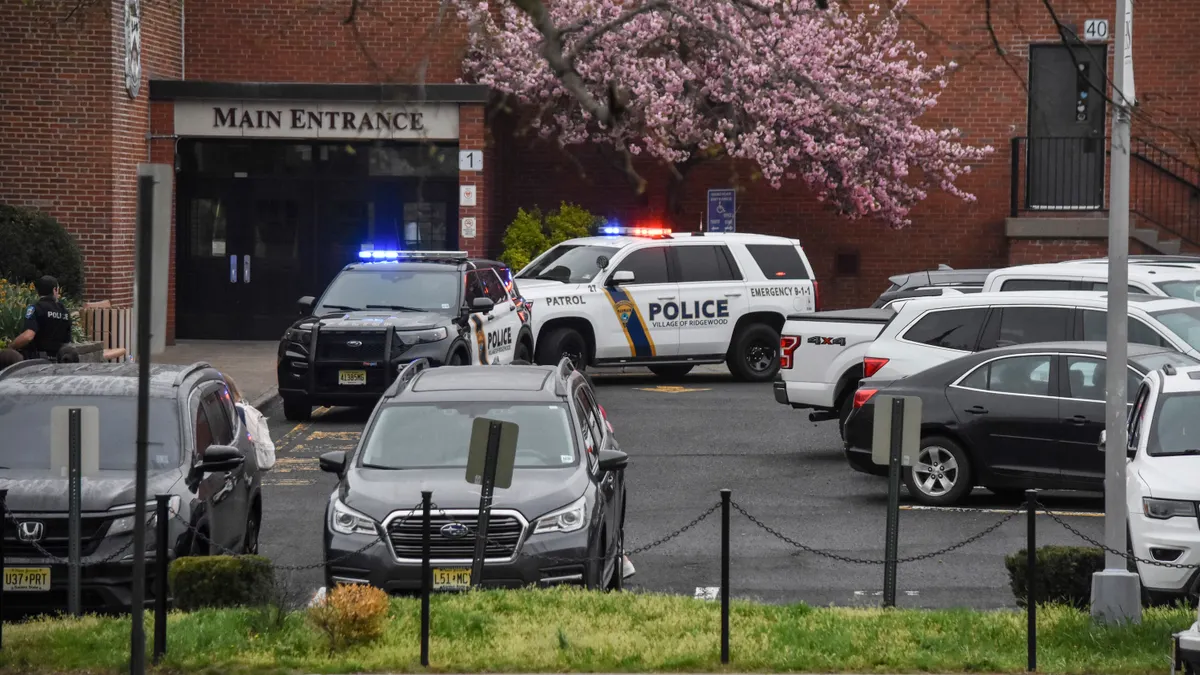
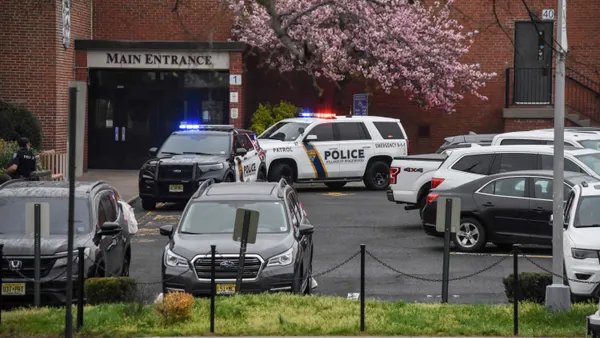
One recent incident is a deadly shooting that occurred at Endeavor Health Swedish Hospital in Chicago in late April, the second shooting at an Endeavor Health hospital in less than a year. The suspect had been escorted to the hospital for observation by police officers. The hospital reported the suspect was “wanded” when he was admitted, according to news reports. He allegedly shot two officers while he was receiving treatment in the hospital emergency room, killing one and injuring the other. He was later apprehended outside the hospital.
“What was once seen as a rare risk is now a daily operational concern, prompting hospital leaders to reconsider how and where security screening fits into healthcare settings,” Thaxton said in her op-ed.
The California law requires the state’s Occupational Safety and Health Standards Board to modify its standards to incorporate the automated weapons screening and other requirements by March 1, 2027. Hospitals will have three months after the standards are updated to comply.
The screening system must be automated, and trained staff must be present while the entrance is open, according to the law. While hospitals can use handheld weapons screening devices, those devices can’t substitute for the automated screening system. “Handheld metal detector wands … may be used in connection with other weapons detection devices [but] may not be the sole equipment used,” the law states.
Small and rural hospitals, long-term care hospitals and rehabilitation hospitals are exempt from the requirement to have automated screening equipment, as are hospitals where the installation of such equipment would conflict with state building code requirements.
Hospitals must cover the costs themselves. The automated screening systems aren’t required for entrances other than the three types the law names. The law specifies that the automated screening requirement does not apply to the ambulance entrance.
“Hospitals are not starting from scratch,” Thaxton wrote. “Prisons, courts and public venues have decades of experience with screening technologies. Healthcare leaders are borrowing proven practices while adapting them to environments where dignity, privacy and clinical flow are non-negotiable.”