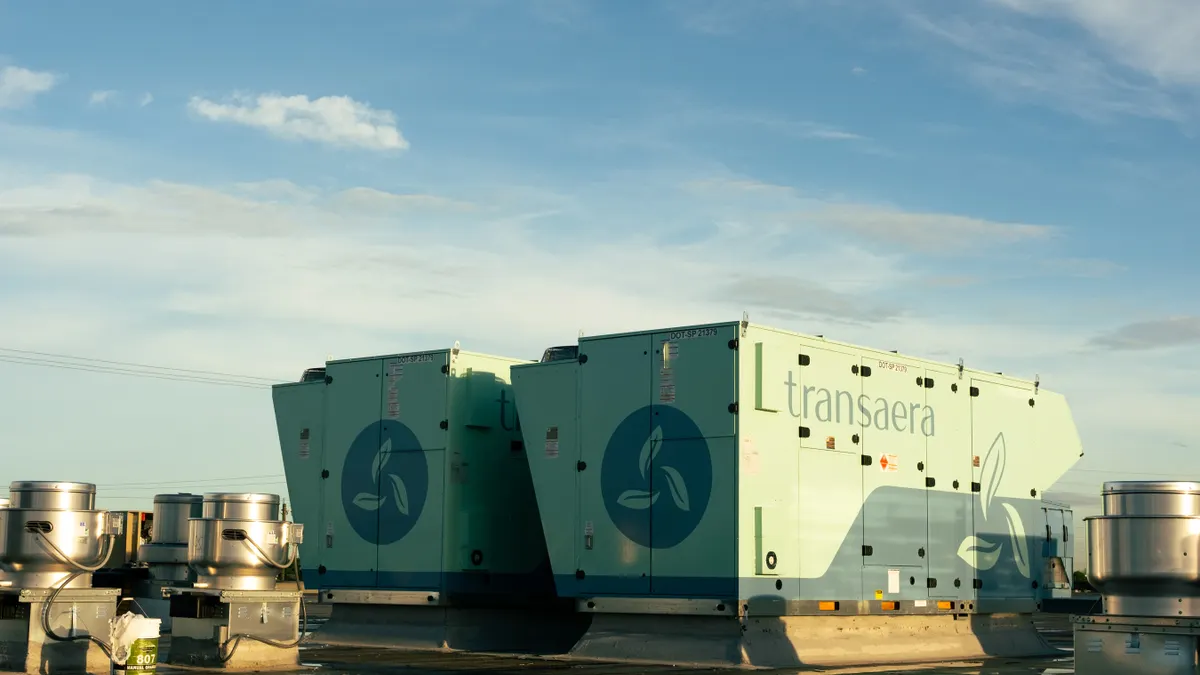
Amazon has entered into a multi-year commercial agreement to integrate the cooling and dehumidification systems of Transaera, an air conditioning company focused on sustainable systems, into its logistics facilities, the company announced last week. The agreement highlights companies’ growing interest in improving commercial HVAC systems’ energy efficiency through humidity controls.
Instead of overcooling air to remove moisture like conventional rooftop systems, Transaera’s technology uses a new class of solid desiccant materials — crystalline compounds called metal organic frameworks, or MOFs — to remove moisture before cooling, resulting in energy savings that can be as high as 40% when compared to conventional rooftop direct-expansion systems, according to the release.
"Our work with Transaera has moved from field trial to readiness for first commercial use, and this new collaboration supports expanding use of this technology within our global network of buildings," Asad Jafry, director of global energy, sustainability and automated guided vehicles at Amazon, said in a statement. The agreement aligns with the company’s efforts to implement technologies that support its climate pledge goal to reach net-zero carbon emissions by 2040, he said.
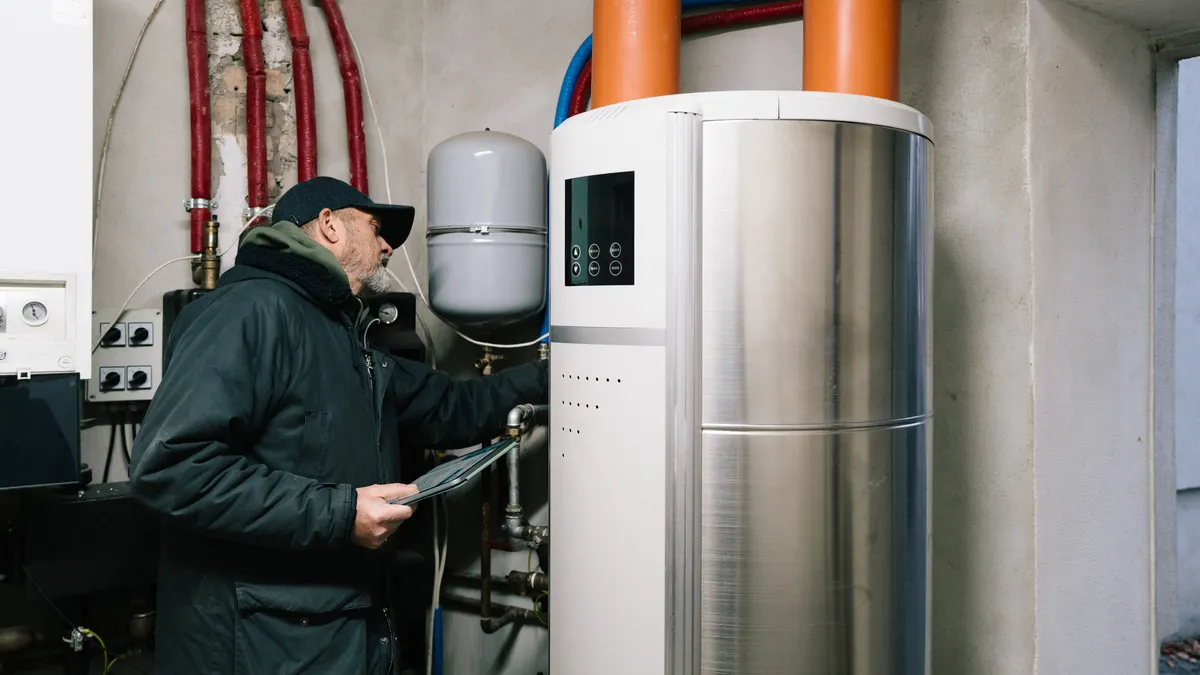
Designed as heat pumps capable of cooling, heating and dehumidifying without reliance on natural gas, Transaera’s systems align with electrification strategies being adopted across the commercial building sector, the company says. Because HVAC use accounts for more than a third of energy use in commercial buildings, the technology offers potential to lower energy costs and emissions, sustainability specialists say.
The agreement follows a six-month field trial of Transaera’s rooftop-based cooling technology at an Amazon logistics facility in Houston. The companies say the trial demonstrated consistent energy savings over traditional systems while maintaining performance in hot and humid conditions. Results were validated through third-party analysis, said Transaera, based in Massachusetts.
Transaera’s first product, a dedicated outdoor air system, or DOAS, has demonstrated more than double the federal minimum efficiency standard for moisture removal, according to the release. The company installed its first DOAS in September at a ProFood Solutions commercial kitchen facility in Hialeah, Florida.
Transaera is working with U.S. manufacturers to build the device, which is designed to replace existing industry-standard commercial HVAC units. Under the agreement, the company will dedicate a portion of its U.S.-based manufacturing output to support Amazon’s HVAC deployment needs.
"This technology has the potential to reduce operational cost while enhancing indoor air quality and occupant comfort across commercial and industrial facilities,” Sorin Grama, CEO and co-founder of Transaera, said in a statement. "This announcement signals that high-performance HVAC is no longer a niche innovation — it's becoming the new standard.”
Humidity control systems proliferate
Other companies are following Amazon’s lead, giving Transaera “nine figures” worth of purchasing targets from customers, Grama told TechCrunch.
Others in the field are developing systems to capture and capitalize on the energy efficiency that stems from separating temperature control and moisture management.
Rice University spin-off Helix Earth, for example, in April announced a $12 million capital raise to scale manufacturing and accelerate deployment of the company’s Helix MICRA unit. The retrofit system is designed to connect to most AC rooftop units or DOAS to pre-dehumidify supply air, “substantially dropping the load on the existing unit and lowering power needs by 50%,” the company says on its website.
“We’ve spoken with hundreds of building owners representing tens of thousands of locations, and the message is consistent,” Helix Earth co-founder and CEO Rawand Rasheed said in a statement. “They want more comfortable spaces, better air quality, lower energy bills, less product spoilage from uncontrolled humidity, and longer life out of their existing AC equipment.”
Meanwhile, another desiccant-based humidity control system manufacturer, Mojave Energy Systems, says its ArctiDry system can supply air at dew points ranging from 55 to 35 degrees Fahrenheit while independently controlling dry bulb and dew point, giving facilities managers the ability to dehumidify air without needing to overcool, the company says. In September, it announced that its units have surpassed 100,000 cumulative operating hours while delivering 99.7% uptime.
On May 12, the company unveiled its newest HVAC product, AquaDry, a hydronic liquid desiccant to dehumidification system that delivers dewpoints down to 25 degrees Fahrenheit with conventional chilled water temperatures and without glycol, Mojave said in a release. Using low-grade hot water between 110 and 180 degrees Fahrenheit for desiccant regeneration makes it compatible with waste heat recovery, while allowing operators to reduce load on chillers, extending capacity and increasing efficiency, Mojave says.
The U.S. Department of Energy’s National Renewable Energy Laboratory has developed its own desiccant-based system that it says has the potential to lower commercial air conditioning peak power demand by more than 90% and cut cooling bills by almost half. Developed in collaboration with Blue Frontier, DOE’s Energy Storing and Efficient Air Conditioner system, or ESEAC, absorbs moisture from the air and uses an ultraefficient indirect evaporative air conditioning system to cool the air.
A year-long simulation in Miami found that a 20-ton ESEAC system reduced cooling-related electricity use by 38%, peak demand by 93% and annual electricity costs by 45%, according to the National Renewable Energy Laboratory. The reductions amount to an estimated $165,000 in savings per unit over 15 years, NREL says.
“Building owners are dealing with rising energy costs, uncontrolled humidity, and aging infrastructure with no viable, cost-effective path forward,” Rasheed said.
By entering into its agreement with Transaera, Amazon is betting a desiccant-based system can offer a solution to that.