Compliance efforts for New York City’s Local Law 97 have been mixed, according to Ari Shultz, vice president of business development at Entech, a New York-based company that helps retrofit HVAC systems with AI-powered boiler and energy control systems.
Although many owners have moved quickly to measure and improve their building’s performance, others are only now getting started, which could hurt them down the road when they have to start meeting more stringent performance requirements, he said.
“The early movers, they're on top of it from the get-go,” Shultz told Facilities Dive. “They're speaking to people. They want to know what different costs benefits [there are] for whichever option they're looking for. And you have … people that [are] not really even sure where they are with their usage, right? We have people coming out now, after the fact, just getting up to speed.”
New York City’s Local Law 97 standard reporting period began May 1, with a June 30 grace period and an additional 120-day extension, making the final reporting deadline August 29.
The ordinance requires commercial, multifamily and municipal buildings of 25,000 square feet or more to report annual energy, water and emissions use. Going forward, they’ll be required to reduce emissions 40% by 2030 and 80% by 2040. Different emissions limits apply based on property type. Failure to comply can result in costly fines: up to $268 per ton of carbon dioxide equivalent emitted above the annual allowance.
Although roughly 90% of large buildings were compliant at the end of 2024, meeting standards will likely get harder moving forward as emissions limits drop significantly for the 2030-2034 compliance window, according to an analysis by the Urban Green Council.
Legacy system challenges
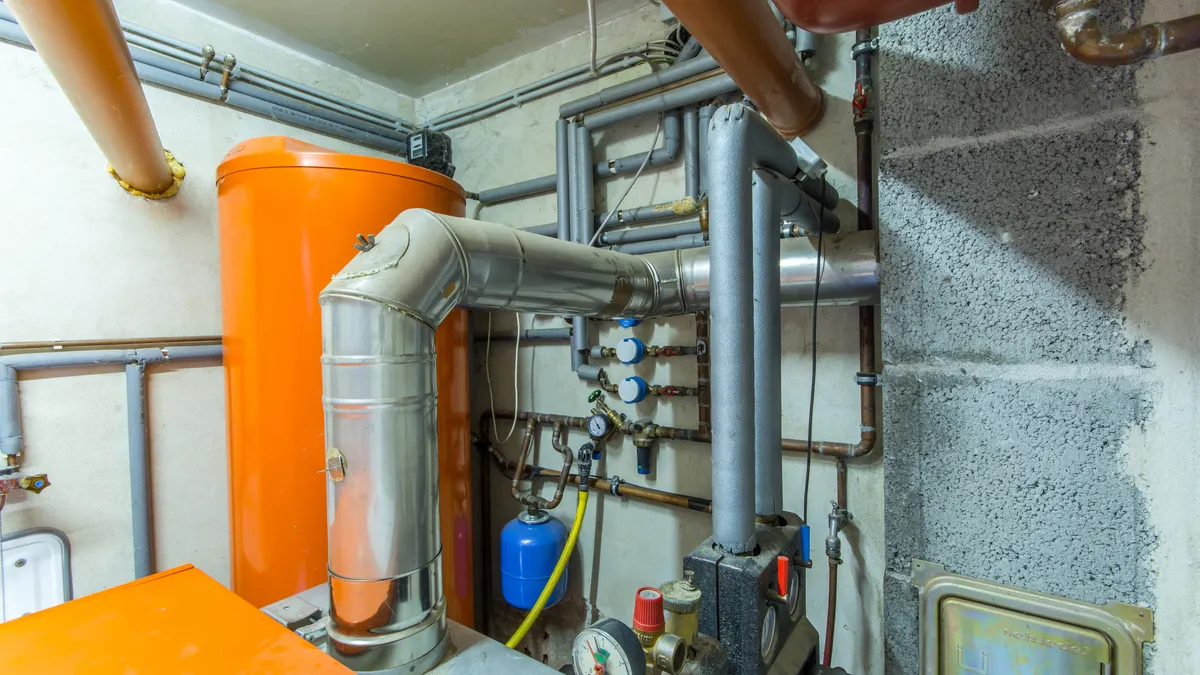
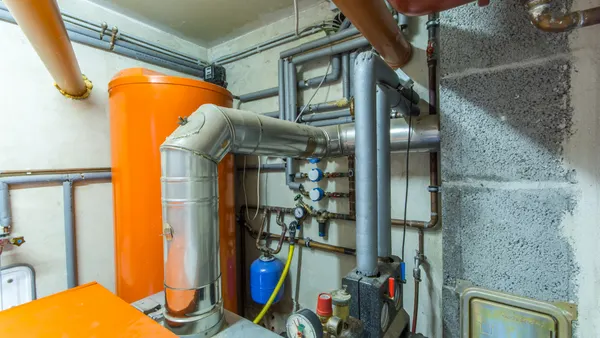
For owners of buildings with legacy systems, meeting the requirements can be a daunting task, but technology is available to help even fossil-fuel-powered HVAC systems like boilers operate more efficiently, Shultz said. The key is to get started early.
“It’s very difficult to set up implementing this at the end,” he said. “If you … slowly put the pieces in place, it’s a lot more manageable.”
Building owners his company has worked with have saved about $42 million and reduced their carbon emissions by more than 137,000 tons by adopting AI-assisted sensors and other technology that help optimize systems, according to a company spokesperson. The average emissions reduction for each building is about 22%, the spokesperson said.
“We’re in 9,000 buildings and internal[ly] benchmarking,” Shultz said. “We’re taking data points every 15 seconds. So we know exactly what’s going on inside the boilers [and] we have a good idea of what it’s going to look like before our system and after our system, so we can walk them through what that’s going to look like. That’s usually a great step.”
Other energy management companies that help building owners in New York City include Runwise, Intech 21 and Parity.
Shultz said that when his company meets with owners, sometimes their building systems are already working well and Entech’s role is to help them optimize. Other times, early conversations and scans uncover leaks or other issues that are impacting performance and harming energy efficiency, he said.
The company recently went into a building with two identical boilers and found through scanning that one of the boilers had a leak. “Within 30 minutes of getting our system installed, we were able to see that there [was] a massive stem leak,” Shultz explained. “So instead of waiting three months to review bills and figure out what’s going on, [this was done] within a minute. Because … we don’t just focus on the temperature throughout the building. We’re integrated with the boiler. We have the run times — how much it’s running, the distance, the delay from the time we run until [heat] starts hitting the different units.”
When it comes to buildings with boilers, steam leaks are a big concern, and they’re often overlooked, he said. One of the benefits of Local Law 97 is it can help owners uncover these hidden costs.
“There [are] so many systems that are not working well that people are just not aware of,” he said. “Water leaks [are] a big one, because you have the return line that comes all the way through the building and goes underground. There’s an insane amount of water going out. It’s bad for the foundation.”
The sensor-based analytics and control systems that energy management companies offer their customers are the kind of tools that can catch these problems — including water problems that aren’t the tools’ main focus — that can often go undetected for a long time.
“It’s built into all our sensors, so we see it,” said Shultz. “And then we call [the customer] up and say, ‘You have a real problem here.’ [In this case] they called people down. They dug up the ground [and] they found it.”
A potential catastrophe became a source of significant savings in this case, he said.
“We have a good idea of the diagnostics,” he said. “We know from the actual system itself how much it's overusing and where the savings are going to be. … We know that we saved you some money [and] some energy.”