When New York City Mayor Zohran Mamdani threw his support behind a ban on biometric scanning last month on privacy grounds, he helped pull a majority of the city council into supporting the bill. That’s alarming some business interests. The bill’s approach is so broad that facilities using the technology for security and workplace management could face lawsuits even if they’re adhering to privacy protections the city has put in place specifically for the technology, a security advocate says.
“There are very robust laws in place regulating electronic access systems,” Jake Parker, senior director of government relations at the Security Industry Association, told Facilities Dive in an interview.
The city enacted two laws in 2021 targeting biometric scanning. The Biometric Identifier Information Law provides privacy protections to organizations' use of facial, iris, fingerprint and other types of scanning, and the Tenant Data Privacy Act governs landlords’ use of scanning in residential properties.
Lawmakers say the latest bill is needed to stop sports and entertainment facilities and other public-facing businesses, like arenas, stores, restaurants and bars, from using facial recognition to monitor who’s on their premises.
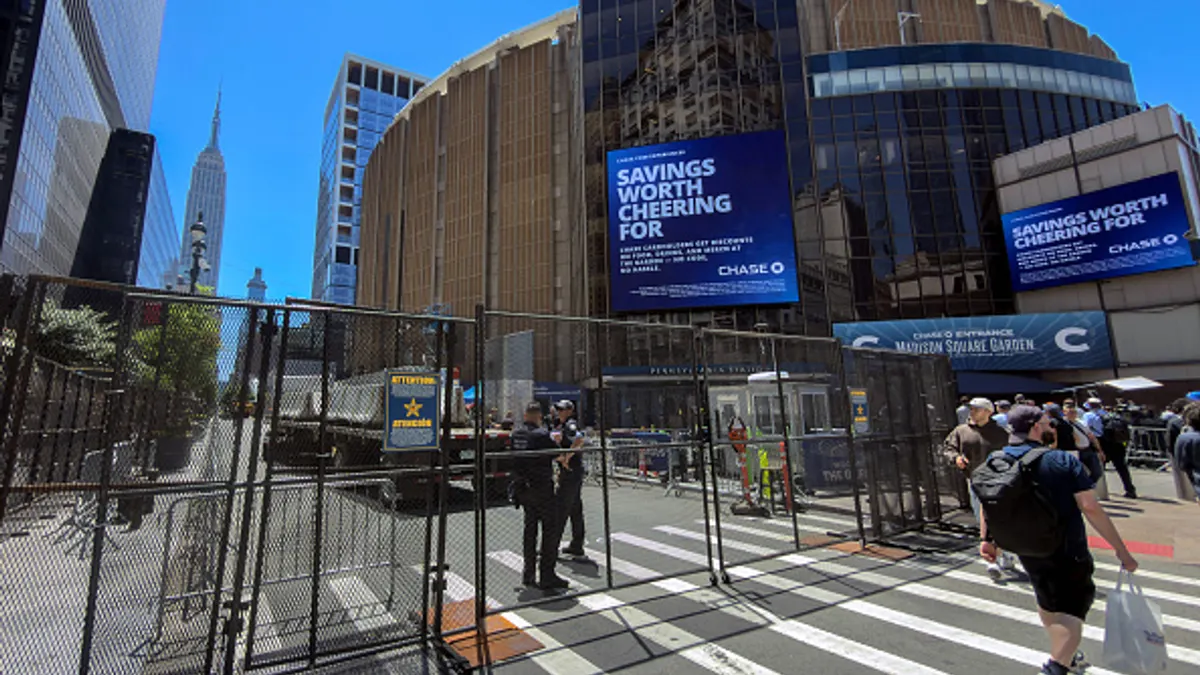
“No one should have to surrender their personal privacy in order to watch their favorite sports team,” Samuel Levine, the city’s commissioner of consumer and worker protection, said at a press conference last month outside of Madison Square Garden when he announced Mamdani’s support.
The problem with the bill is its breadth, Parker said. The bill applies the ban to places of public entertainment, retail stores, and food and drink establishments, and also to places of public accommodation, which in existing city law is a broad category that, Parker says, could ensnare many types of facilities.
“It could include, for example, back-end access to a building where there’s a storefront,” he said. “A workplace that sells anything … could be a place of public accommodation under this.”
The bill makes an exception for some types of financial institutions.
Should the bill pass as drafted, building management can expect to see an uptick in lawsuits because the enforcement mechanism is a private right of action, said Parker.
“There are undoubtedly going to be lawsuits,” he said. “There have already been lawsuits filed under the existing laws. They’ve been frivolous so far. Thrown out. But this bill sweeps much broader.”
Among the allegations made in at least one of the lawsuits is that the defendant’s use of the technology to reduce thefts amounts to a profit motive. “Loss prevention … generates profits by reducing the number of stolen goods,” the 2024 complaint states.
“That’s a stretch,” Parker said. “Preventing a theft shouldn’t be equated with profiting, but that’s what the allegation was.”
Bill supporters pointed to Madison Square Garden, New York City’s high-profile arena, as a textbook case for why the ban is needed. The arena has been accused of using facial recognition to ban people from or track them if they’re on the premises.
“Surveillance [of this type] opens the door to abuse,” Levine said at the press conference at the arena earlier this month.
In a statement emailed to Facilities Dive last month, an arena spokesperson said the technology only does what people have always done: recognize faces. “We just do it electronically,” the spokesperson said.
In testimony it gave earlier this year on the Tenant Data Privacy Act, the International Biometrics + Identity Association said stores and other types of businesses have come to rely on the technology to help keep employees and customers safe.
“Whether it’s a corner bodega in the Bronx, a jewelry store in Queens, or a hotel or restaurant in Midtown Manhattan, or businesses elsewhere in Brooklyn and on Staten Island, facial recognition is not a luxury,” Rob Tappan, the organization's executive director, said. “It is a frontline defense against shoplifting, fraud, trespassing, and violent crime.”
Wegmans, a large grocery retailer, has said it’s using facial recognition in New York City stores.