Dive Brief:
- The rapid speed of data center development is driving changes in contracts and evolving lease negotiations that focus on infrastructure upgrade requirements and cost allocation, experts say.
- Primary market supply in the first half of 2026 surged 33.7% year over year to a record high of 10,903 MW, but vacancy still fell to 1.4% as new capacity was absorbed immediately upon completion, according to CBRE’s midyear data center report. Hyperscale and AI occupiers, competing for limited contiguous power blocks, drove demand.
- Data center contracts previously looked very similar among large hyperscalers like Meta, Microsoft, Amazon and Google, but the emergence of neoclouds — AI-first cloud providers — is changing how leases are structured, according to Peter Bergan, partner in law firm Vinson & Elkins’s real estate practice. Because these projects have to be financed, landlords are gaining more leverage in negotiations, gutting termination rights and having more say in the building’s shell to ensure the facilities have a viable financial path moving forward, he said.
Dive Insight:
Data centers of all sizes saw rental rate gains as competition for limited capacity intensified, CBRE said in its report, released Aug. 27. Average rental rates for 3-to-10-MW deployments rose 8.3% in the first half of 2026, with rates for 500-kW-to-3MW facilities rising 7.9%. Larger installations with 10 or more MW rose 6.7% year over year, while smaller 250-to-500 kW deployment rates rose 4.3%, CBRE said.
Total under-construction capacity across primary markets increased 24.8% in the first half of 2026 to a record high of 7,481 MW, surpassing the previous peak of 6,350 MW in the second half of 2024,
Preleasing activity also accelerated, with commitments made on 80.4% of all under-construction capacity, compared with 73.4% a year ago. Less than 1,500 MW of future capacity across all primary markets remains available, representing about six months of demand at the current absorption rate, CBRE said.
Power availability and infrastructure delivery timelines remain the most important factors influencing site selection, leasing activity and pricing, according to CBRE. “Local opposition has become a serious obstacle, with community resistance and zoning delays stalling projects across North America,” CBRE said. “As a result, the ability to secure local approval has become as critical to site selection as power and fiber availability.”
Despite ongoing power and permitting challenges, unprecedented demand and limited available capacity are driving investors to focus on construction financing and development equity, per the report.
There is, however, increasing scrutiny over lease structure from both developers and lenders when it comes to these deals, according to Bergan.
“Landlords have more leverage generally because the reality is, even with hyperscalers, these things have to be financed,” Bergan told Facilities Dive. “Nobody is undertaking a multi-billion-dollar construction project without project-level financing in place. The hyperscalers can’t take the position [anymore] that pay financing is your problem. It’s frankly everybody’s problem at this point.”
For example, while hyperscale leases would previously have termination rights just for convenience, where they would be able to walk away from a lease by “writing a check for some amount of the rent,” those are starting to go away, according to Bergan.
“Even [with] the termination rights for failing to hit certain milestones, we have developer landlords that are pushing back more significantly … because the financeability is such a primary concern,” he said. “Meaning, ‘Look, we’ll talk about what happens if this thing doesn’t come online by such and such date, but you can’t terminate.’ That’s been a tough pill to swallow for a lot of tenants, especially hyperscalers.”
This is primarily because, from a financing aspect, lenders do not want to underwrite or close on a loan when there’s a risk that 18 months later the lease may be terminated, he said.
This has particularly changed the structure of leases concerning neoclouds, or anybody who is not a hyperscaler, he said. While these companies may be sponsored by large institutional organizations like AMD, NVIDIA or Google, who will back them up under the leases and ensure the space is filled even if the company goes under, it is still pushing developers to be thoughtful about protecting themselves via contract language, according to Bergan.
“How do we make sure we’re not just putting ourselves out there and signing unrestricted guarantees [and] being very thoughtful as to what happens if this neocloud AI company is unable to fulfill its obligations,” he said.
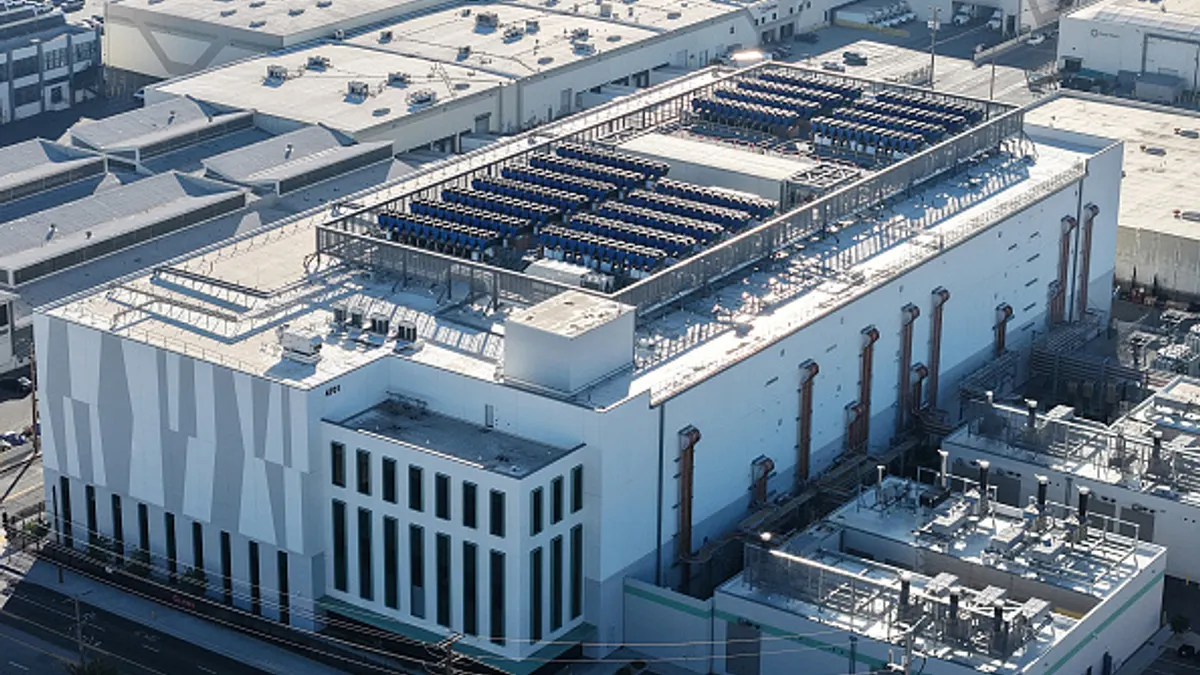
And because of the speed of technology in this space, nobody knows what a data center is going to look like in 15 years, a standard contract length in today’s market, Bergan said. As a result, developer landlords are being very mindful about the data center’s shell — its footprint and power capabilities — to ensure that it can support future growth or upgrades that might be necessary down the road.
“Maybe your building’s a little bit bigger than you otherwise need, because the racks are getting larger. The structural load capabilities have gotten tremendously higher, just because the racks are getting heavier and heavier,” he said. “[They are building] for what you think is going to happen in the next 5, 10 or 15 years, rather than building precisely to meet the specs of this data center today.”