Findings by a federal watchdog that students missed 3.5 million days last year because of plumbing, HVAC and other problems at public schools validates what facilities professionals have been saying for years, the head of the National Association of Energy Service Companies says.
Facilities professionals have been raising the alarm that $80 billion in backlogged school maintenance and repairs is impacting students’ learning experience, and now that’s been quantified, said NAESCO Executive Director Timothy Unruh. The U.S. Government Accountability Office released findings last month showing that a fifth of school districts had to cancel classes at least once in the 2024-25 academic year because of facilities issues.
“What we find is that our next generation is being negatively impacted by the condition of our schools,” Unruh told Facilities Dive. “The U.S. school system has an opportunity to make improvements in student performance simply by investing in their facilities. So, the report gives us solid evidence that we need to look more at how we make those investments.”
NAESCO members are energy service companies, or ESCOs, that work with building operators to retrofit facilities to improve energy performance and reduce emissions. Although ESCOs focus on reducing facility energy costs, it’s not uncommon for facilities to use the HVAC, lighting and window changes that ESCOs typically make as a starting point for broader upgrades for a long-term extension of the building’s useful life, Unruh said last year in a webcast.
“They get a building that’s been renovated and no longer has a capital requirement hanging out there or some deferred maintenance thing they haven’t had time or money to do,” he said.
Whole-building approach
The GAO report suggests schools would benefit from the whole-building approach that ESCOs take, especially given the difficulty they face accessing capital, Unruh said.
In the performance contracting system that ESCOs typically use, schools come up with as much funding as they can and the ESCOs — which get paid based on the long-term energy cost savings that are generated — absorb the difference.
“If you don’t have access to funds, then the performance contracting model is an ideal way to move forward,” he said. That model “uses whatever existing funds you have combined with savings they can achieve and mix those two together to create a … project to get as much [work done] as possible.”
K-12 schools are the ESCO industry’s bread and butter. Last year, schools accounted for a third of ESCOs’ work — about $3 billion in services out of an industry total of roughly $11 billion, according to an analysis of the ESCO industry by Lawrence Berkeley National Laboratory released earlier this month.
Schools have been relatively heavy users of ESCOs in part because of the financial role ESCOs play, Unruh said.
“The ESCO has a vested interest in the project,” he said. “The contractor, architect, engineer — they don’t have that.”
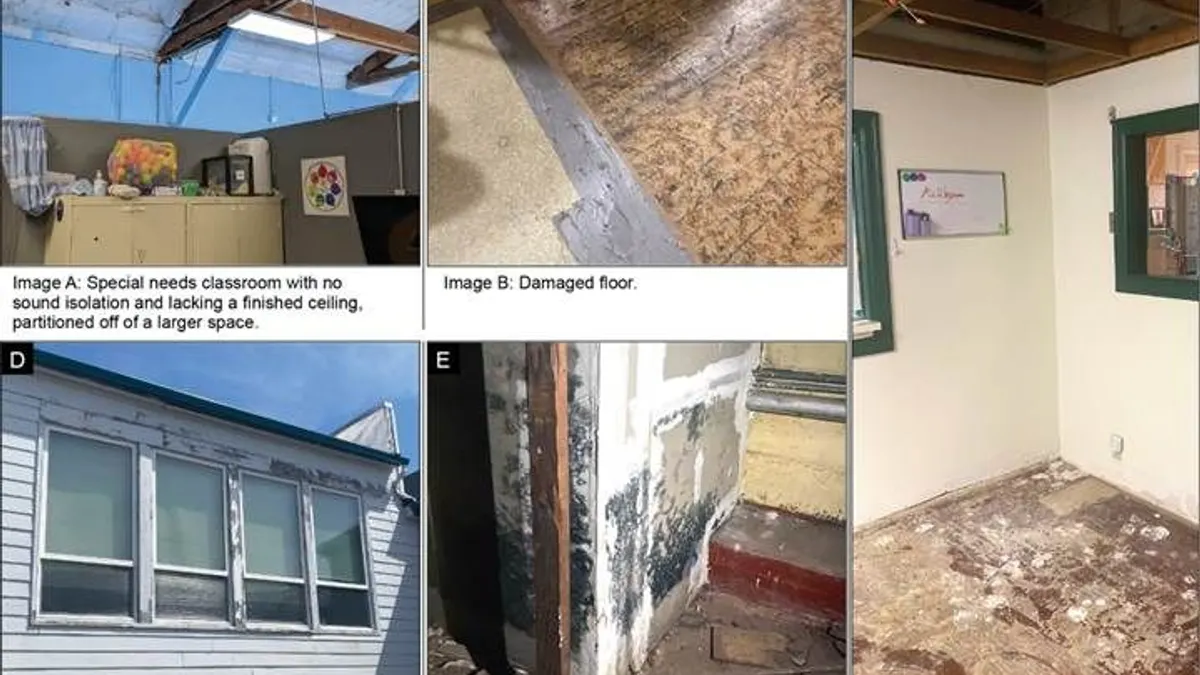
The GAO report identified plumbing emergencies, extreme classroom temperatures, poor indoor air quality and building structural problems as the main reasons for school closures. School districts spent more than $200 billion last year on operations and maintenance, capital improvements and bond interest payments, almost a quarter of their budgets.
Despite the spending, officials in more than half of the school districts say their budget is insufficient to meet the maintenance and repair needs of their buildings.
One of the main ways available to them to get funding — bond issuances — is hard for many districts to implement, particularly in areas with low tax bases, according to a 2024 assessment of school funding disparities. The assessment focuses on California, but a lawsuit in Arizona used similar findings to argue the reliance on bond funding leads to widespread educational disparities by tax districts.
To the extent districts get bond issuances passed, it’s often for more teachers or new assets, Unruh said.
“Fixing something old doesn’t necessarily add a new benefit, it just keeps an old benefit alive,” Unruh said. “Public buildings across the country are faced with that. [Taxpayers] love to hear a school district is adding more teachers, but you don’t necessarily want to hear they’re going to spend all your money replacing boilers.”
Schools having trouble getting financing could work with ESCOs offering energy as a service, or EaaS, but it’s an unfamiliar concept to taxpayers and could raise concerns if they believe schools that use it are giving up control of their assets, Unruh said.
In the energy-as-a-service model, the ESCO assumes control of the new HVAC and other systems it deploys in exchange for a fee. It’s a business model that commercial facilities are starting to show an interest in, but its approach is a hurdle in the public sector, he said. State or local law might not permit it.
“I would say there’s a desire among public facilities operators to do something like energy-as-a-service, but there’s not always a clear, clean pathway for them to do that,” he said. With schools, “you can only do what the legislation specifies you can do [and] the legislation doesn’t [necessarily] specify energy as a service.”
The idea of handing over control to a private company could also be a roadblock to taxpayer acceptance. “Imagine you’re a taxpayer in a school district and the school district announces we’re going to sell off the assets of our boilers, chillers, lights and control system to a company X that will now manage that, and we’ll pay a fee to them,” he said. “That could be sensitive.”