Dive Brief:
- Energy service companies generated revenue of $10.7 billion in 2024, a 45% increase over 2018 in inflation adjusted terms, and are on track to generate $15 billion in 2027, Lawrence Berkeley National Laboratory says in a report.
- Schools and other public facilities are the biggest users of the services provided by ESCOs, which help facilities make energy efficiency and other improvements for more cost-effective operations. ESCOs are generally paid based on how well they meet efficiency targets.
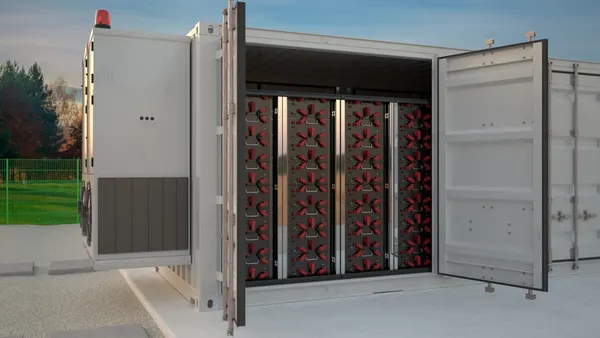
- On-site energy generation is the most common energy security measure facilities are deploying, followed by battery storage and microgrids. “The ESCO industry continues to show strong growth over time,” LBNL says in its industry report, released Sept. 15.
Dive Insight:
Energy service companies have been operating for decades, but their growth has been accelerating in recent years as energy costs rise and state and local governments set performance standards to improve building efficiency and reduce emissions.
Federal policies in prior administrations have helped their growth as well. “The Energy Act of 2020 accelerated market growth by requiring federal agencies to implement at least half of identified efficiency measures through performance contracting,” the International Energy Agency says in a report released earlier this year. “This created stable public sector demand for ESCO services and nearly doubled the market compared with pre-2020 levels.”
Historically, schools, hospitals and public agencies at the state and local levels have used ESCO services the most of all facility types, and that continues, the report says. K-12 schools and public agencies accounted for $5 billion in ESCO revenue in 2024, while spending by federal agencies dropped.
In almost 80% of projects, the ESCOs measure and verify the facility’s energy performance as well as implement the efficiency measures. In the other cases, facilities have a third-party company or an internal team do the measuring.
Commercial and industrial facilities make up a small share of the market — 6% — and mostly they hire ESCOs not for performance contracting but design-build services. Almost 70% of the work ESCOs did for C&I companies was design-build in 2024. With design-build, the ESCOs manage the renovation or construction of a project but don’t enter into a long-term contract to manage energy use.
The lion’s share of facilities use conventional financing like loans, leases and bonds to pay for upgrades, typically in amounts that cover the entire cost. About 20% use a combination of financing and cash.
Facilities in the Northeast and Mid-Atlantic regions are the biggest users of ESCOs on a per-capita basis, spending between $35 and $36 per person for their projects, while the Pacific Coast is the biggest user on an absolute basis, spending $29 per person.
What the report calls the West North Central area — North and South Dakota and some nearby states — spends the least, $23 per person.
The biggest ESCOs — those with $300 million or more in revenue — manage about 70% of the business, a share that’s been growing. In 2018, big companies did half the business, while small and mid-sized companies split the rest. Now small and midsized companies together are doing about a third of the business.