When a rural hospital in Colorado sat down with its construction team this month to work out the details on a $65 million addition, it was planning to include full-building generators to smooth out its power supply. But it decided to take a different approach, said Matthew Noll, chief operating officer of Alliant and one of the team members.
It’s now looking at a system that will use a variety of renewable technologies — combined heat and power, geothermal and solar — to generate electricity, and add a battery system for storage.
The power and storage technologies are eligible for Section 48E federal investment tax credits that could put between $4 million and $8 million back into the hospital’s pockets, said Noll, whose company helps organizations tap into the credits.
“About 17% to 20% of the $65 million development cost is going to go into your heating and cooling, so you’re looking at about $13 million,” Noll said in an interview with Facilities Dive. “Between 30% and 50% of that would equate to your credit. So, this $65 million project should yield somewhere in the neighborhood of $4 million and $8 million in a credit. It’s not a bad day.”
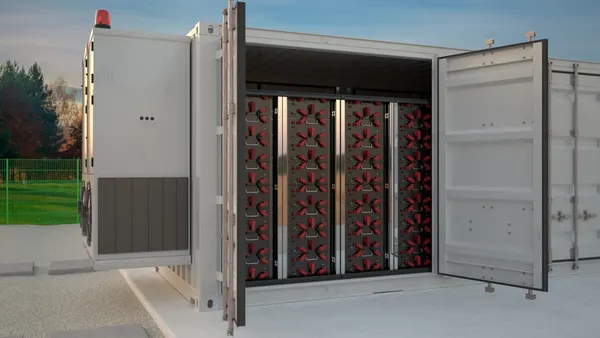
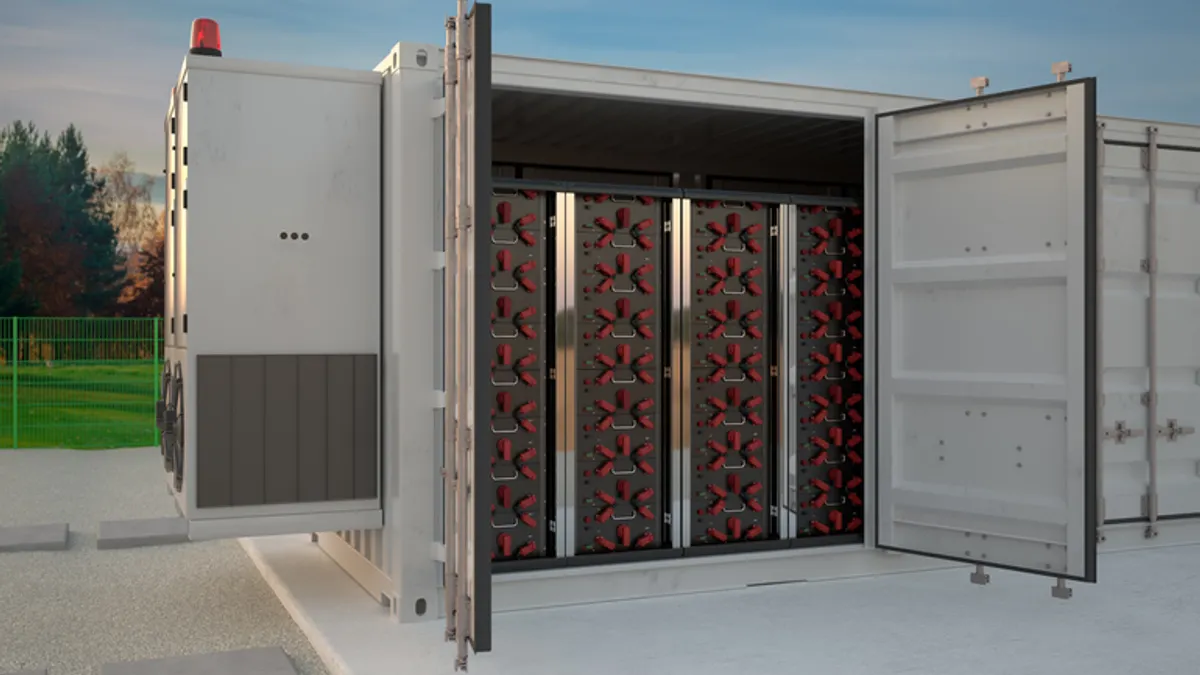
For facilities already connected to the grid, the credit can make lower energy costs possible by increasing the affordability of a battery energy storage system, which the building operator can use to store lower-cost electricity at night for deployment during the day, when rates are more expensive, Noll said.
“We’re seeing a lot of battery energy storage systems,” he said.
For nonprofits and public facilities that don’t need the credit for tax purposes, the federal government sends them the benefit. “It becomes a payment direct from Treasury,” he said.
Private companies that don’t need to offset their taxes can sell the credit to other companies that do. “The market’s bearing somewhere between 85 and 93 cents on the dollar,” he said. “I’ll pay you the cash. It’s tax free and you can do with it what you will.”
In a typical case, a small manufacturing plant might add a battery system to store night-time energy to run high-energy-use machinery, like a lathe, furnace or kiln, during the day. “Take that cost entirely out of the equation, and their power consumption goes drastically down,” he said.
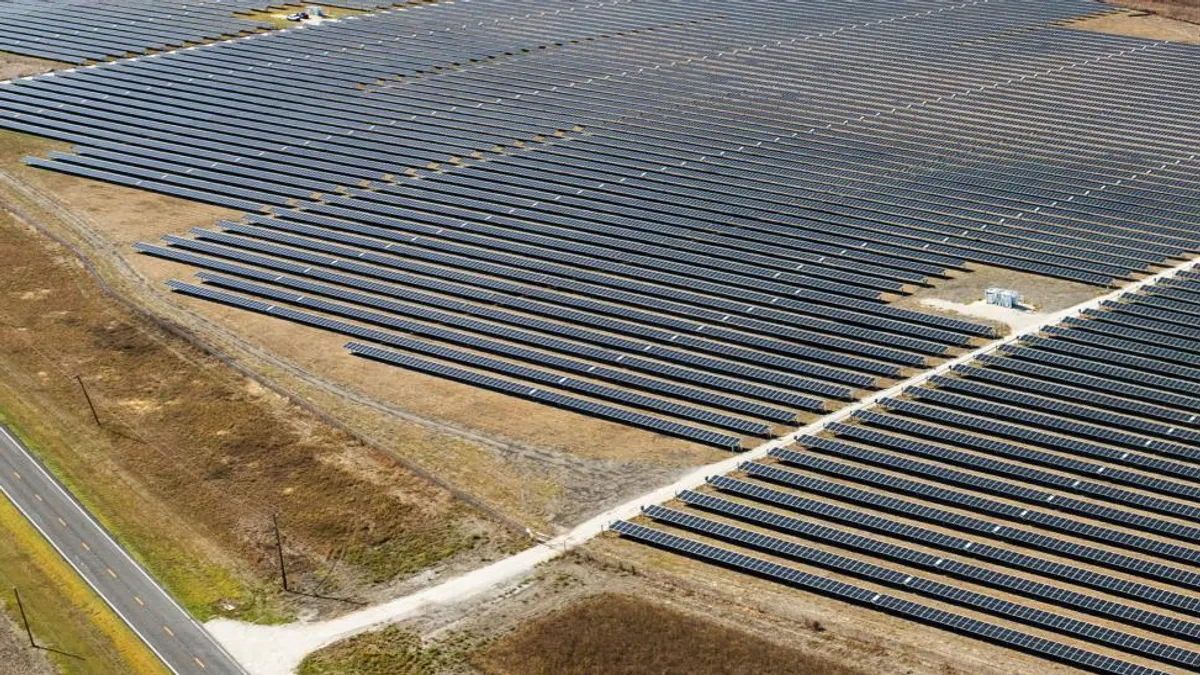
The Trump administration in the One Big Beautiful Bill Act slashed the tax credit for a number of technologies, including solar and other alternative energy systems, but solar remains eligible if it’s paired with a battery storage system. The law also left geothermal tax credits in place.
“There are safe harbors,” Noll said.
For organizations that otherwise wouldn’t have considered a project, the eligibility of solar combined with storage changes the calculation, Noll said. A small manufacturing or other type of facility might install panels on top of its warehouse or parking canopy in addition to adding battery storage to leverage cheaper nighttime rates. “Now they’re really drastically reducing their energy footprint and their costs and they’re becoming more competitive in the marketplace,” he said.
It helps that battery storage technology has improved in recent years, he said. “Historically, you have battery issues and complications,” said Noll, referring to the short lifespan and fire risk that have been problems in the past. “They’re great systems” now, he said.
For the projects to be eligible, the components of the solar arrays and other renewable systems must meet domestic content requirements, which have changed in recent years. While guidance has been released, not all of the foreign-entity questions have been answered, specialists in the field say. But many organizations are pricing in that uncertainty so they can go forward with their projects, according to an analysis by Crux Climate, which connects clean energy projects with investors. “Buyers are pricing [prohibited foreign entity] exposure directly rather than waiting for full regulatory clarity,” says the Crux analysis.
Smaller facilities looking at power, storage
Most of Alliant’s clients are larger facilities — hospitals, universities and K-12 schools — which use the credit to bring in alternatives to generators, which can be noisy and, if they’re diesel, release a lot of emissions. And with gas and diesel prices rising, generators are getting expensive to fill.
But the company’s also seeing more small and mid-sized facilities interested in adding power, energy storage or both.
“Folks that would never have explored a solar-battery solution in the past are saying, ‘Let me look at this, because if I can get 40%, 50% of that back, the economics of it change,’” he said. “Especially when [they] add the time value of money and the energy cost savings over, say, a 7-10 year run.”
A phase-out of the tax credits begins in 2032, but there’s bipartisan support to extend them, Noll said.
Rep. Brian Fitzpatrick, R-Pa., along with a handful of other lawmakers, introduced the American Energy Dominance Act, H.R. 8477, earlier this year that would remove the accelerated deadlines that OBBBA placed on the 48E investment tax credit and other energy incentives, including the 179D Energy Efficient Commercial Buildings Deduction, which gives facilities an incentive to install energy-efficient HVAC, lighting and insulation.
“If America wants to lower costs, strengthen its energy supply, and build with confidence for the future, then we need a policy framework strong enough to support the scale of that work,” Fitzpatrick said when introducing the bill in April. “That means certainty. When the rules are unstable, projects stall, hiring slows, investment hesitates, and the people counting on progress pay the price.”