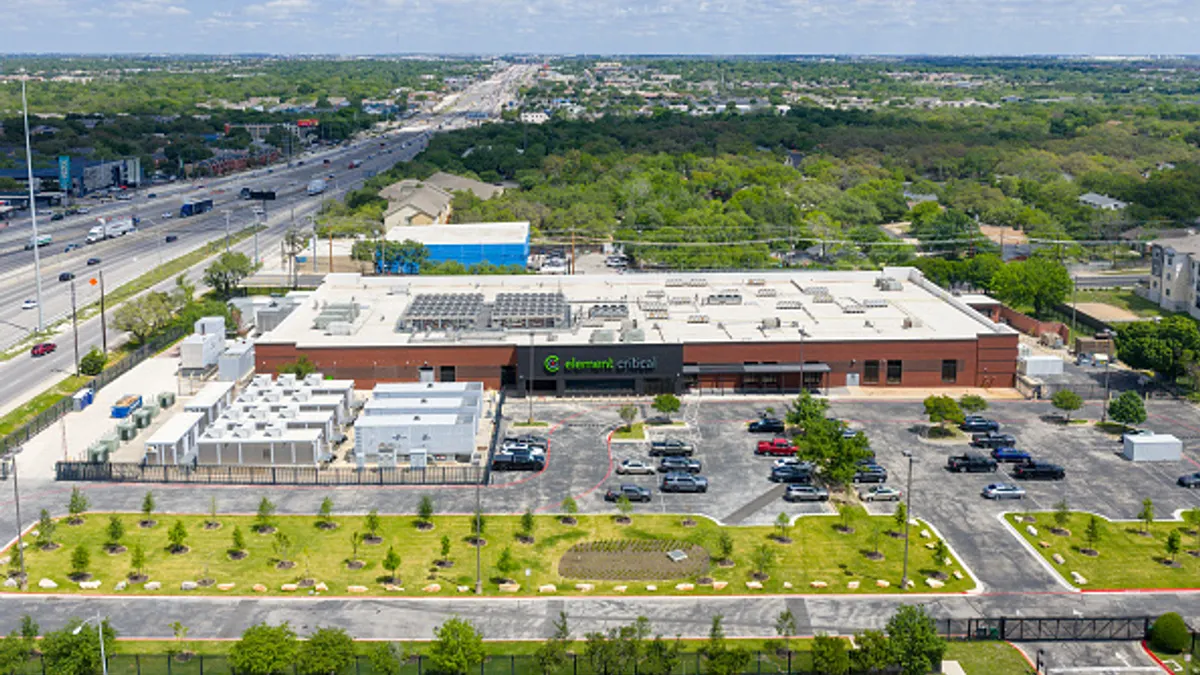
Data centers that have on-site turbines or batteries for supplemental power face a higher fire risk than those that just connect to the grid, says Tyler Ahrenhold of commercial property insurer MSIG USA.
“Your risk of fire or explosion goes up tenfold,” said Ahrenhold, who heads up the company’s construction and inland marine division. The “maximum foreseeable loss is much more critical or severe.”
The higher risk is a management issue for operators and an underwriting issue for insurers as states and municipalities make bring-your-own-power a condition of project approval.
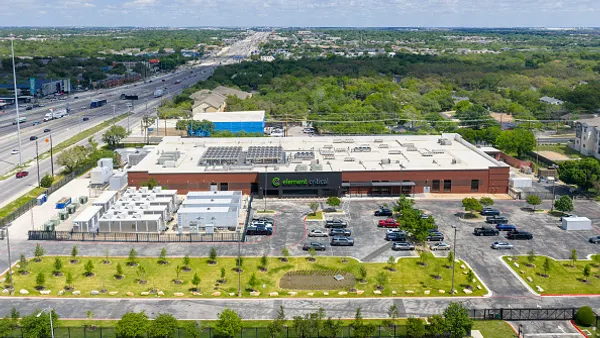
Ahrenhold says insurers rely on best practices more than codes to gauge whether a building team has deployed on-site power in the safest way. For his company, minimum spacing between a power generation or battery source and a nearby building is 100 feet. “That can help prevent the spread of fire from one structure to another,” he said. “It’s certainly something we’re mindful of, because there isn’t quite a regulatory code that we can lean on that would prevent a critical scenario from an inadequate spacing perspective or a not-ideal site plan,” he said.
Although his role is to insure the construction phase of data centers, it’s not uncommon for building operators to roll over the coverage once operations begin, he said. The policy typically comes up for renewal once a year after that.
Fire is by far the biggest risk, but it’s still relatively rare, according to a report by Allianz, another commercial property insurer that operates in the data center space. Of roughly $815 million in claims in Allianz’s loss database, half [that amount has] been for fires, the company says.
The fires are being driven in part by the use of batteries. “Lithium-ion batteries, increasingly used in or near server environments, can create the risk of thermal runaway — a self-sustaining, high-temperature fire that is difficult to control,” the report says.
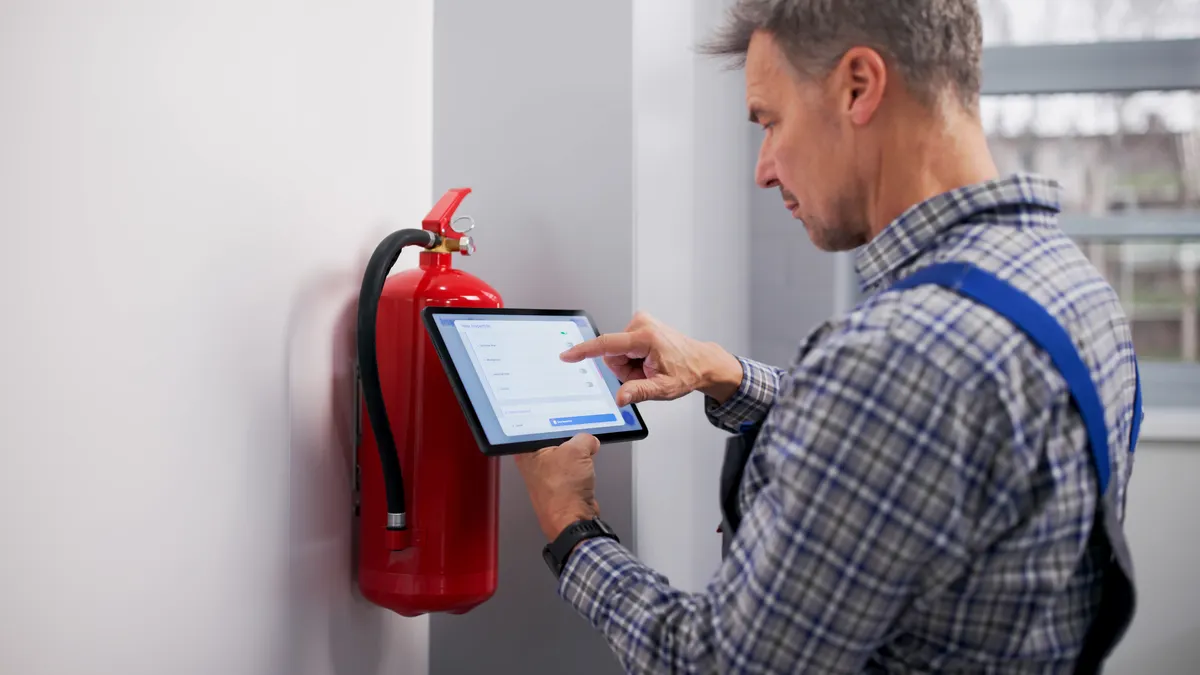
The fire suppression systems themselves can introduce risk, the report says. “Accidental activation, vibration, noise, contamination, or humidity [can damage] sensitive equipment,” it says.
Not all data center batteries are lithium-ion. Google is among a handful of companies with data centers deploying iron-air batteries, which are considered safer than lithium because they use a non-flammable water-based electrolyte. But commercial use of the batteries is relatively new and their efficacy over the long-term remains to be seen.
The deployment of data centers in what Ahrenhold calls elevated severe convective locations — areas in the Midwest and elsewhere that are prone to high winds, flash flooding, hail and tornadoes — adds its own layer of risk. So insurance underwriters want to make sure the building envelope, windows and doors are solid.
“Understanding how these structures were designed to protect against some of that critical wind speed is good to know,” he said.
To a greater degree than other facility types, data centers are expensive to insure because of the equipment inside them. The GPUs and other computer equipment tend to be several times more valuable than the buildings they’re in.
“It’s very sensitive equipment,” Ahrenhold said. “So, the introduction of water is obviously very scary. They also produce high heat levels, so making sure that the facilities are climate controlled … can alleviate a lot of risk from a fire and combustibility perspective.”
The cost of the facilities — some last year were in the $10 billion to $20 billion range, according to one estimate — means the insurance is going to come from multiple companies, not just one, Ahrenhold said. The degree of his company’s confidence in the building design and engineering and the team that’s overseeing it helps determine how much risk it’s willing to take as one of the participating insurers.
“If we feel folks are inadequate or inexperienced, or cutting corners in any sense, we have the ability to scale back our participation,” he said. “Maybe we take a smaller line … or we decide to pass…. That’s always in our pocket as well.”
Some 100 gigawatts of new data center capacity is expected to become operational in the U.S. between now and 2030, JLL estimates.
“What’s very cool about this time period is we’ll never see anything like this again,” said Ahrenhold. “The AI data center boom is said to be a 3-5 year boom. We’re going to do our best to take full advantage of it but also be smart and cautious.”