Dive Brief:
- About one in five school districts had to cancel school at least once in the 2024-25 school year because of facilities issues, causing some two million students to lose an estimated 3.5 million days of learning, the federal government’s investigative arm reported to Congress last week.
- Plumbing emergencies and extreme classroom temperatures were the main causes. Indoor air quality and building structural problems were also cited.
- “America’s school infrastructure faces significant issues,” says the report by the U.S. Government Accountability Office. “Nearly half of U.S. public school districts had chronic facility issues in at least one school … about 14 percent were considered to be in poor or very poor condition…. An estimated 15 percent also had serious safety concerns regarding at least one of their schools [and] district leaders commonly reported their schools to have compliance issues related to accessibility, fire, safety, and other building code requirements.”
Dive Insight:
School districts spent about $214 billion, or about 22% of their budget, on operations and maintenance, capital improvements and bond interest expenses in the 2024-25 school year, according to GAO, which based the funding estimates on U.S.Census Bureau data.
Officials in more than half of the districts say their budget is insufficient to meet their schools’ maintenance and repair needs, and although using bond proceeds is a way to narrow the funding gap, it’s hard to secure money that way, especially if the area doesn’t have a high enough tax base to support it, the report said. “A low local tax base hindered efforts to fund school facility needs in about half of districts (an estimated 55 percent), with the highest rate among rural districts,” the report said.
The federal government is not a significant source of funds, most of which is for narrowly defined needs and over limited time periods, and state funding tends to come with its own hurdles. “An estimated 73 percent said that limited state formula funding for facilities hindered their ability to meet their facility needs,” the report said.
Just under half of school districts are having to manage chronic facilities issues, mainly water intrusion from leaks and excessive heat or cold in classrooms, says the agency, which surveyed school officials, met with facility organizations’ leaders and made site visits to a representative sampling of schools in Oregon, Maine and Alabama.
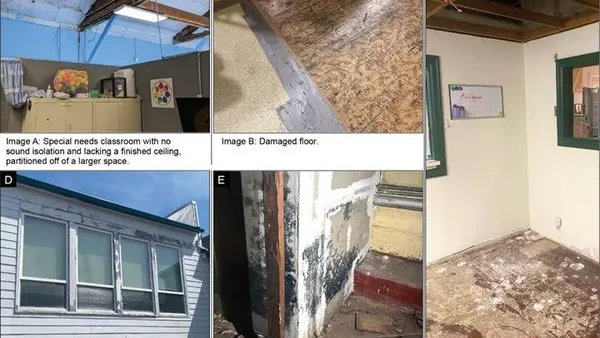
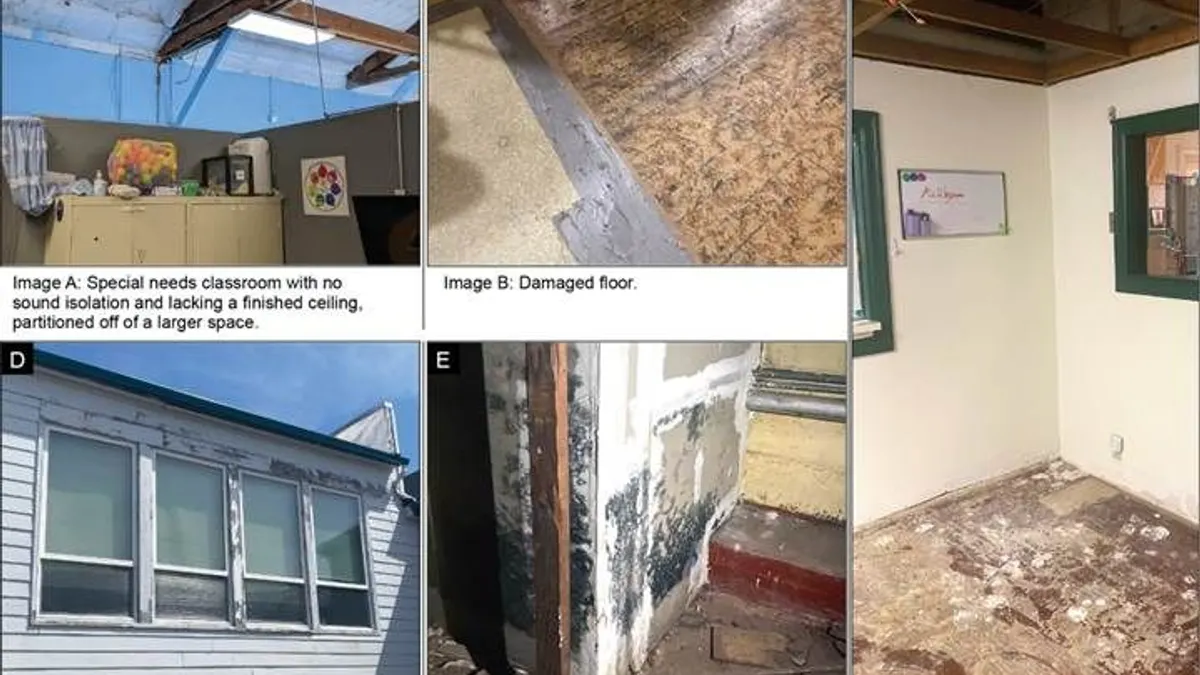
Inadequate funds have forced school leaders to make tough choices, the report said. For example, roof replacement can cost millions of dollars, so districts tend to patch them. “Schools we visited had damaged ceilings, floors, or electrical systems due to roof leaks and water intrusion,” the report said. “One teacher told us that every time it rained heavily, there was ‘a little waterfall’ in her classroom, which distracted students and was potentially dangerous.”
Because of outdated or otherwise inadequate systems, classrooms could swing from 90 degrees or higher to below 60 degrees, depending on the weather, making learning hard, the report said.
When temperatures peak at one school, GAO said, “teachers and students would relocate to a cooler part of the school (e.g., the cafeteria). In some cases, teachers held class outside because it was cooler than inside. However, another teacher said moving her class was so disruptive that she tried to avoid it.”
Taken together, building problems tend to be a source of distraction, lead to low morale and can cause illness or injury. The report found 13% of districts had chronic problems with students and staff reporting discomfort in the classrooms.
“Leaders at one school told us a coworker got sick while teaching due to excessive heat in the classroom and had to be taken to the hospital,” the report said. “School leaders in a different state told us a teacher reported their chronic health problem had been exacerbated by poor air quality at a school with extensive mold and poor ventilation.”
Districts that have managed to maintain their schools have found ways to make preventive maintenance a focus, among other coping strategies, according to the report.
“One facilities director … led a multi-year effort — with support of the chief financial officer — to install sophisticated utility monitoring systems throughout the district,” the report said. “That allowed his team to optimize energy use and quickly detect and repair problems. These efforts required an up-front investment but ultimately saved the district hundreds of thousands of dollars annually.”
School leaders credited knowledgeable facilities staff with saving money by knowing what is, and isn’t, a good use of resources. “Developing internal expertise was important to ensure that vendor-proposed initiatives were good investments,” the report said. “District leaders described unscrupulous vendors who attempt to sell energy-efficiency or building-control packages to districts with the promise of cost-savings that appeared unlikely to materialize…. Vendors frequently promised savings for schools that ‘did not always add up.’”