More building owners appear to see the value of on-site energy as the technology and cost for power generation and storage has improved, says an attorney who works at the crossroads of energy and real estate.
“I’ve seen more [of these projects] in the last few years,” David Streier, a shareholder at Fredrikson & Byron, said in an interview.
The bids that building operators get from contractors to add power or storage have dropped from when he first started working in the field 15 years ago, said Streier, who mainly works on the power side of deals but has represented the facilities side as well.
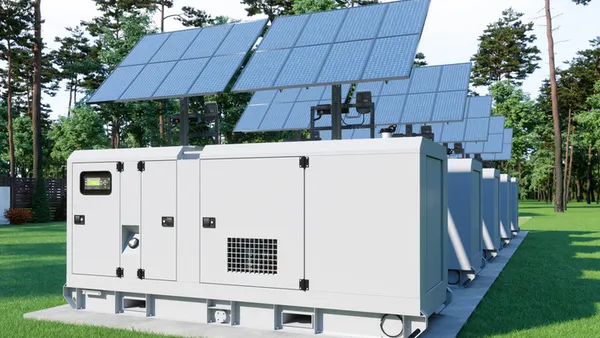
“Costs have come down so far that this is more attractive to a company,” he said. “If [building owners] are doing a new construction or some sort of renovation or expansion, [adding on-site power or storage] is an incremental cost in the budget — a line item — but it’s not just an expense; it’s going to help with energy savings and eventually it’ll have a payback, a return on investment. So, you pay a little bit more or you borrow a little more while you’re doing your project, but you get some energy savings over time and you might get some … goodwill out of it.”
Streier credits state and federal incentives for helping to bring renewable energy technology costs down by accelerating the manufacturing of renewables and energy storage — but even with some federal tax credits sunsetting, the long-term trajectory of the technology is solid, he said.
Independent power producers and others on the generating side will continue to build projects, which will help building operators on the facilities side looking for partners to reduce their grid exposure. “They might not be growing their pipelines as much as they had been, but they’re executing on the projects they have and pivoting to new ways … to adapt,” he said.
Streier says he’s seeing more facilities treat on-site generation or storage as part of their business strategy. “Energy storage has become so mature now that it’s acceptable for a CFO or a board to approve it,” he said. “They see their competitors doing it. Even without [federal incentives], they just want to do it because it's part of their sustainability goals.”
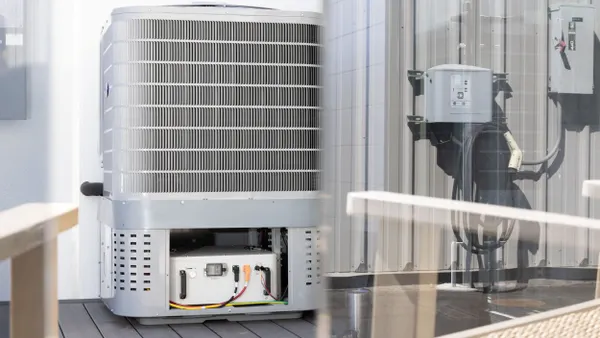
Lithium-ion remains the most common technology for battery storage, but with innovations in other technologies, including long-duration iron-air batteries and thermal storage like graphite blocks, building operators could have more storage options to consider going forward, he said.
Iron-air batteries show promise because of their long duration — as much as 100 hours, according to Form Energy, which signed a deal with Google and Xcel Energy in August to provide 30 gigawatt-hours of battery energy to one of Google’s data centers. Graphite blocks are a thermal technology that stores excess electricity, from solar arrays or other sources, as extreme heat that can be deployed later.
“The battery technology that’s coming to market is pretty exciting,” he said.
Whatever happens with the federal investment tax credits and production tax credits that are being phased out — whether they’re brought back in some form — the long-term trajectory of solar and other renewable projects appears solid, he said. For that reason, building operators looking to partner with power companies to bring generation on site, or to add storage, should continue to benefit from the maturing technology, according to Streier.
“I’ve been through this cycle several times,” he said. “Our clients are not closing up shop.”