Dive Brief:
- Trane Technologies’ team of in-house service technicians and account managers who talk with customers about their HVAC needs is one of the company’s biggest growth drivers, CEO Dave Regnery said in a podcast June 1.
- Regnery doubled down on the global HVAC manufacturer’s plan to be a sustainability leader, despite the headwinds that sustainability is facing in the United States. Repurposing the 30% of energy that buildings waste is where future growth will come from, he said.
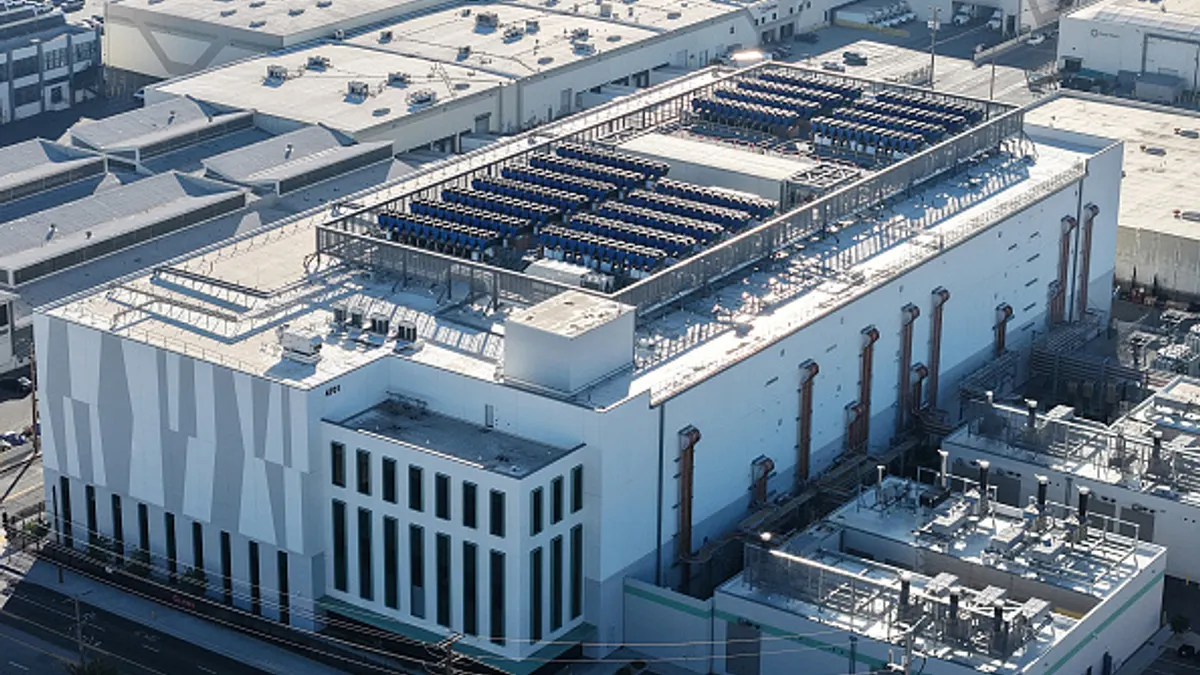
- He noted the concern over data centers’ energy use misses the fact that the buildings are among the most efficient users of energy of any facility type.
Dive Insight:
Regnery is a decades-long veteran of Trane who stepped into the CEO role five years ago. He credited the company’s large in-house services team — a third of its employees — as one of the biggest advantages it has over other HVAC manufacturers.
“When you have that type of model, you see where the opportunities are in the different verticals,” he told Adam Serwer, editor at large at Barron’s, which hosted the podcast. “Our account managers, our sales force — they see where the opportunities are at a local level and they will penetrate that particular vertical.”
Trane competes in 14 industry verticals, including data centers, education and hospitality. Regnery said the account managers and technicians that comprise its services team develop their domain expertise from their contacts with those managing HVAC systems.
“They have domain expertise that will allow them to traverse those different verticals and look for the opportunities,” he said. “We’re very strong in data centers, but we’re also very strong in all these other verticals. The reason being is the breadth of our portfolio and the domain of expertise of our sales force.”
What makes data centers so efficient is their reuse of the energy they consume, Regnery said. Unlike other building types, which lose a third of their energy as excess heat that’s released outside the building, data centers channel their energy savings into computing power.
“In the data center space, if you save energy, it’s not like in a building where it goes to the bottom line,” he said. “In a data center, when you save energy, you just get more computing. So it’s just moving it to the computing side.”
Regnery said the “mind blowing” fact that buildings lose 30% of their energy through inefficiency provides a growth path for the company. “We know how to solve it,” he said. “We have the technology today.… Some of it is sophisticated controls. Some of it is the mechanical equipment itself. Some of it is upgrades to the mechanical equipment. Some of it is the infrastructure that surrounds the equipment. Those are all technologies that exist today.”
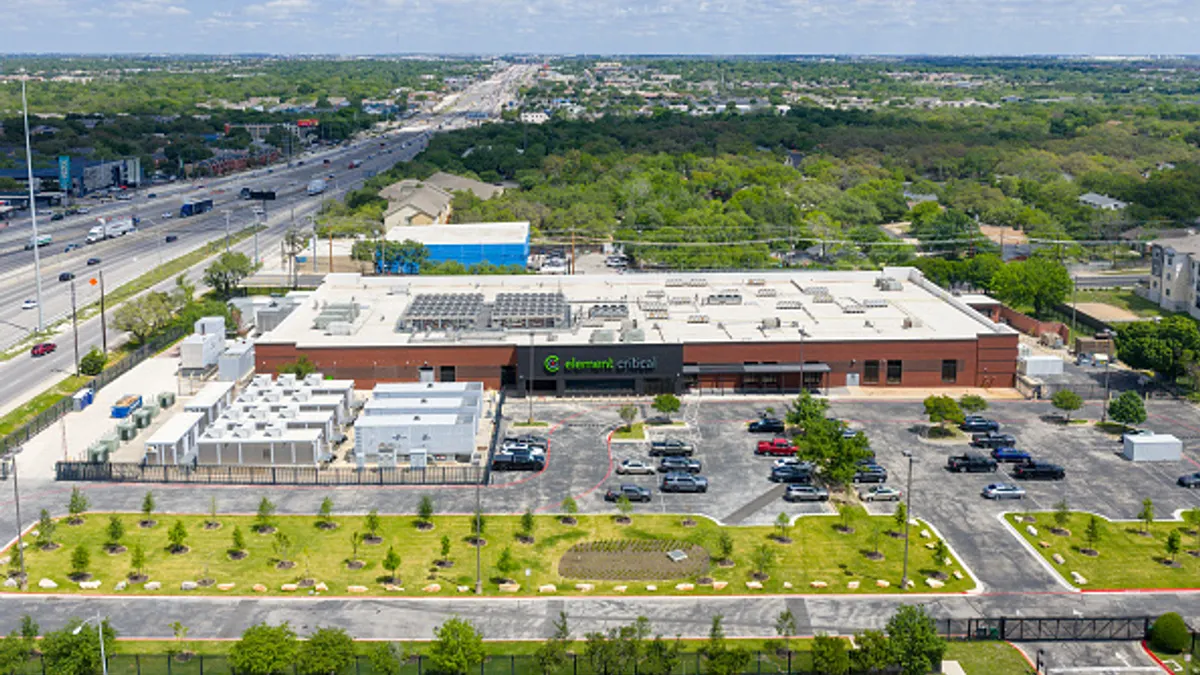
Trane works regularly with hyperscalers, colocation providers and chip makers to design thermal systems that are intended to meet future data center needs based on where computing power is headed — what are called reference designs. Out of that work, he said, the company applies those innovations to other verticals.
“Those products come back around to our core business,” he said.
The company’s strategy of manufacturing its systems where it sells them has helped it manage volatility caused by tariffs, Regnery said. But the advantage it gets is more foundational than that.
“I was with members of the [Trump] administration a few months ago, and I said, ‘Look, we’re your model company,’” he said. “‘We are in the United States — manufacturing in the United States. We do all of the assembly here as well. Many manufacturers in the HVAC space do most of their assembly in Mexico. We do it right here in the United States.’”
The company has 21 plants in the U.S. and one plant in Mexico, he said. It also has plants in Europe, the Middle East and Asia to service those markets.
To keep its pipeline of some 7,000 in–house service technicians full, it has between 300 and 400 trainees at any one time going through two- and four-year programs. They also bring in all 7,000 technicians twice a year, in rotation, for continuing education.
In April, the company announced opening a training center at its headquarters in Davidson, North Carolina. The facility has the capacity to provide 100,000 training hours to 4,500 students a year, the announcement said.
“It’s one of those things that’s, like, ‘Wow. This company is interested in me. They want to make sure I have the best skill set in front of my customer,’” he said. “It’s just turned into this flywheel now, creating great technicians.”