Dive Brief:
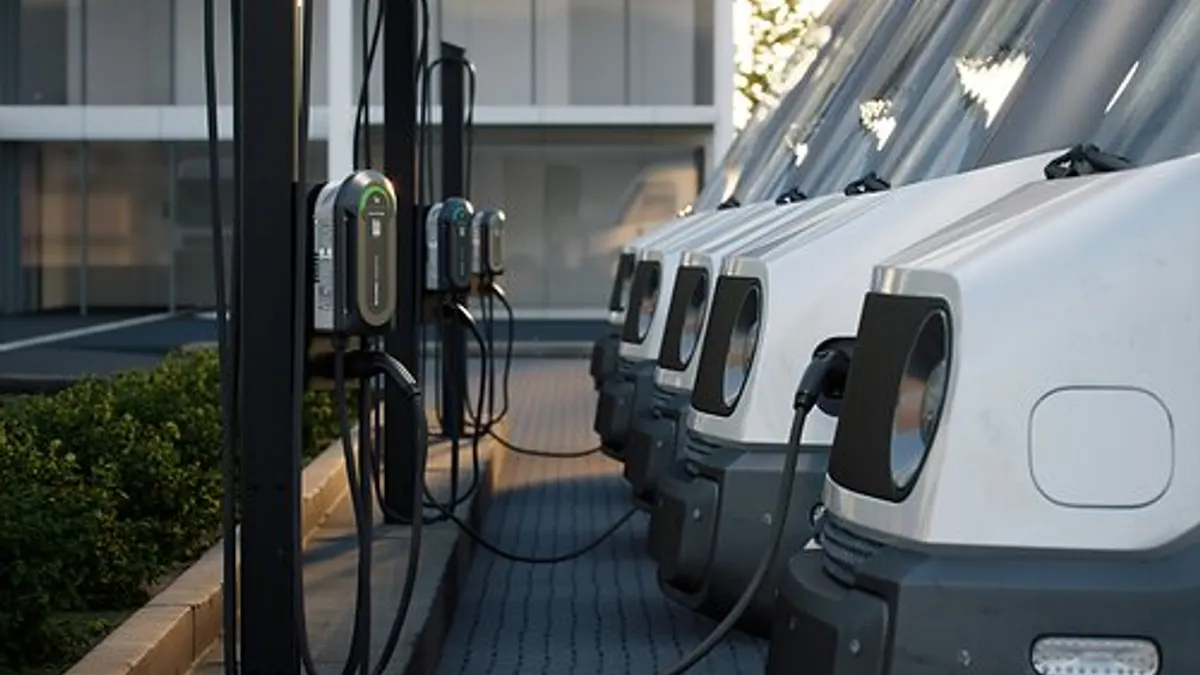
- Schneider Electric on Wednesday launched a commercial electric vehicle charging solution for fleets, workplaces, retail centers and “destination charging” hubs like hotels and apartment buildings, the company said Wednesday.
- Schneider Charge Pro combines outdoor-rated charging hardware with J-1772 and North American Charging System plugs and a proprietary EV Connect Software+ bundle that can receive over-the-air updates, Schneider says.
- Despite barriers like limited supplies of heavy-duty electric trucks and the Trump administration’s effort to neuter state clean-air regulations, industry surveys suggest fleet operators are preparing to electrify at least some of their vehicles. About one-third of states have followed California’s lead and adopted zero-emissions vehicle requirements, according to ForeFront, a commercial energy solutions provider.
Dive Insight:
In addition to worries about limited heavy-duty EV selection and a dearth of technicians qualified to work on electric trucks, some fleet operators surveyed by Mitra EV in February said they were daunted by the prospect of acquiring, installing and servicing charging infrastructure.
Schneider aims to address those concerns with Charge Pro, the company says. The entire solution — “from the hardware to the software and firmware” — is designed by Schneider Electric, “providing a single, integrated solution that performs reliably across sites,” Shawn Bonacorsi, North America head of electrification solutions for Schneider Electric, said in a statement.
Charge Pro combines commercial EV charging hardware with EV Connect’s cloud-based Software+, a charging station management system that allows site owners to manage access, monitor performance and earn income from charging sessions across multiple stations, Schneider says. Schneider is offering 48-amp or higher-powered 80-amp configurations that can deliver up to 19.2 kW of energy through a 240-volt circuit — enough to add 60 to 100 miles of range per hour to compatible EVs — through wall- or pedestal-mounted hardware.
Customers can opt to run installations through Qmerit, which Schneider says is North America’s largest EV charger installer network. Qmerit has nearly 24,000 certified installers in the U.S. and Canada, according to a Schneider product brochure.
New installations come with one year of the software at activation alongside driver support, “proactive monitoring” services to improve performance and a five-year hardware warranty, Schneider says. These features mean Charge Pro can reduce total cost of ownership and risk to owners and operators through reduced maintenance requirements and higher charger availability, Schneider says.
Charge Pro also aims to reduce friction for facility owners hoping to attract drivers of private EVs.
Each charger has a QR code that drivers can scan to begin charging sessions, rather than requiring them to download and set up a charging app and account on the spot. The chargers can be configured with either of two plug types: North American Charging Standard, or NACS, popularized by Tesla; and J-1772, found on most older American- and European-made EVs. While NACS has become the industry standard for new U.S.-sold EVs, many EVs on the road today have J-1772 plugs.
Bonacorsi said Charge Pro would “deliver a more streamlined and dependable charging experience” for facility owners and drivers.
“Property owners, fleet operators and workplaces are looking for EV charging solutions that are simple to deploy and dependable at scale,” he said.