Dive Brief:
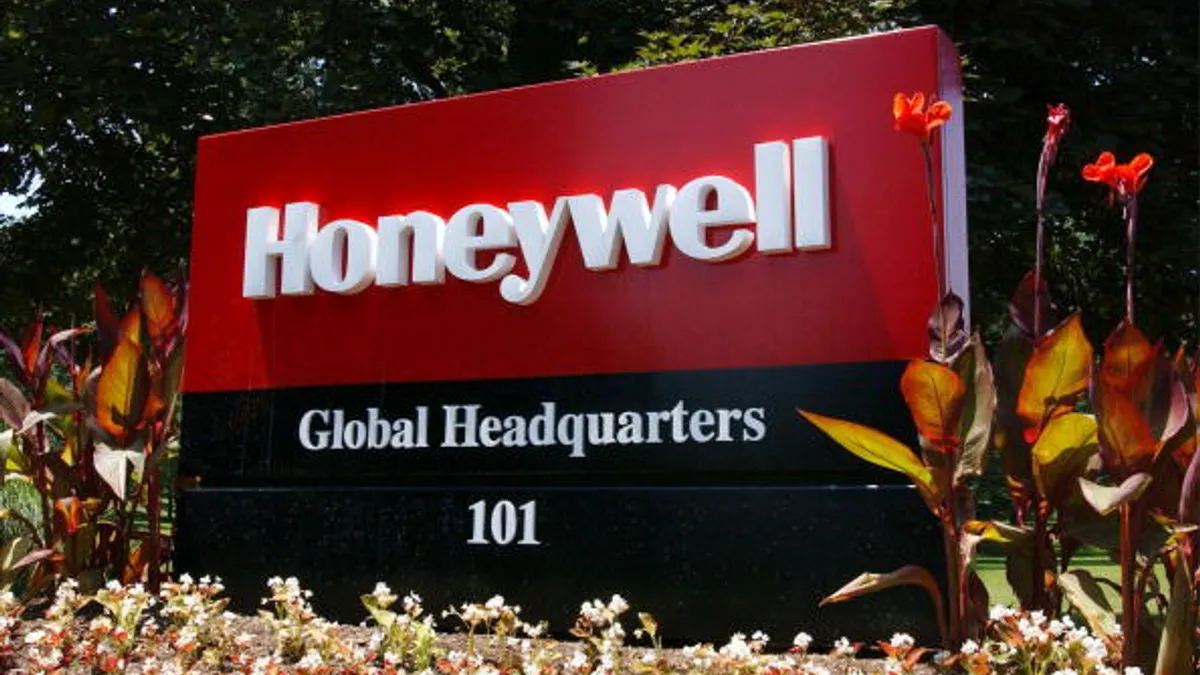
- Honeywell Technologies plans to launch building and process automation products in high-growth verticals like data centers, healthcare and hospitality in the second half of the year, CEO Vimal Kapur said on the company’s second-quarter earnings call Thursday, without elaborating on what they might be.
- Building systems and services generated 9% organic growth, driven by double-digit gains in products and continued strength in solutions, compared to 4% organic growth for the company as a whole, according to Honeywell’s earnings release.
- The earnings report is the first in which the company is operating without its aerospace division, which it spun off so it can focus on its automation specialties in building, process and industrial systems.
Dive Insight:
Building automation continues to be a growth leader for the industrial automation and process solutions giant. Honeywell building products grew 10% year over year, led by double-digit growth in its fire business and a 7% increase in building solutions, driven by services.
“Our simplified pure-play automation portfolio is well-positioned to benefit from long-term macro tailwinds,” said Kapur, referencing the proliferation of AI, increasing global energy demand, an aging population and increased consumption.
Orders grew 13% year over year, led by growth in the hospitality and data center verticals, according to the earnings report.
Data center operators’ interest in liquid cooling is playing into the company’s strengths in process automation because of the sensors that the systems rely on, Kapur said. “Our sensors are required as a critical input,” he said.
The company has been working with original equipment manufacturers as they design their liquid cooling systems, Kapur said. “All those OEMs are actively working with us to develop new strategies on how they're going to execute the liquid cooling,” he said.
Honeywell’s AI-assisted Forge cloud platform is becoming important to its growth strategy, although it remains a small part of its business, Kapur said. The company’s building and other automation products integrate with the platform, so once facility managers and others have the platform in place, the company can add products to it. This should help to boost the company’s annual recurring revenue, according to Kapur.
The platform “does pull in products to a certain degree,” Kapur said. “We continue to launch new offerings, and drive demand to our products…. The base is small,” he added. “We are going to inch from about $900 million to a little over $1 billion of ARR in that segment this year.”
The company expects inflation to persist in inputs important to its business, including electronics, memory, copper and labor, but Kapur said the rising prices aren’t affecting its strategy. “We're able to cover inflation with price,” he said. “We'll continue to … manage things with our customers. I would say generally things are very similar to what we assumed going into the end of the second quarter.”