Dive Brief:
- Cushman & Wakefield increased services revenue 5% year over year in the third quarter, though segment growth remained flat in the Americas as declines in multifamily property management and lower pass-through costs offset gains in its project and facilities management businesses, the firm said Wednesday.
- The commercial real estate services company was buoyed by its leasing and capital markets segments, which grew revenue 15% and 18%, respectively. Leasing growth in the Americas was up 19% and broad-based across all deal sizes, CFO Neil Johnston said on the company’s earnings call Nov. 4.
- “Corporate clients continued to show an appetite for executing long-term leases,” Johnston said on the call. “Industrial was particularly strong, with notable performance across many key markets, and office continued to be a meaningful contributor, reflecting sustained demand from occupiers for high-quality space.”
Dive Insight:
Revenue grew 8% to $2.8 billion, while services revenue grew 5% to $1.8 billion. Lower pass-through costs that tempered services revenue resulted from Cushman & Wakefield’s contract mix shifting towards self-performed services, Johnston said.
Despite the recent rise in interest rates, the firm has seen minimal impact in its capital markets business, though some deals are being repriced, which can elongate deal times, CEO Michelle MacKay said.
“On the economy at large, it's strong. Companies are investing at scale in technology, in modern logistics and industrial capacity, and in higher-quality workplaces for their people,” MacKay said. “That investment is physical. It needs land, building, energy [and] infrastructure. In other words, it needs the built world.”
At the same time, there has been so little new construction in recent years that high-quality space is scarce and gaining value as occupiers move up in quality and a diverse base of capital continues to seek real assets, she said.
“This creates a compelling supply-demand relationship,” MacKay said. “On the markets, if you center too much on the day-to-day volatility, you can miss the transformation. You can't let the perceived risk obscure the much larger opportunity. What is happening in the economy is a fundamental transformation, one we believe will create opportunity for years to come.”
MacKay believes that the company still has room to run in office leasing with demand clearly improving and absorption continuing to strengthen, but supply is becoming a major tailwind.
“It’s no longer growth in just a handful of markets. Sixty-percent of U.S. markets posted positive net absorption over the past year. Companies are starting to make longer-term commitments,” she said. “People aren’t as focused on it, but office deliveries … have historically run around 50 million square feet annually, and over the next few years, that’s going to drop to seven million square feet. That’s going to put good pressure on rents, especially for the best spaces.”
Although Cushman & Wakefield noted declines in its multifamily property management side, Johnston attributed this to client transitions from last year and said the company is still doing a lot of work in that sector.
“We are most encouraged by what we are seeing around our facilities management business,” Johnston said. “In the Americas, you are seeing strength in project management, and that momentum is actually building. You are seeing strong facilities management offset by [self-performed services].”
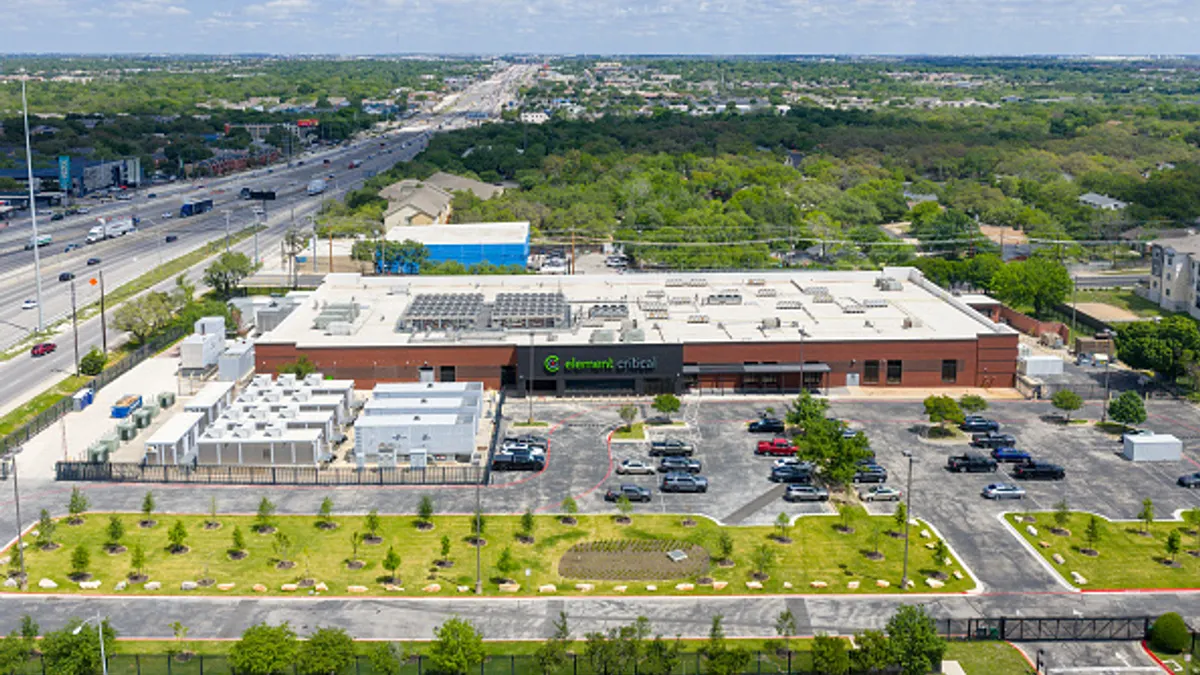
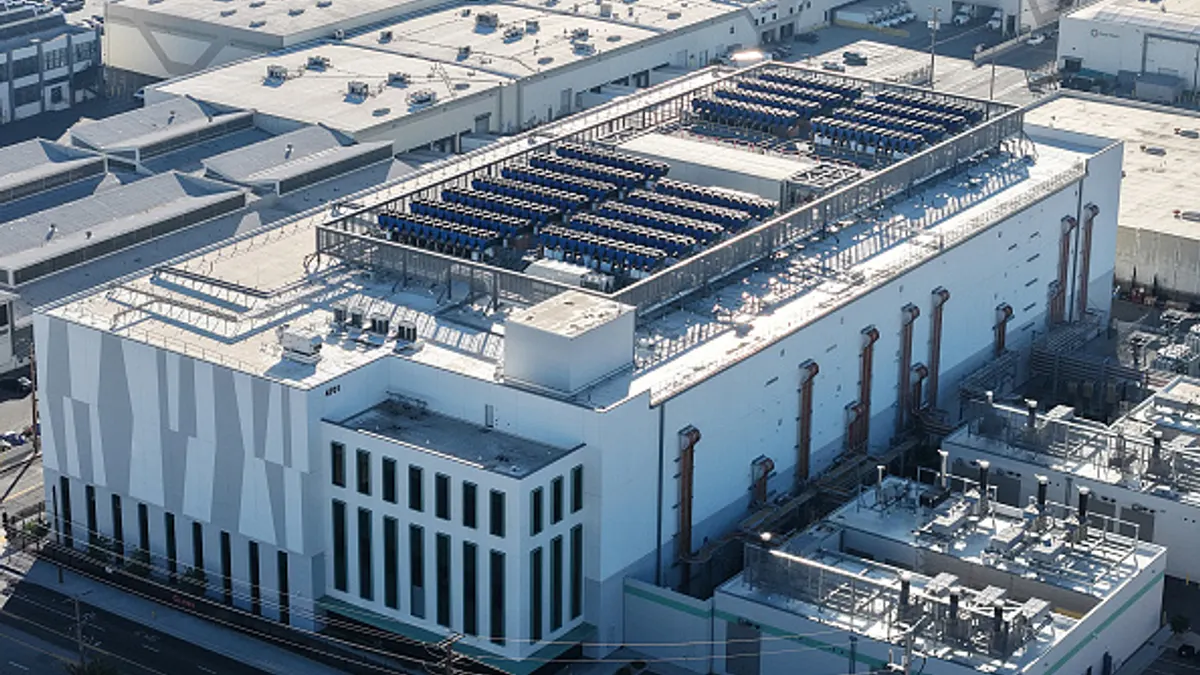
As it relates to data center services, Cushman & Wakefield has had a couple of big “service wins,” MacKay said, noting that the asset class is still a small part of its business, only making up about 3% of Americas leasing revenues. “Data centers are still a real and growing opportunity for us. We are still investing in that platform in a way that we will continue to be able to support our clients and the growth in that asset class.”
The company’s strength in leasing is primarily coming from other areas, like industrial and office, with data centers instead presenting the biggest long-term opportunity in services that Cushman & Wakefield can offer, according to MacKay.
As for its own AI initiatives, the company is approaching it from two angles, “efficiency tools and revenue generators,” she said. “As we continue to move forward on both of these fronts, we are increasingly focused on the outcomes rather than, say, how many people are using tools.”
For example, from a service delivery perspective, the company is using a tool called AI+ to help its project management teams benchmark bids and identify savings before contracts are signed. In leasing, it is using a product called OneAdvise to help reduce manual work and give its employees faster, more consistent insight, she said.
And in facilities management, the company is using AI-enabled tools to help clients forecast space demand and make better occupancy decisions. “This is a revenue-facing AI and technology use case across multiple business lines,” she said.
As for the impacts of the 2026 midterm elections, “the markets are clearly liking those results today,” MacKay said. “When we walked into the room, [yields] were coming down, which could potentially provide some stability into the capital markets as we move forward,” she said.
Though the results may suggest future headwinds against data center development, the company has worked to ensure a balanced strategy and hasn’t overly rotated into the asset class, according to MacKay.
“Remember that clients, whether it’s data centers or otherwise, are really looking at us to help them navigate complexity and change, and that is what we continue to do in every region and asset class,” she said. “Whether or not you're going from a Tier 1 data center market to a Tier 2 data center market, we're going to be brought into those conversations.”