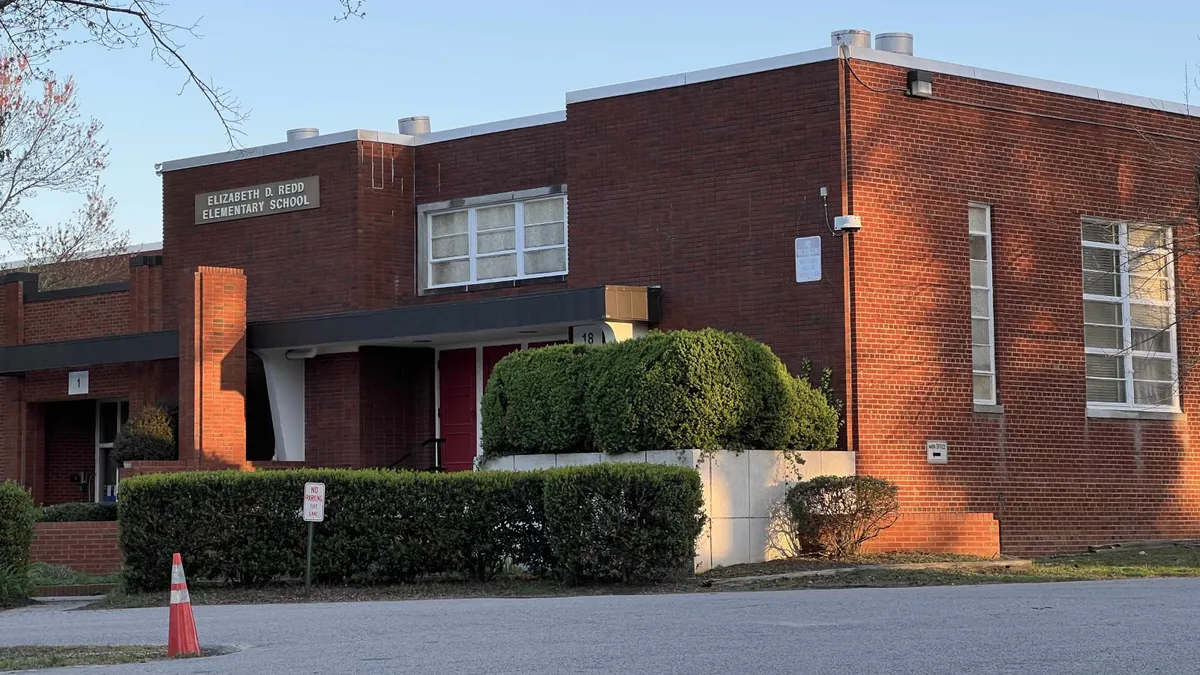
As it became clear in early November that Richmond voters would pass a 1% sales tax measure for school construction and renovation, Richmond Public Schools Superintendent Jason Kamras was grateful that residents would approve a tax increase even while households around the country are experiencing an affordability crisis.
“We are dealing with decades of deferred maintenance [and] disinvestment,” Kamras told Facilities Dive. “Our challenges are legion, which is why I think the voters so overwhelmingly supported the 1%.”
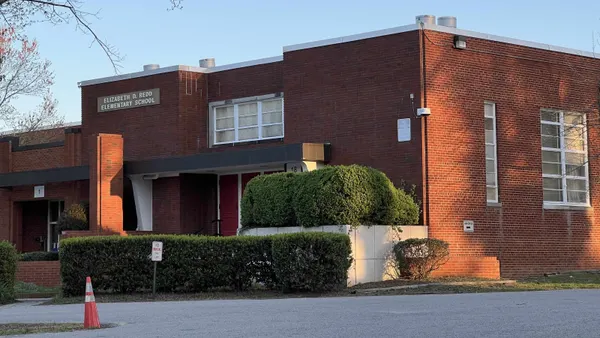
The district faces a roughly $680 million, 20-year backlog in maintenance, repair and upgrades to a portfolio of more than 40 schools, according to an independent assessment the agency conducted in 2024. Almost a quarter of the schools are more than 100 years old. About 70% are more than 50 years old. Only a handful are less than 15 years old.
Earlier this month, voters in Richmond were asked to decide whether to increase the sales tax by 1% to create a fund exclusively to build new public schools and renovate existing facilities. When the final votes were counted, 68% of the electorate voted in favor of the assessment, according to an Axios Richmond report.
Kamras says the actual need is even more than what the assessment shows — “well north of $1 billion,” he said.
With passage of the 1% assessment, the district could raise an estimated $850 million over the next 20 years. But that’s still not enough to meet all of the needs, Kamras said.
“I wish the sales tax would solve everything,” he said. “It's going to take us a lot farther, a lot faster, but it by itself does not solve all of our facilities' needs.”
The district currently gets about $2.5 million a year for facilities work, according to the school.
Adding to its challenges, the district fired its director of facilities earlier this year for improper use of funds and as of mid-November was operating with an interim director, according to the district’s website. The former facilities chief is alleged to have made personal purchases using his school district credit card, according to news reports.
“The investigation found direct evidence of asset misappropriation and unprofessional conduct” by the official, a school district investigation found, ABC 8 News reported in October.
Among the needs the district faces is a $938,000 roof repair at Woodville Elementary School, $2.5 million for brick wall repairs at John Marshall High School and $1.7 million for updated windows at Thomas Jefferson High School.
Mold, flood damage and HVAC issues are widespread, according to the assessment, which used a facility condition index to determine what each of the school’s needs are weighed against what it would cost to replace the school.
“The Facility Condition Index … is defined as the ratio of the cost of current needs divided by the current replacement value (CRV) of the facility,” the assessment says.
Schools that score between 0 and 5 are considered new or well-maintained, with little or no visual evidence of wear or deficiencies. Those with a score of between 5 and 10 show wear but are still in a serviceable and functioning condition. Those with a score of between 10 and 30 show signs of hard or long-term wear and are nearing the end of their useful or serviceable life. Those with a score of 30 and above have reached the end of their useful or serviceable life, making “renewal” necessary.
The Richmond City Council will need to pass an ordinance to enshrine the sales tax increase into law. The district has been using funds from a local meals tax to patch together funds for school construction dating back to 2018.
Kamras said the city will determine which projects to prioritize based on feedback from nine stakeholder meetings, as well as building conditions, enrollment trends, and concentration of student need.
Nationwide problem
Richmond is not alone in its need for school renovations. School districts on average only receive about 17% of their construction and equipment funding from states, according to 21st Century School Fund’s State of our Schools report. The federal government doesn’t help much, either, adding just 3.2% of the funds schools need, the report says. Local communities tend to be left to foot the bill.
The result is that U.S. public schools face an $85 billion shortfall on facilities, the report found.
Mary Filardo, executive director of the 21st Century School Fund, would like to see the states and federal government do more to support school facilities across the country, she told Facilities Dive. She said the country should view its ailing school infrastructure similar to debt.
“You can not replace that leaky roof, but it's not going away. You still owe that building a roof,” she said.
Filardo said that schools’ HVAC systems are complicated. They’re not just for temperature control, but also air filtration and dehumidification. Retrofitting older schools also presents unique challenges.
“In the 1950s, there would be one outlet in a classroom, maybe,” she said. “If you were lucky, one on each wall.”
From the states’ perspectives, Filardo sees a wide range of approaches to start addressing needs. Wyoming, for example, has used coal lease bonuses — mining company payments for extraction permits — and Massachusetts has implemented a statewide sales tax.
Meanwhile, in Virginia, Richmond was one of many seeking to boost facilities budgets. The same measure failed to pass in 32 of the 47 localities statewide.
Kristen Nye, executive director of Virginians for Modern Schools, an organization supporting the measure, said voter education proved to be very important in Richmond’s case. She added that the measure opened up opportunities that may have previously seemed out of reach.
“Let's say those plans haven't been touched in well over a decade,” Nye said. “They're sort of blowing the dust off of them and taking them back out in the community again.”
Improving schools in Richmond
Richmond City Councilor Katherine Jordan led the city’s legislation that put the sales tax measure on the ballot.
“Very often education is a popular talking point on the campaign trail, but when it comes to budget time, somehow it just doesn't make it through,” she said.
Richmond School Board Member Katie Ricard said that if the measure had not passed, it might have been put back on the ballot for a future year. RPS might also have looked to the state for more funding.
Although the measure passed, the school district will need additional funding, said Ricard, noting that she expects the district to continue applying for grants.
“We have 42 school buildings across the district,” Ricard said. “It just gets really costly to maintain all of them. They are old, and their systems are pretty much hanging on by a paperclip, sometimes until they fail.”