Dive Brief:
- The U.S. HVAC market shipped more central air conditioners and heat pumps in April than in the same period last year. Furnace and water heater shipments generally declined but remained popular in the commercial market, according to a report by the Air-Conditioning, Heating, and Refrigeration Institute.
- Combined shipments of central air conditioners and air-source heat pumps increased 5.1% year over year, to 837,098 units in April, the most recent month with data from AHRI. Air-source heat pump shipments rose 1.8%, to 380,888 units in April.
- The April results are in contrast to softer year-to-date trends, with combined shipments of air conditioners and heat pumps falling 3.5% in the first four months compared with the same period last year. Heat pumps remained a bright spot, with year-to-date shipments edging up 1.2%, to over 1.3 million units, AHRI said in its report.
Dive Insight:
The continuing popularity of heat pumps comes as advances in technology have made the HVAC units capable of heating and cooling any building in the U.S. today, experts say.
“There [are] old worries,” Ian Shapiro, professor of practice of mechanical and aerospace engineering at Syracuse University, said in an interview last year. “Forty years ago, we had single-speed heat pumps that could not keep up in the cold weather, and I think we’re still paying the price for that bad experience… . There [are also] issues with fossil fuel companies and utilities spending a ton of money because they don’t want to give up their sales of oil and gas.”
On June 8, the U.S. Supreme Court sided with the Trump administration and gas sector interests by sending a case involving a potential ban on non-condensing commercial gas water heaters and residential gas furnaces back to a federal appeals court.
The action means that two energy efficiency rules finalized by the Department of Energy in 2023 and 2024, which would effectively eliminate non-condensing versions of the appliances from the market, must undergo additional legal scrutiny.
Even if the order extends the legal rigmarole surrounding the ban, it isn’t likely to change the outcome, the Appliance Standards Awareness Project said in an email statement, so heat pumps may continue to benefit from ongoing electrification trends.
“I can heat any building in the U.S. with a heat pump, with no backup and no problems at all, because today they make them variable speed,” Shapiro said. “So, they speed up when it’s cold outside, and they make them so they can operate down to very low temperatures, way down below 0 degrees Fahrenheit.”
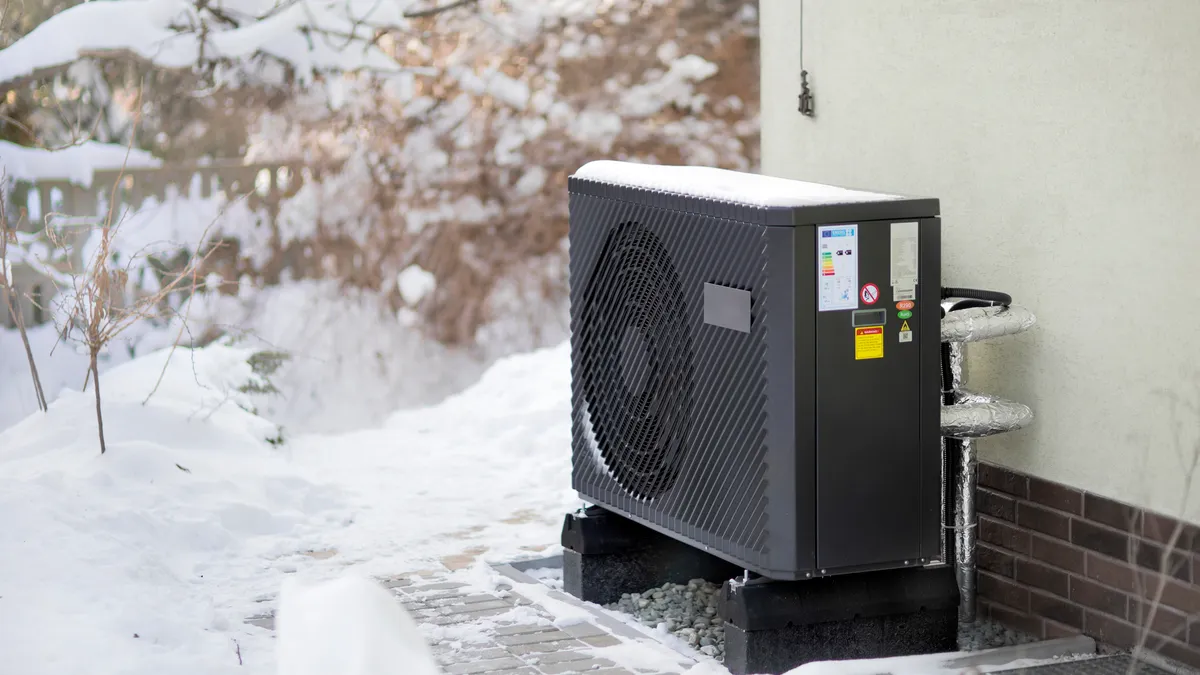
“They don’t even lock out until negative 20 degrees [Fahrenheit]. They have a defrost built into them,” Greg Asbaty, technical services manager for the Mid-Atlantic region at Mitsubishi Electric Trane HVAC US, told Facilities Dive. “We’ve seen them … buried in snow and actually defrost so much around them that they have made a little igloo. They’re asked to perform in much harsher conditions than they ever were in the past.”
Heat pumps are also becoming more popular because of their ability to both heat and cool, meaning vendors that have historically been in the cooling industry are also working in the heating side, according to one vendor.
“People are buying [heat pumps] solely for heat and getting air conditioning as a benefit,” Asbaty said.
Although overall gas storage water heater shipments declined in April, commercial sector shipments rose 10.4% year over year and were up 4.7% year to date. Commercial electric storage water heater shipments fell 7.8% in April and 1.4% year over year for the first four months of the year.
U.S. shipments of gas warm air furnaces during that period decreased 11.6%, to 966,919 units year-to-date in April, compared with 1,093,683 units shipped during the same period in 2025. Year to date, oil warm air furnace shipments still beat last year's performance, rising 11.4%.
AHRI's shipment statistics are compiled from participating member manufacturers and represent more than 90% of North American production and sales of air-conditioning, heating, water-heating and commercial refrigeration equipment, according to the organization.