With the phase-out of new HVAC equipment that requires refrigerants with high-global warming potential, start planning now for system retrofits or replacements, says Greg Asbaty, technical services manager for the Mid-Atlantic region at Mitsubishi Electric Trane HVAC US.
The American Innovation and Manufacturing Act, enacted in 2020, phases out the manufacturing and sale of refrigerants containing significant hydrofluorocarbons. New HVAC equipment is designed to use refrigerants ASHRAE has characterized as A2L, which have lower toxicity and lower global warming potential but are mildly flammable. These A2L refrigerants — including R454-B and R-32 — come with a lot of safety requirements, Asbaty told Facilities Dive.
“The biggest hurdle we have right now is dealing with safety factors,” Asbaty said. “All of our units have leak sensors, shut-off valves, alarms, audible alarms … there’s a lot more safety features that now go into place.”
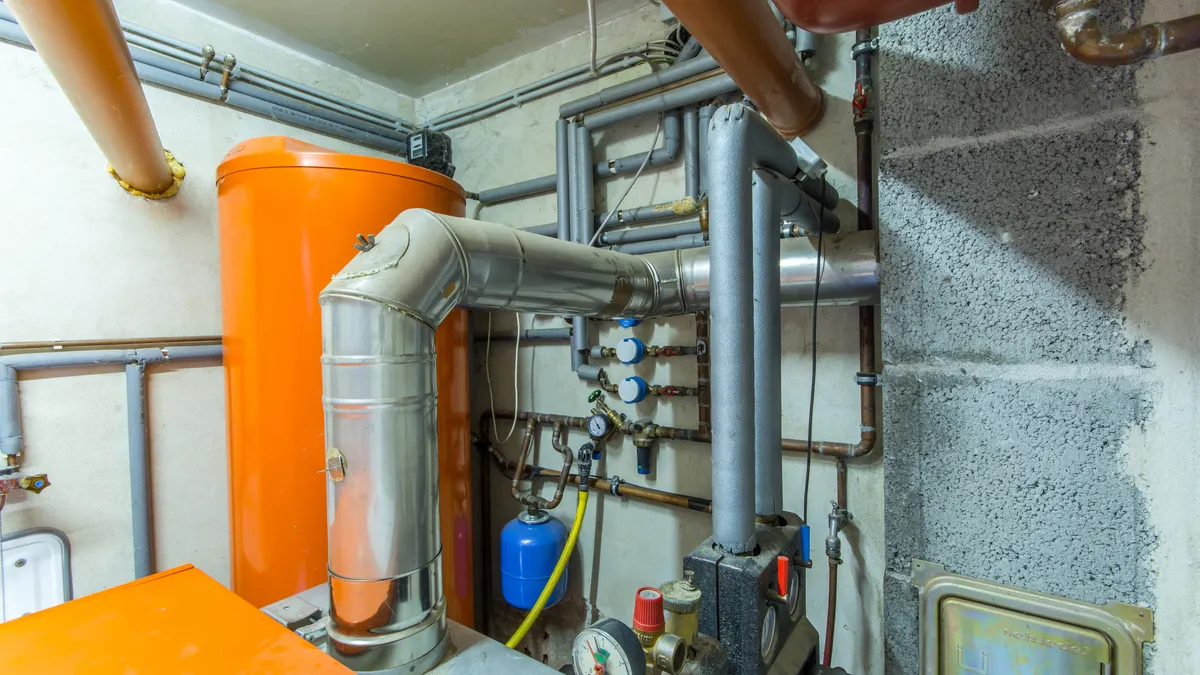
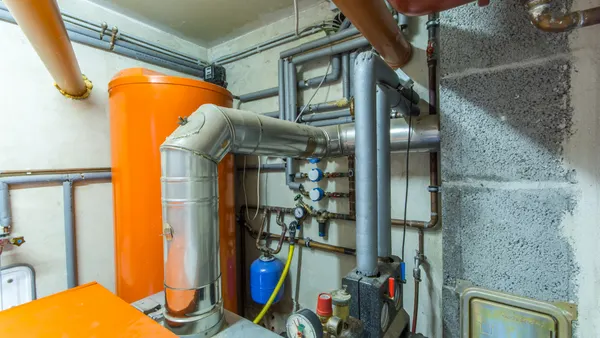
Old piping can make installing a new system a challenge, he said. “You’re changing over to a new style of unit using the same piping a lot of the time,” he said. “You’re using 15-year-old copper, tubings and things like that.” In part because of the mild flammability of the new refrigerants, old piping can be more prone to leaks.
Ensuring the piping is adequate should be a top focus, he says. It’s “not just easy slapping new units on each end,” he said. “There is a lot more that goes into … making sure everything is going to hold up for the new refrigerant.”
Separate from the unit replacement, facilities managers face more regulations for the building, he said. These include a mandate for rated, ventilated shaft enclosures when refrigerant piping penetrates two or more floors or ceiling assemblies, according to Chris Campbell of the Building Code Blog. The blog uses as reference the 2024 International Mechanical Code, or IMC, which draws on the 2022 editions of ASHRAE 15 and 34 standards, both of which provide additional requirements for A2L refrigerants.
“We now need ventilation,” Asbaty said. “We need fresh air. We need alarms that go on. All the piping itself needs to be in shafts where you can’t penetrate them with things, fire-rated shafts.”
And because manufacturers can no longer sell equipment that uses old refrigerant, HVAC system failures could mean high costs and long wait times to get a new unit, he said.
“It’s no longer, ‘Oh, we have that in stock; we can get you a unit,’” he said. “We’re not producing these systems anymore.”
In cases where parts for legacy systems are available for replacement purposes, the parts usually are coming from Japan and other countries, so it could take months for them to arrive. “You may be looking at six to eight months of downtime while you’re waiting on a piece of equipment … to get into the country,” he said.
A spokesperson for Mitsubishi Electric Trane HVAC US said in an email that the company has "ample 410A equipment in stock in the U.S. now. It is available for order and shipping immediately.”
Instead of waiting for the system to break down, Asbaty recommends that facility managers plan for scheduled replacement, starting with the oldest equipment. Approaching replacements in this way will help managers before “you really are up against the wall,” he said.
High repair costs and power consumption and reduced occupant comfort are signs equipment is nearing the end of its life, he said.
“If you look at your power consumption, say we’re using 30% more power this year on this machine, that may be a sign that something is failing,” he said. “Or if people are complaining that they’re not as comfortable … those are all signs that your system is starting to go or something’s starting to fail.”
Signs of failure create a window of opportunity to begin working with an engineer to plan out the replacement of the system in the next year, he said.
“During this refrigerant changeover, it is very important to get your system either working right now as it is, or prepare to be changing everything going forward,” he said.
Bottom line: If it makes sense, managers can take steps to keep their legacy systems, such as those that use R-410A, running. But if they're going to replace it, they should start that process now. “I would do it as soon as possible,” Asbaty said. “You’re going to have a lot of things that are going to be different on the new stuff.”
Editor's note: A previous version of this subhead misstated the organization for which Greg Asbaty works. He is technical services manager for the Mid-Atlantic region at Mitsubishi Electric Trane HVAC US. This story also has been updated to include comment from Mitsubishi Electric Trane HVAC US.