Joe Scorpio is co-founder and owner-operator of Junk Jaws, a Chicago-area junk removal company that works with both commercial and residential customers.
When you plan a renovation in a building people are still using, it's natural to line up the trades first and leave debris as a line item for the hauler. I would turn that around; if debris has to leave through occupied space, put the route and timing of removal on the phasing plan before you book a trade. The timeline for when debris gets removed — and where it sits while the work is being done — is critically important to the safety of the people in the building.
Decide where a load can wait
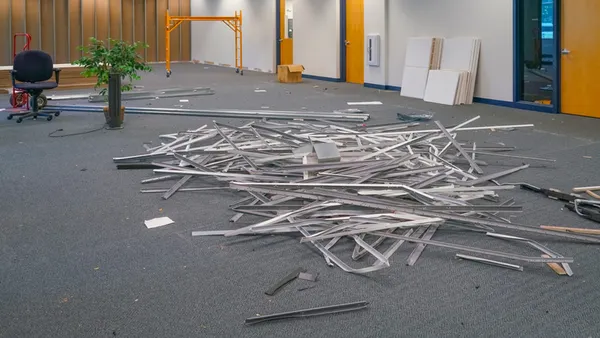
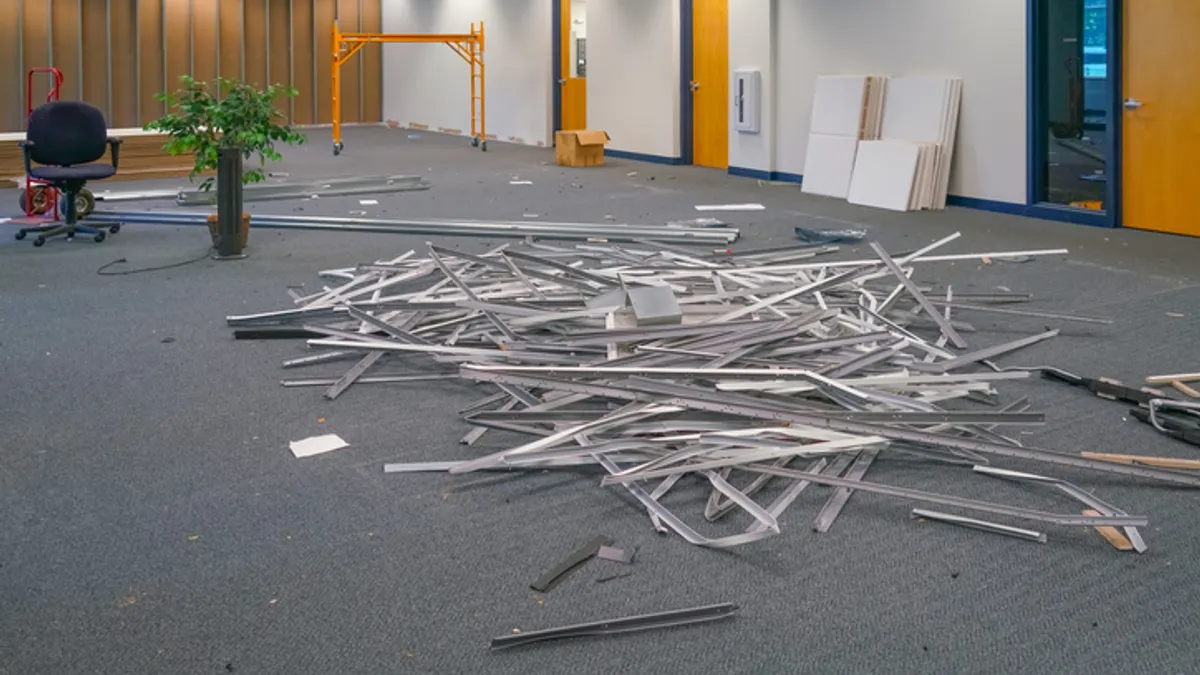
Renovation debris is a hazard on a number of levels, but fire risk is an especially important one. Although renovation fires are relatively rare in the United States compared to structure fires, the risk of fires spreading during renovation is greater than that of structure fires. According to data cited by a National Fire Protection Association article, 85% of renovation fires spread beyond the object where they started compared to roughly half of structure fires.
One reason for the difference is the fire protection system; it’s not uncommon for it to be shut down while the work is on.
"Sprinkler systems are shut off, fire doors are propped open, smoke extraction is cut off, and more," an article in the NFPA Journal says.
Given the risk, a staged load should be treated as fuel. It can never wait in an exit route. The U.S. Occupational Health and Safety Administration prohibits staging materials or equipment in exit routes. What’s more, debris isn’t to be staged anywhere for an extended period; under OSHA's construction housekeeping rule, combustible scrap and debris are to be removed at regular intervals.

Both rules are duties employers owe their workers. The duties apply to tenants, too; hold their corridors to the same standard. And define what "regular intervals" means. In the contract that covers the hauling, put in a number that holds the hauler to account for removing the debris at set times.
Clear each zone when a trade finishes
When it comes to clearing the zone — removing the final load after work in an area is done — tie the debris pull to the end of the trade's work, not to a calendar date. If you book the hauler by date alone, there’s a chance the crew will arrive before demolition is finished. Whether they wait in the corridor with their carts or leave with half a load, the floor is blocked for the wrong reason.
To prevent this, write the trigger into the schedule. Only after demolition signs off on a zone can the debris crew clear it, and only then does the next trade get the floor.
For the pull itself, look at what hospitals are asked to do. Under the U.S. Centers for Disease Control’s guideline on environmental infection control, debris removal is to be scheduled when patients are least exposed to dust. Debris is also to be misted and carts covered before they leave the work zone, and patients are to be kept off any elevator carrying construction materials and debris.
That guidance is written for health care, but it’s worth following in other settings. When the pull happens, determining how the load is covered and which elevator to use are all best practices that make sense from a safety perspective.
Work in multiple zones
How building systems are configured can determine which parts of a building need to be vacated, and when, for the work to happen. An example is the air handling system; it can make sense for floors that share the same system to get work done at the same time.
A good example is the Moorhead Federal Building in Pittsburgh, which was renovated in 2003. According to an architect's account of the project published that year, the facility’s large air handling units served several adjoining floors, so those floors had to be renovated together. To make that workable, the construction team isolated the two air-handling units that fed the upper floors, requiring crews to work on the top five floors in two phases. The plan effectively traded time for space: a longer job, at 57 months, for far less swing space to build out.
The lesson here is, before the phases are drawn, know which floors share an air handler and whether one can be isolated.
You want to settle the vertical route early, too. On an upper floor, set aside one elevator for the contractor if you can. Otherwise, the budget can swell to cover outside hoists and harder debris removal.
In sum, to manage debris in the safest, most efficient way, walk the debris route — from the work zone to the loading dock — before the first trade is booked. If debris has to be moved through occupied space, start with the route and timing of removal on the phasing plan — before you book a trade.