Dive Brief:
- Managers of agricultural research facilities can access up to $30 million from a $121 million fund for property improvements from the U.S. Department of Agriculture and the U.S. Department of Education.
- The money can be used for project planning, small-facility upgrades, mid-scale construction projects and large-scale projects. It requires the facilities to make a dollar-for-dollar matching contribution to ensure “strong local investment and stewardship of taxpayer resources,” USDA and ED say in a press release.
- The application deadline is July 17. The goal of the program is to have “food and agricultural research … conducted in state-of-the-art facilities equipped with cutting-edge tools,” said Scott Hutchins, USDA chief scientist and under secretary for research, education, and economics.
Dive Insight:
The Research Facilities Act was enacted in 1963. The latest program funding comes from the One Big Beautiful Bill, signed into law last year to extend 2017 tax cuts.
The Research Facilities Act program aims to help improve lab and other research facilities at land-grant universities and other types of institutions, including agricultural schools at non-land-grant universities.
Facilities managers can apply for grants of between $100,000 and $200,000 for project planning, which includes conducting feasibility and needs assessments, site surveys, environmental reviews, preliminary architectural and engineering designs and cost estimation and budgeting.
Managers who secure a planning grant would have to wait for a new funding round in a subsequent year to apply for additional money to undertake the project itself. “Recipients may only receive funds for one award at a time,” the program rules state.
Grant amounts are made available based on project size:
- $250,000 to $2 million for small facility upgrades, which include lab modernization.
- $2 million to $10 million for mid-scale construction, which includes expansions, specialized research wings and major retrofits.
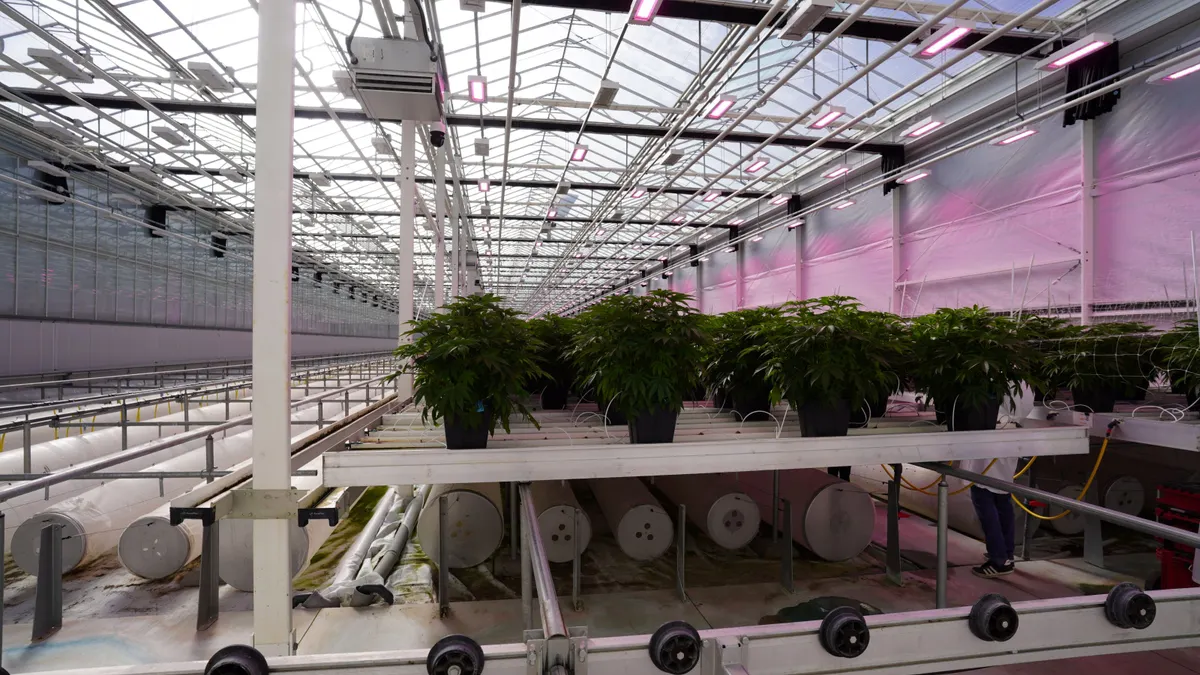
- $10 million to $30 million for large-scale projects, which include new construction and major work on research complexes, specialized labs and controlled environment research facilities.
The matching contribution must come from non-federal money, and applicants must show they have a financial pathway to get the project to the finish line. “Explain how your institution will sustain the facility’s operations and maintenance beyond the grant period,” the rules state.
More than a dozen projects are underway from a 2023 funding round, including a $75,000 grant to the University of Kentucky to reverse the ventilation flow in a swine research facility and add automated controls to the system.
“The installation of the fans and the linking of those fans to an automatic controller … is the first phase of the project,” a project summary states. “The second phase … involves work in the attic of each [facility] room that will allow the appropriate air flow of tempered air. This involves the construction of plenums and their insulation.”
Projects submitted should align with USDA goals set by the department’s secretary, according to the program announcement. So, facilities must be used for research that aims to increase farmer and rancher profitability, expand markets, create new uses for agricultural products, protect against invasive species, promote soil health and improve human health through better food quality.