The constraint on the electricity grid is pushing an increasing number of facility managers to look at behind-the-meter energy strategies, a trend that could play to the strengths of microturbine provider Capstone Energy+, the company’s CEO says in an interview with Facilities Dive.
The bearings in the company’s microturbines ride on a cushion of air rather than lubricants, eliminating the friction that’s the main source of noise and emissions in gas engines, Capstone Energy+ CEO Vince Canino said.
“There are no lubricants, no oil, no coolants,” said Canino, who joined the company in 2024 after holding executive positions at GE and Trane, among other companies. “That also helps us provide some of the lowest emissions technology out there.”
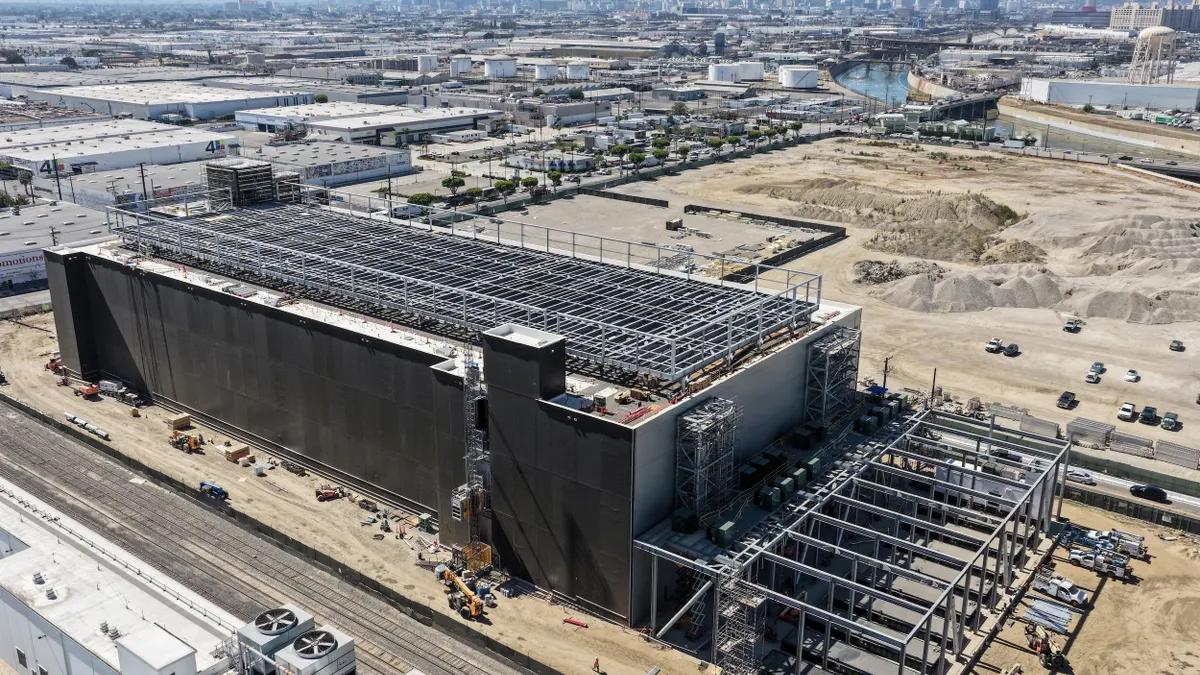
Noise and emissions from power generation are a big part of the pushback against data centers, which are increasingly deploying their own power to help reduce demand on the local utility and in some cases to meet state bring-your-own-power mandates.
Increasingly, facilities in all types of verticals, not just data centers, are looking at behind-the-meter solutions, Canino said.
“We have an auto shredder recycling plant in Los Angeles where the utility couldn’t bring the power in for another 3-4 years, so they just decided they were going to build their own plant and not even connect to the grid,” he said. “We’re even in grocery stores — anywhere where a customer has an electricity demand or thermal demand.”
Working around utilities’ capacity constraints is a big reason companies are deploying their own power, but they’re also executing on energy resilience and carbon-reduction strategies, he said.
“Facilities are starting to see the risk, and they need resiliency and more of a sustainable lower carbon footprint solution,” he said.
Capstone launched in the late 1980s offering microturbines as range extenders for hybrid cars and buses before pivoting about a decade later to stationary engines. It completed a financial restructuring in 2023 and on July 8, after a three-year hiatus, resumed trading on Nasdaq.
“There was a lot of hard work,” Canino said. “There are a lot of people in this company that put the heartbeats in to make this happen.”
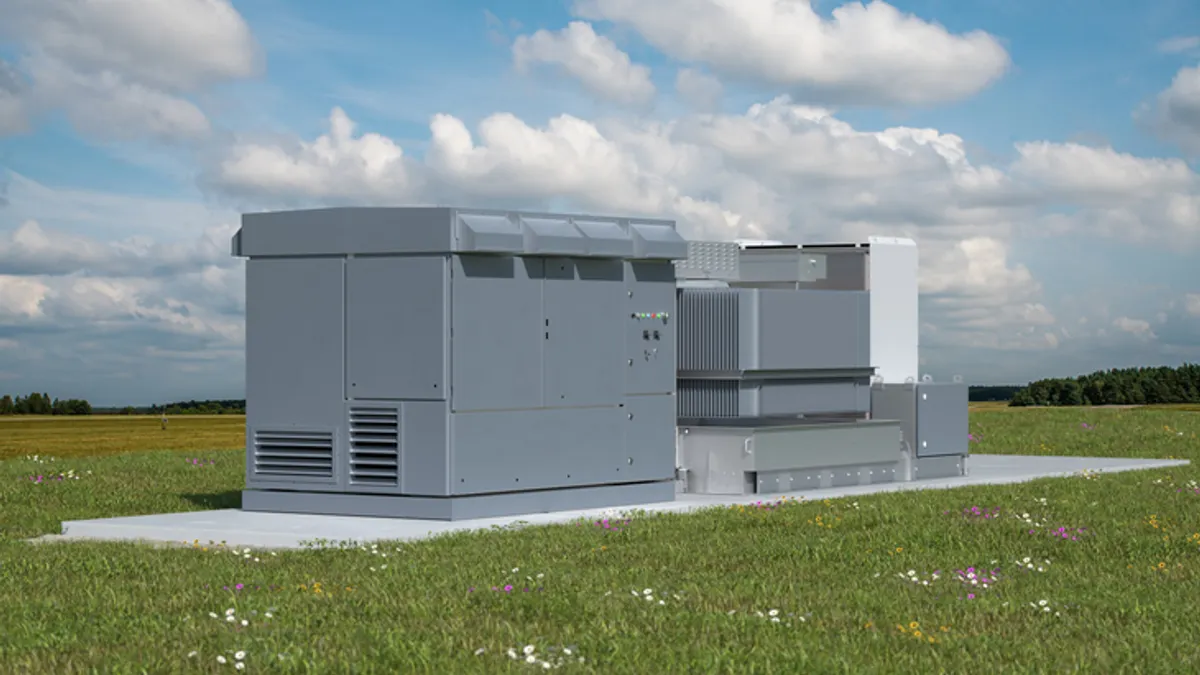
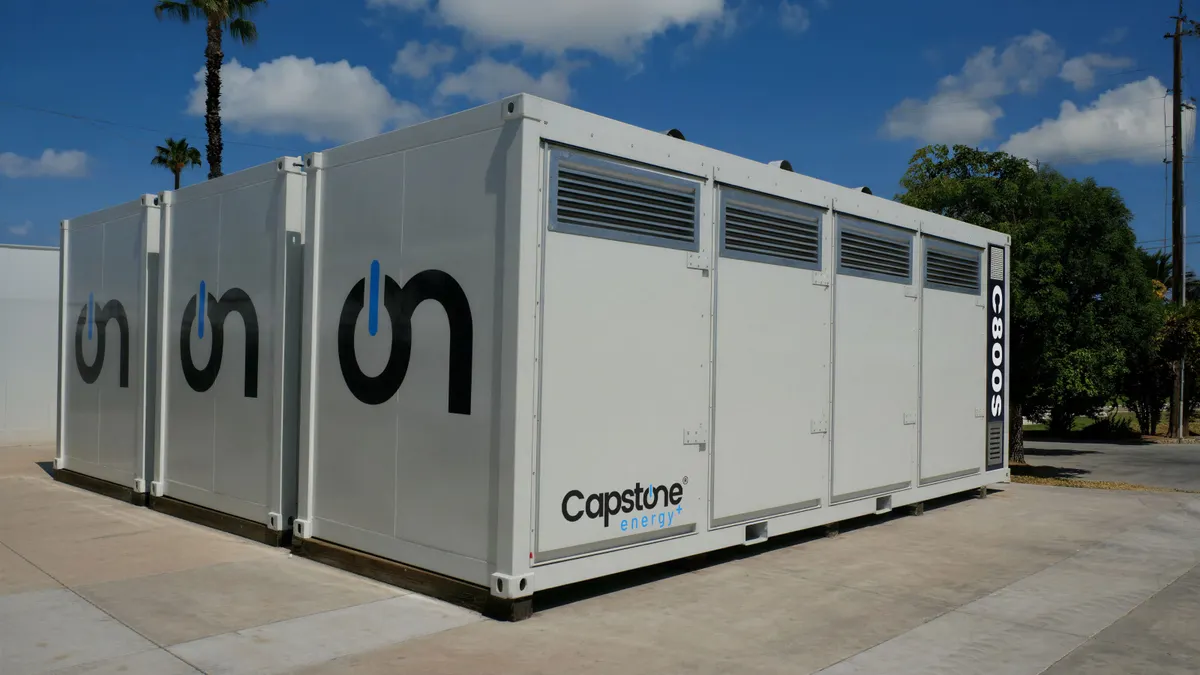
The company offers 30 kW, 65 kW and 200 kW engines. With the larger engine it takes a multi-bay approach, so facility managers that expect their needs to grow can deploy the engines in enclosures that have room for additional capacity.
“Customers … say, ‘Well, I only need 600 kW today [but] I may need a megawatt in the next few years,’ so they’ll buy what we call the 5-bay enclosure. Two bays are empty, and then when they need that extra power, they just buy the engines. We ship them and install them for them.”
Microturbines have the advantage of being small. The company’s 65 kW engine is about the size of a refrigerator.
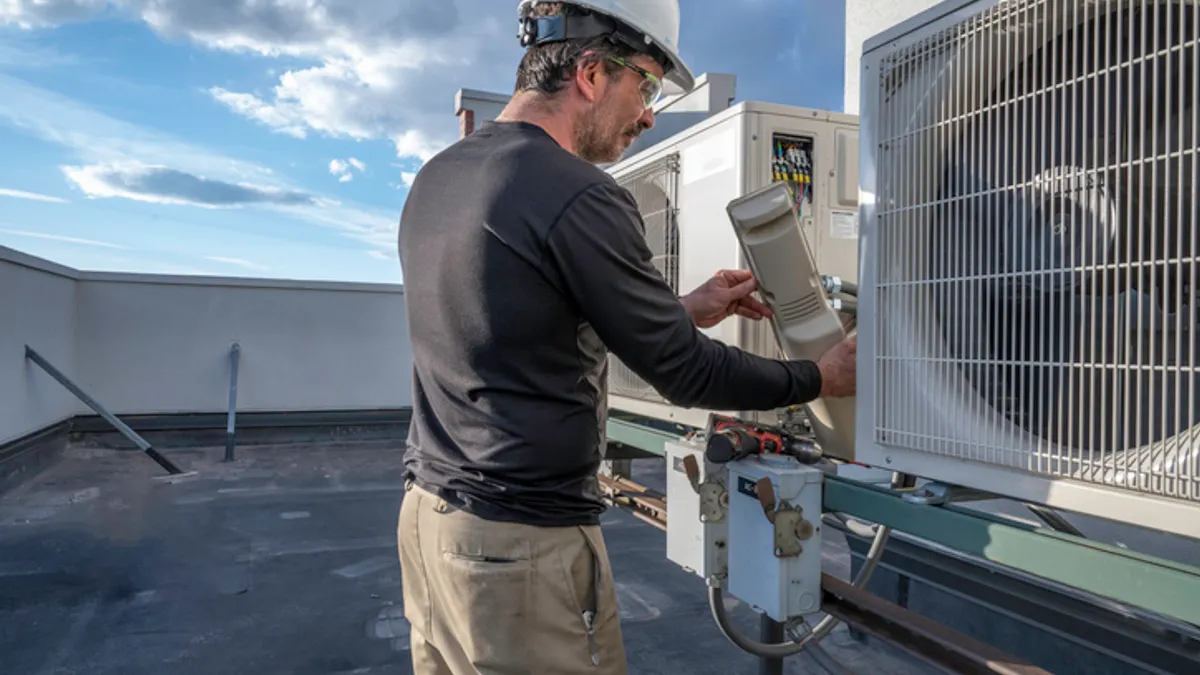
“I was on the roof of the Riu Hotel” in New York City, Canino said. “We had six of these C65s lined up … providing electricity as well as hot water” with enough space to add more later. “That’s the kind of modularity that we have.”
To accommodate facilities’ budget constraints and operational plans, the company makes its engines available for lease, purchase or lease-to-own, or it will retain ownership and sell the power under a power purchase or energy service agreement.
Under these agreements, “the customer doesn’t really put anything to it,” he said. “They could if they want to … but typically they put very little out, and then they’re paying a capacity and an energy fee for electricity and whatever thermal that project may deliver.”
Canino sees the United States and other countries going through what he calls an energy renaissance, driven in part by the tension that’s increasing as the public sector pushes its agencies and the private sector to electrify at the same time that utilities are facing capacity constraints from the growth of data centers, electric vehicle charging and building electrification.
“The obvious answer is, [utilities] have to build more power plants,” he said, but “building more power plants takes a long time.”
That gap in new power generation creates opportunities for solar, wind and battery power, but they require a lot of space and, with some exceptions, they’re not 24/7, he said, so there’s a place for microturbine technology.
“It becomes a good solution, because it’s quiet, it’s clean, and it can be temporary, mobile or permanent,” he said.