Darnell Lee is a field service technician at KLAUS Multiparking America, the U.S. arm of German parking system manufacturer KLAUS Multiparking GmbH, a specialist in space-efficient solutions, including vehicle lifts, stacker systems, semi-automatic puzzle parking systems and fully automatic parking. Opinions are the author’s own.
The call I remember most came in February. A car parking stacker system at a multifamily property was lifting slowly and hesitating on the upstroke, the pump working harder than it should have to, through fluid that had thickened in the cold. The system hadn't been neglected in any dramatic sense. The fall service visit had just been pushed back, then pushed again and eventually absorbed by more pressing things on the property management calendar. By the time I arrived to look at the system for maintenance, what would have been a straightforward adjustment in October had become a more involved repair in February.
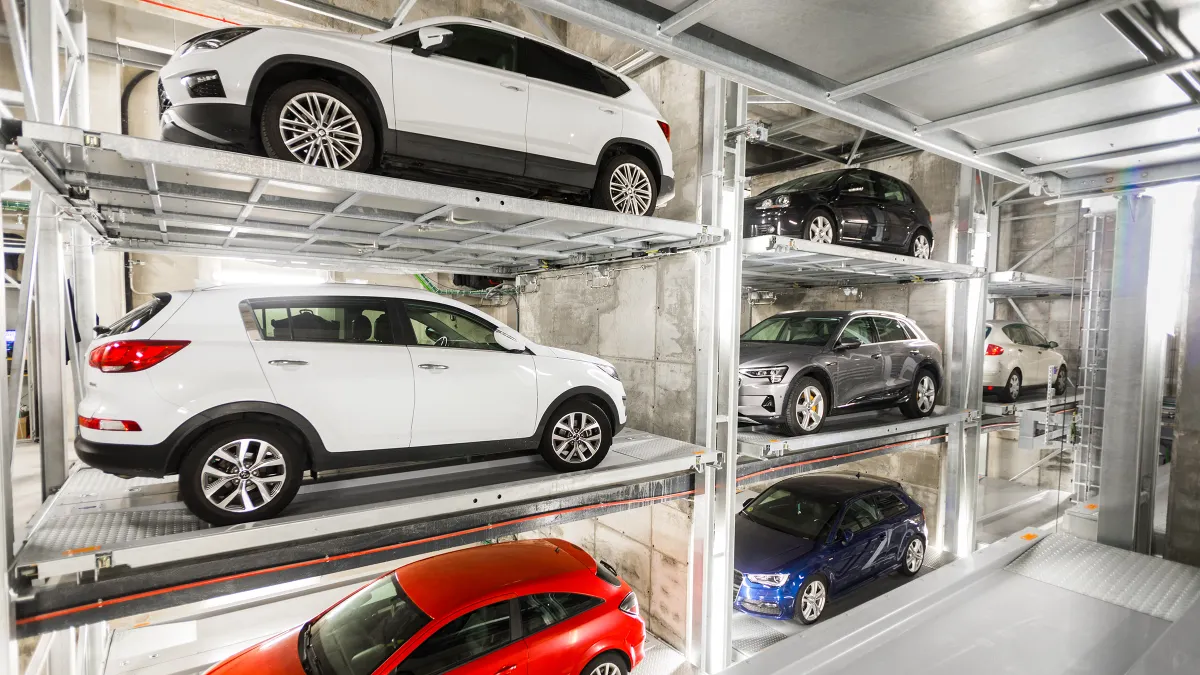
Mechanical parking systems, the automated lifts and stackers that let a single footprint hold multiple vehicles, don't have the benefit of a controlled environment. They operate in a parking structure, which means they absorb whatever the building's climate delivers across twelve months. A maintenance program that ignores that is one built around convenience rather than the system.
What a year does to the system
The simplest way to explain seasonal maintenance on a stacker system is to walk through what each part of the year does to the components.

Fall is the most important service window that most facilities miss. By the time temperatures start dropping, summer has already impacted the system for months. Heat and humidity affect hydraulic seals and electrical components in ways that aren’t always immediately apparent. A fall visit catches what accumulated over the warm months before winter compounds the impact. It is also the last reasonable opportunity to address platform coatings and corrosion before localities start applying road salt. Defer the fall visit and you hand winter a hard start.
Winter concentrates stress on specific parts of the system. Road salt and moisture migrate off vehicles onto platforms and into pits, and they work on steel surfaces and electrical enclosures. Hydraulic fluid thickens as temperatures drop, changing how the system moves and how much load the pump can carry. A system that operated normally in September might move noticeably differently in January for no reason other than temperature, and that difference is worth a technician's attention.
Spring brings its own inspection logic. A system that has run through a cold, wet season needs a close look before it carries peak spring and summer load. This is especially true for any installation that sees reduced use over the winter. Returned to regular use without an inspection, a system that sat quiet for months has had time to develop corrosion, stiffened components or tolerances that shifted while nobody was cycling the platform. Spring is not a forgiving time to find that out.
Summer rounds out the picture. Heat and humidity return, seals are under pressure and high-use months that accelerate wear on drive chains and lifting mechanisms in ways that will compound without a late-summer or early-fall visit.
Building the program around the year
The reason quarterly service makes sense for most parking installations is that it maps directly to what seasons do. Four visits, timed to seasonal inflection points, means a technician arrives at each transition with a specific set of questions about what the preceding months have done to the system, and what the coming months will demand of it.
That structure changes what a visit accomplishes. A technician showing up in late October is looking for what summer did to the seals and electrical components, checking platform coatings before salt season and verifying that hydraulic fluid is in the right condition to handle cold weather. The same technician in April is assessing what winter left behind and whether the system is ready for heavier use. The visit isn't generic. It has a context.
Building staff play an important role between these professional visits. The team that walks past the system daily is in a position to notice changes that develop gradually, the kind that don't trip an error and don't stop the system, but do indicate that something is shifting. A platform that moves a little differently after the first cold snap. A sound that wasn't there in warmer weather. Oil spotting that appeared after a wet stretch. These observations don't require technical training. Some of the best early catches that I've been part of have started with a passing remark from someone on the building team.
The budget case for this kind of program is straightforward to make. Seasonal maintenance catches developing issues at the component level, where they are still manageable and relatively inexpensive to address. Waiting for something to stop working is also a budget decision. It just tends to get made in the worst possible month.
Before the season turns
That February call could have gone differently. The system wasn't failing because it was complicated or poorly maintained; the fall visit had slipped and winter found what it left behind.
For a facility manager with a mechanical parking system, the most useful thing to do before the next change of season is to confirm whether the service schedule is built around the calendar or whatever is convenient. Those two methods look very different in February.