Employees are searching for stability and control where they work, how they spend their time and what their days on-site look like, and employers that aren’t meeting that with incentives and perks could be putting retention on the line, according to a survey of 1,000 U.S. workers by ezCater.
Nearly half of workers who transitioned from remote to hybrid or fully on-site, or 47% of respondents, said they didn’t receive any new perks when on-site requirements were introduced, ezCater says in its Future of Workplace Experience report.
Ignoring incentives could work to employers’ detriment: 27% of employees returning to the office said they’re more likely to job hunt if nothing is offered, ezCater says.
The finding tracks the experience of The FruitGuys, a company providing farm-fresh fruits and vegetables to workplaces. “COVID really upped the ante of bringing more wellness-focused perks into the office,” Erin Mittelstaedt, CEO of The FruitGuys, told Facilities Dive. “One, because people were worried about health and [offices] didn’t want people to get sick. Two, people wanted to have reasons to make the workplace more enticing and bring people back into the office.”
In ezCater’s survey, 66% of workers said they expect a recurring benefit like daily or weekly meals. Younger employees are more likely to want food at the workplace, too, the survey shows. Almost half of hybrid and remote Gen Z workers are more likely than older generations to say food perks would incentivize them to work on-site.
Food-related perks were the second most-named incentive that would get employees back on-site, behind flexible work hours and ahead of “generous vacation time,” ezCater says.
As organizations adopt AI and prioritize productivity, relationships with colleagues help to ground employees, ezCater says. Connections boost productivity, strengthen results and make employees more likely to stay at a company, the report states. Almost 70% of employees said that socializing with coworkers in the workplace makes them more productive. The same amount says social time makes them more likely to stay at a company longer.
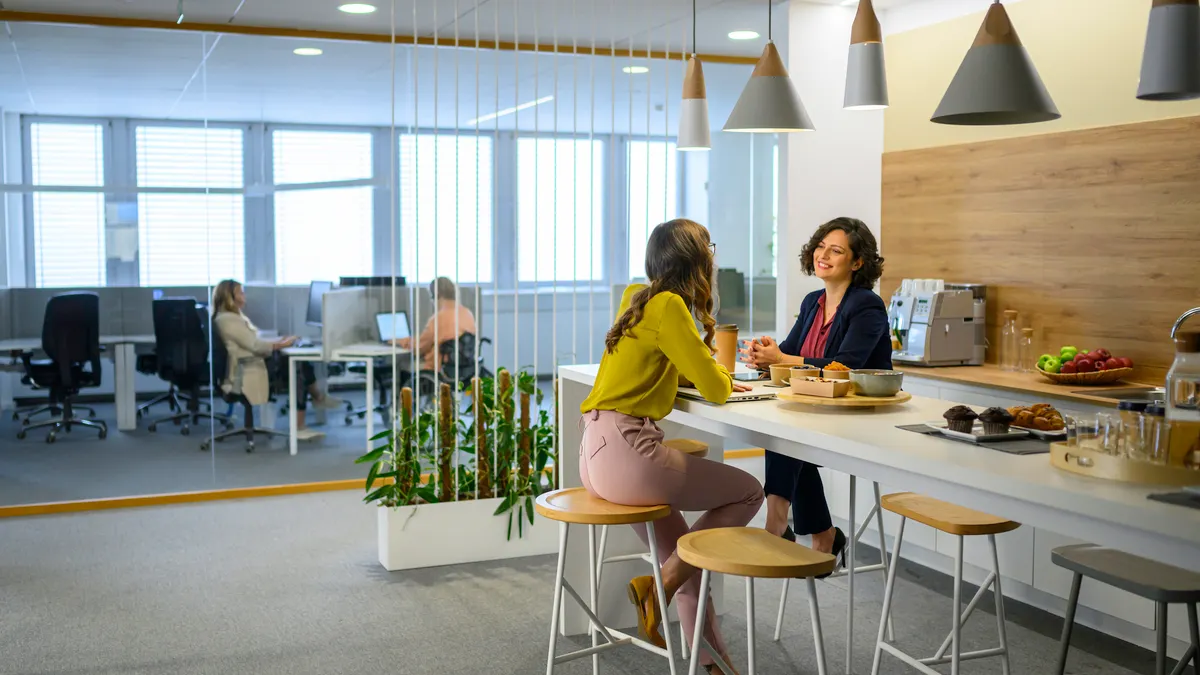
“Food is such a great way to build community,” Mittelstaedt said. “It’s such a great way to bring people together. Even if you’re not sitting down and doing a whole lunch with your team, people [will] line up when the fruit gets delivered. Instead of gathering around the water cooler, they’re gathering around the snacks in the pantry, and it’s fostering communication.”
Although it's hard to calculate the ROI of food incentives, there’s evidence that it can increase engagement, Mittelstaedt said. “Wellness programs can reduce the number of sick days or [improve] general employee satisfaction,” she said. “That’s one way people are looking at the success of these programs.”
A Slack survey of 10,000 workers found that people who take breaks during the workday to have a snack, take a walk, play a game or chat with coworkers are more productive than those that don’t.
For employers that provide a recurring benefit of fresh fruit and healthier snacks, Mittelstaedt said, the benefits can be two-fold: it provides physical and mental benefits, like improved memory and cognitive function, and it helps people connect around it, especially in a hybrid workplace where employees aren’t in the office every day. The FruitGuys have one client whose employees do all their interviews on Wednesdays, so they get fruit delivered on that day, Mittelstaedt said
“They want people to be around for people to see that culture, so they pair it with food,” she said.