Dive Brief:
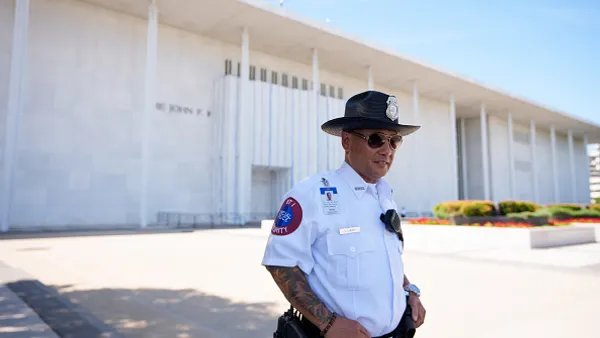
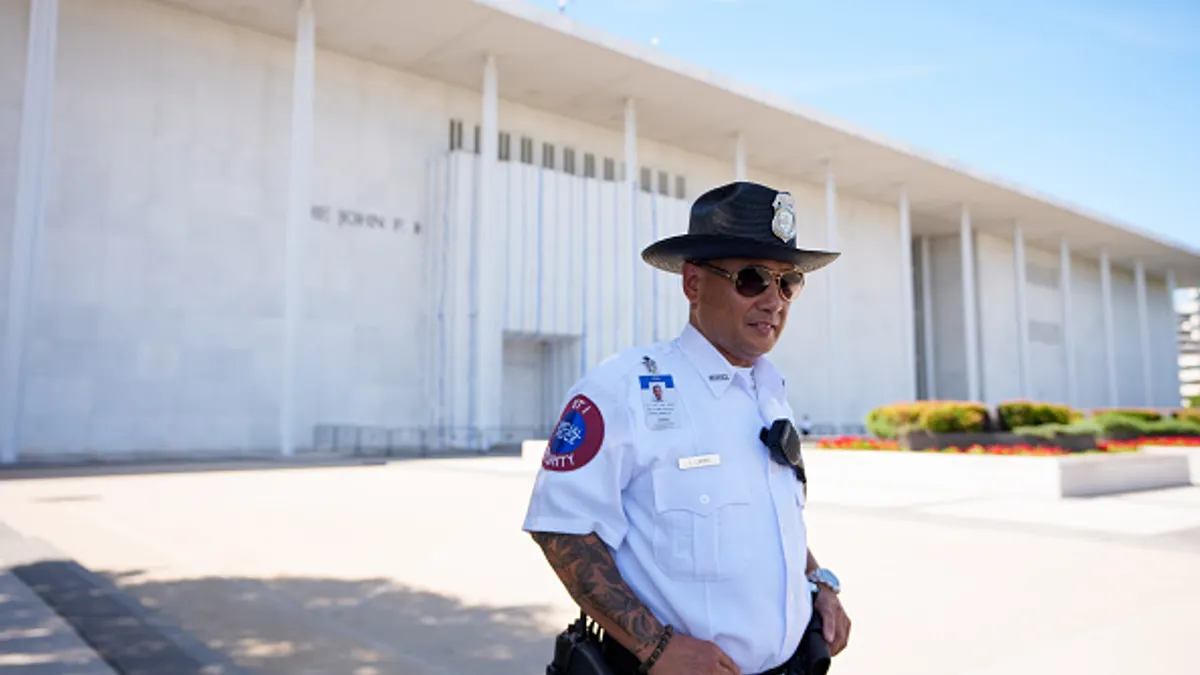
- Officials at the John F. Kennedy Memorial Center for the Performing Arts voted to close the building on an emergency basis yesterday in defiance of a court order requiring the facility to remain open until the court approves a plan for its renovation.
- “The Board of The Kennedy Center today agreed, almost unanimously, to close the Building for Safety reasons,” President Donald Trump, who serves as the board’s chair, said yesterday in a Truth Social post.
- The vote came shortly after a federal district court ruled against the center’s plan to add Trump’s name to the building despite a previous ruling prohibiting any name other than Kennedy’s from being on the building. “Simply put, Defendants cannot install memorials for President Trump or anyone or anything else at the Kennedy Center without Congress’s blessing,” said Judge Christopher Cooper of the D.C. federal district court.” The board resolution bucks a federal court order and a statute Congress enacted.”
Dive Insight:
In voting to close the building, the board cited plaster falling from the ceiling in the Grand Foyer several weeks earlier as evidence that the building can’t be occupied safely.
“Shortly after 4:30 p.m., employees heard a sudden notice on the P.A. system,” the New York Times reported yesterday. “‘The center is now closed to the public. Please exit the center by way of the Hall of States.’”
The closure tests a court order since May requiring the building to stay open until the board presented a plan supporting closure as the most appropriate way for renovation work to be completed.
The renovations “may involve demolition and reconfiguration of component parts of the building [but the court] is not persuaded that the building [must be] stripped to its studs and reconstructed,” Cooper wrote in the late-May opinion.
Rep. Joyce Beatty, D-Ohio., an ex officio board member, sued the board last year contending that Trump and the Kennedy Center’s leadership acted illegally by approving a plan to close the center and add Trump’s name to the institution.
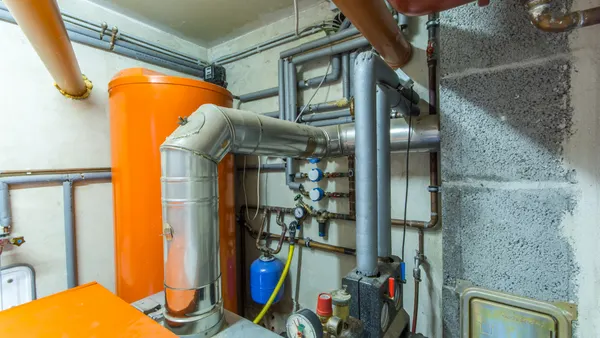
Based on assessments the Kennedy Center had overseen in 2021 and 2022, the building needs work on its roof, exterior columns and the structural steel and concrete supporting a deck that wraps around the building. It also needs new piping in some areas, chillers and boilers, along with cosmetic repairs like new marble and painting.
Matt Floca, the center’s facilities director until he was appointed by Trump earlier this year to take over as the executive director, had said the work could be completed while the building remained open but later recommended a two-year closure.
The center is sitting on $257 million that Congress appropriated to help it pay for renovations, but the board has argued in court filings that adding Trump’s name to the building is essential for it to generate the money it needs to operate and for the renovations.
“Blocking the Board from appropriately recognizing President Trump will cause donors to flee, financial contributions to dry up, and structural rehabilitation to stop,” the U.S. Department of Justice, arguing on behalf of the board, said in a court filing.
The board last month approved a resolution to engrave Trump’s name on the wall in recognition of his efforts to restore the building. It also voted to name an adjacent plaza after him. Both of these resolutions violate the law, Cooper wrote in his opinion yesterday.
The board also voted to add Trump’s name to the wall if certain fundraising goals are met. Cooper said this part of the resolution can’t be addressed by the court until the fundraising goal is met, because it’s “unripe” until that happens.
In his Truth Social post, Trump said the renovation work depends on the board putting his name on the wall.
“The Renovation and Reconstruction, which is a very large and complex job, cannot begin until such time as the D.C. Circuit rules on the Board’s approved name,” he said. “If the ruling is a negative one, which it should not be, and is not overturned by the U.S. Supreme Court, the Reconstruction and the Renovation of The Kennedy Center will not take place.”
To keep the center afloat in the meantime, he said, he’s making $17 million that he raised available to the center.
In its court filing, DOJ said the center faces permanent closure without recognizing Trump because he’s integral to attracting donations, but a Washington Post report last month says donations plummeted after his name was engraved on the wall last year. His name has since been removed.
“‘The center took a huge hit when the takeover happened,’” the Post reported, quoting a Kennedy Center official. “After the name change, ‘it was just an absolute fiscal cliff. Donors disappeared, ticket sales disappeared, artists disappeared — like it was doomsday.’”
The Kennedy Center didn’t immediately respond to a request for comment. In a statement published by news outlets, Roma Daravi, vice president for public relations at the Kennedy Center, said the board would appeal Cooper’s ruling. “We intend to appeal today’s Court ruling and move forward with recognizing Chairman President Trump’s historic contributions to the revitalization of America’s Cultural Center,” Daravi said.