Dive Brief:
- The United States could reduce energy costs by an average of $215 billion a year — $4.8 trillion cumulatively by 2050 — by implementing a broad package of policy and other reforms, the American Council for an Energy-Efficient Economy says in a report it released Wednesday.
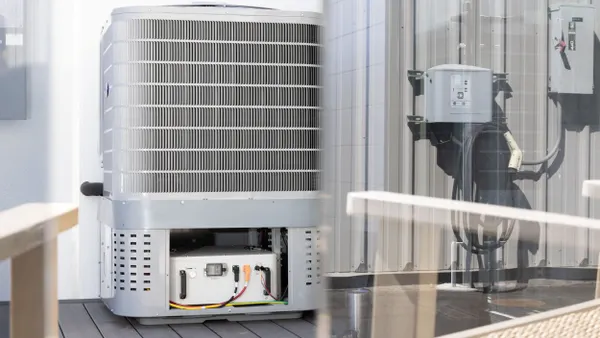
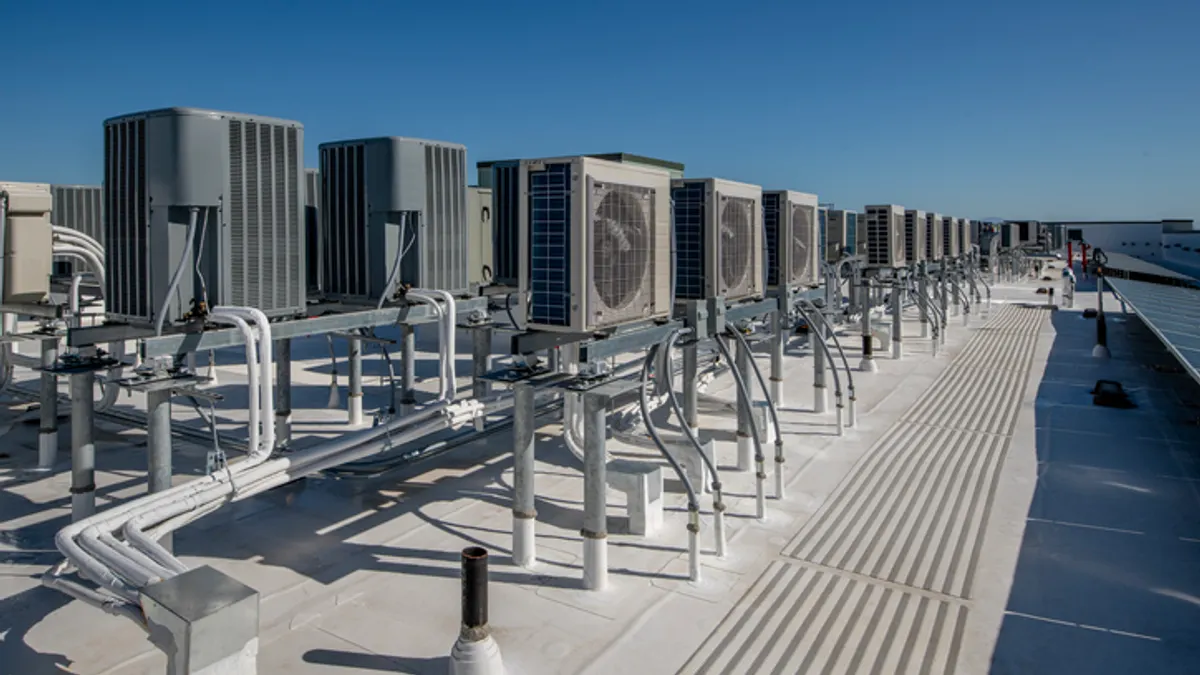
- Savings could come as highly efficient heat pumps and other building and building equipment efficiency upgrades are made, the report says.
- Building and other electric efficiency measures would also reduce growing peak demand by 20% on average through 2050.
Dive Insight:
Surging power demand from data centers and rising costs from geopolitical conflicts have put a spotlight on energy supply constraints, but there’s a lot that can be done on the demand side of the equation, the report says.
“Energy efficiency is the fastest, cheapest, and cleanest way to meet our energy needs,” the report states.
The report estimates that, if lawmakers and others were to institute measures resulting in greater energy efficiency from commercial and residential buildings, industrial processes, and transportation systems and increased demand flexibility, the U.S. would be saving hundreds of billions of dollars a year, up to a net $550 billion a year by 2050 — almost $31,000 for each household when calculated against the $4.8 trillion cumulative total savings that can be reached by 2050.
ACEEE researchers derived the number by feeding energy-use data on buildings, industrial operations, transportation systems and demand flexibility programs into a modeling tool used by policymakers, researchers and regulators called the Energy Policy Simulator from think tank Energy Innovation and then seeing how the data changes when policy and other assumptions are added to the mix.
In the new-building space, policy assumptions include widespread adoption of the most energy-efficient equipment that the U.S. Department of Energy considers technically feasible by key dates, such as a 100% switch to heat pumps for heating by 2035, due to incentives and appliance efficiency standards.
For existing buildings, the research assumes further energy savings that come from improved “building design, shell, and controls,” some of which result from state and local building performance standards.
The report notes that last year the Trump administration revoked a federal building performance standard that was created in 2022.
When it comes to demand flexibility, the researchers assumed such programs could reduce overall peak demand 20% by 2050. “At least one large operator, Google, has announced voluntary demand flexibility programs — both among its own data centers and using a ‘virtual power plant community-based power’ that aggregates many other electric loads — to offset a portion of its rising electricity demand,” the report says.
Other model inputs addressed energy savings in transportation and energy use. With those inputs, the model found that about half of the $439 billion in savings in 2050 come from the building sector, led by the savings that are generated from the switch to heat pumps and other high-efficiency appliances.
Roughly $100 billion comes from material, plant and electrical heat efficiency in the industrial sector and roughly $140 billion comes from transportation efficiency measures, including those that lead to better fuel economy and the increased use of electric vehicles. Demand flexibility accounts for a fraction of the savings.
“The largest potential future savings are from policies that would shift the market from wasteful electric resistance and gas furnace heating to highly efficient heat pumps,” the report says. “Each inefficient unit represents a large opportunity for energy and bill savings and to reduce winter peak electricity demand,” adds the report, focusing on residential buildings