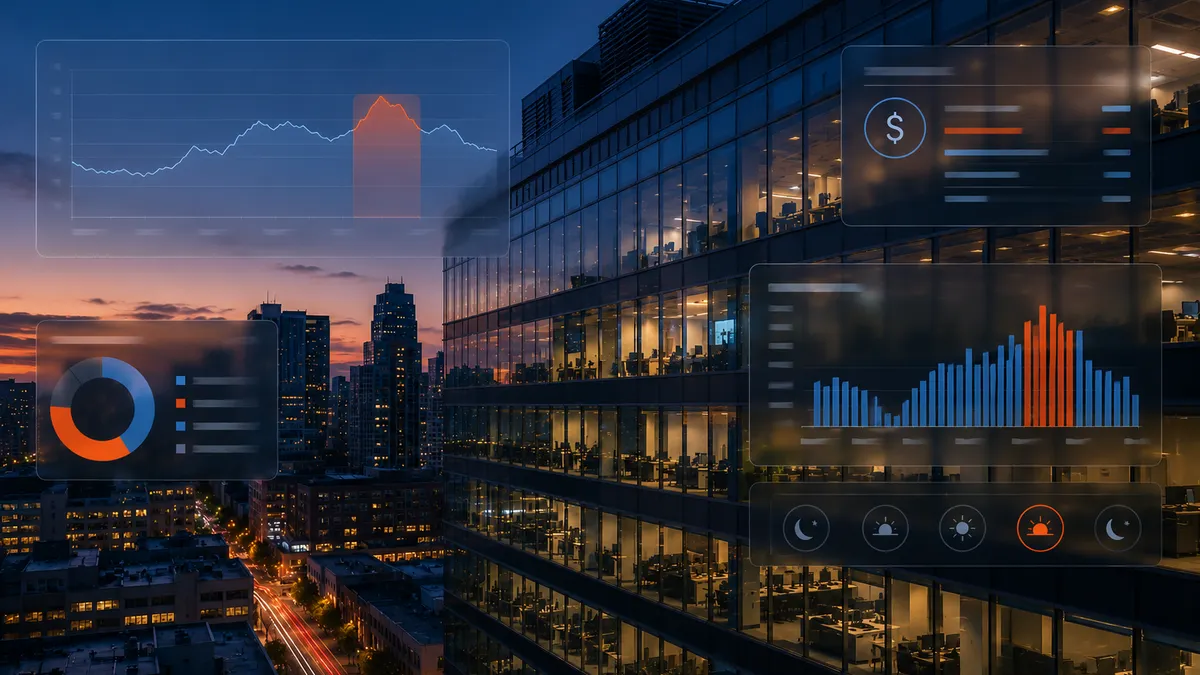

Energy costs in commercial real estate are no longer driven primarily by how much energy a building uses. Increasingly, they are determined by when that energy is used, and those moments are easy to miss.
Across much of the United States, a growing share of electricity cost is tied to short periods when the grid is under stress. During these windows, the cost of ensuring enough power is available rises sharply, and those costs are passed through to building owners. In some markets, these charges have increased several-fold in a single year.
These high-cost periods are limited, difficult to predict without the right data, and often only understood after the fact. By the time they appear on a bill, the financial impact has already been set. A small number of hours can now determine a significant portion of annual energy spend.
Many portfolios are not structured to respond to this shift. Owners have taken meaningful steps to control costs, from negotiating supply contracts to implementing demand response and reviewing utility expenses. These actions still matter, but they were built for a system where costs were tied more directly to total consumption.
That is no longer the full picture.
Today, the challenge is less about reducing energy use and more about understanding when costs are created, where they are lost, and how they can be controlled across a portfolio. In many cases, gaps exist in one or more of these areas, and they compound.
Blind spot #1 is visibility. Energy use is spread across buildings, tenants, and systems, but without a connected view, it is difficult to understand how costs are formed. Many portfolios rely on monthly bills, whole-building meters, or static reports that show usage after the fact. Others track operations or rates separately. These approaches provide useful information, but not a complete picture. Without sufficient metering and submetering, key drivers of cost remain hidden and difficult to translate into action.
Blind spot #2 is recovery. Utility expenses are often processed and passed through without full accuracy. Tenant billing may rely on estimates or incomplete inputs, and recovery opportunities are missed. These gaps are rarely obvious in a single building, but across a portfolio they can materially reduce net operating income.
Blind spot #3 is control. Procurement, budgeting, and forecasting are often disconnected from how buildings operate. Energy purchasing is based on assumptions rather than actual performance, making costs harder to predict and control. Without a clear connection between market exposure and real-world consumption, portfolios remain vulnerable to price volatility and manage costs after they occur rather than shaping them in advance.
Blind spot #4 is timing. The most expensive periods on the grid are also the least visible. Demand response and load shifting can reduce some exposure, but often rely on limited forecasting or predefined triggers. Buildings may still draw power at the exact moments when costs are highest, and in a system where a handful of hours define spend, that matters.
Blind spot #5 is proof. As expectations around efficiency and sustainability increase, organizations are asked to demonstrate performance beyond internal reporting. Without consistent, credible metrics that connect energy use to outcomes, it becomes harder to communicate progress to tenants, investors, and regulators.
Individually, each gap is manageable. Together, they create a system where costs rise, recovery falls short, and performance is harder to demonstrate, even with significant effort.
Leading organizations are beginning to shift how they think about energy. Instead of treating it as separate activities, they approach it as a coordinated system that connects visibility, financial management, and operations. The goal is not only to reduce energy use, but to understand when costs are set and respond accordingly.
For commercial real estate owners, this shift has direct business implications. In a market where tenants are paying closer attention to total occupancy costs, energy is one of the most visible and variable components. Buildings with lower, more predictable utility expenses are easier to lease and retain tenants in.
At the same time, gaps in cost recovery can quietly reduce margins. Over time, the ability to manage energy effectively becomes part of how portfolios differentiate themselves, not just operationally, but commercially.
The portfolios that perform best over the next decade will not be defined by how little energy they use, but by how well they understand when and how costs are created, and how much of that value they recover.
The question is no longer whether energy costs can be reduced. It is how much is currently outside your control, and how much can be brought back into it.