It’s better to be proactive about safety, even in ways that aren’t compelled by federal rules, because facilities are exposed to liability any time there’s a safety mishap, according to Philip Jacklin, continuing education program manager at Diversified Fall Protection.
“If a worker gets injured on the job, even if there’s not a safety requirement in place that was in violation, the employer is still held responsible for mitigating it,” Jacklin told Facilities Dive in an interview.
Regulations administered by the U.S. Occupational Safety and Health Administration include a general duty clause, which requires employers to furnish a workplace free from recognized hazards that are likely to cause death or serious physical harm to employees. It acts as a catch-all for hazards not covered by specific OSHA standards, Jacklin said.
Companies can get cited under the clause after there’s been a workplace injury or a death even if there’s no specific rule violation, he said. “Obviously a work practice was dangerous [if] it injured or killed someone, so you failed to make a safe workplace,” he said. “It’s kind of a circular argument, but it’s still there.”
There’s also the risk of civil suits from employees’ families, which can lead to settlements that mandate costly fixes, he said.
“Even if there might not be a legal requirement for a fall protection hazard, companies end up purchasing [safety devices] anyway after an injury or a fatality,” Jacklin said, because settlements usually require organizations to abate hazards to prevent future mishaps.
That makes it incumbent on facility managers to take a proactive safety approach even when it comes to practices that aren’t subject to OSHA rules, he said.
If “someone was hurt … you end up buying a system after the fact anyway,” he said. “If it’s an identified hazard, [you] should plan to do something about it eventually, instead of only looking at the legally required ones.”
To be proactive, facility managers can start by identifying hazards. They don’t have to solve the problem immediately. “Doing a little bit on it makes progress towards figuring out a solution,” he said.
Jacklin’s company is focused on fall risks, which can occur at ground level as much as from heights, he said.
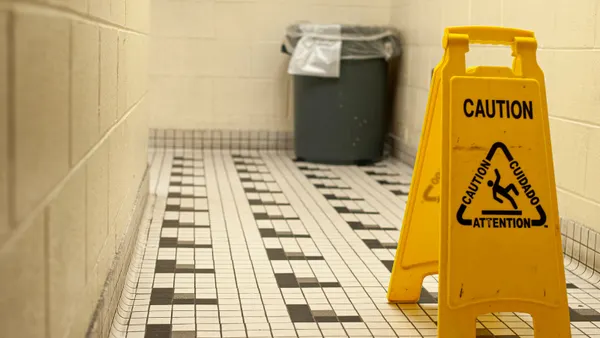
“Wet floors are a huge, complacent hazard,” he said. “You don’t have to be up high to fall and get injured or die.” Factory floors and loading docks are big risk areas, he said.
Jacklin said state OSHA offices are an underused resource for facility managers looking for safety help. They offer inspections without the risk of citation, which could help managers show that their facility is being proactive about safety, he said.
“They’re just going to say, ‘Hey, this is a potential citation. You should get this … abated,’” he said. “Once you get those issues abated, OSHA will make sure that you’re on the ‘good business list.’”
After this story published, Jacklin clarified that by "good business list" he means state OSHA agencies recognize when a facility tries to be proactive about safety; there is no formal "good business list."
Facilities managers can also reach out to vendors to identify problem areas. “Get an audit done,” he said. “You’re going to discover new hazards there. Some of them will be in that [proactive] realm; others [will] need more immediate attention.”
Separate from the legal and financial risks, safety reviews are a best practice, he said. “There’s a moral implication of not doing this,” he said. “It’s a longer cycle, but it still does advocate for the worker and make the workplace safer, which in the end helps the business.”
Editor's note: We have updated this story with an additional comment from Philip Jacklin.