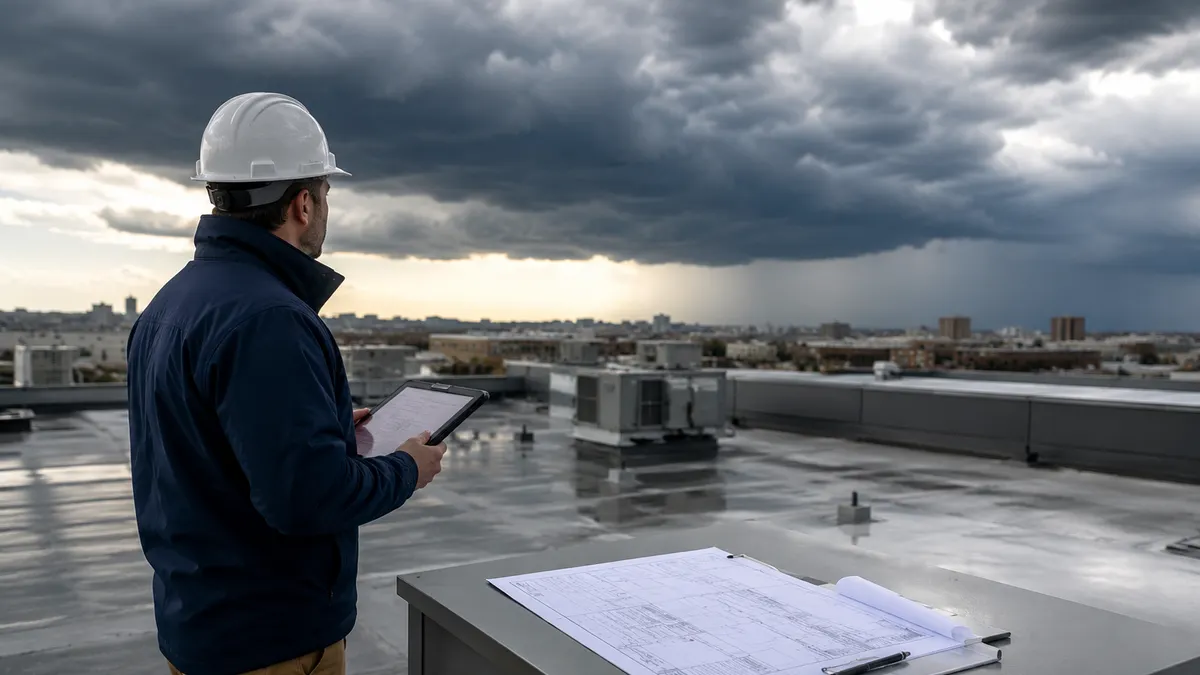

Facility managers have always prepared for storm season, but today's weather patterns are making that process increasingly difficult.
What was once considered a predictable seasonal challenge has evolved into a year-round operational risk. Hurricanes, severe thunderstorms, hail events, high winds and flooding are occurring with greater frequency across regions that historically experienced fewer major weather disruptions. For organizations responsible for commercial facilities, this shift requires a different approach to roof management.
The roof remains one of the most important and often overlooked components of a facility's resilience strategy. While many organizations invest heavily in emergency response plans, business continuity initiatives and life safety systems, roofing issues are frequently addressed only after a weather event exposes existing vulnerabilities.
The challenge is that most storm-related roof failures do not begin during the storm itself.
In many cases, severe weather simply reveals issues that already existed. Aging flashings, deteriorated sealants, blocked drainage systems, unsecured rooftop equipment and deferred maintenance can all increase the likelihood of damage when a storm arrives.
This creates a significant opportunity for facility leaders
Organizations that proactively assess roof conditions before severe weather season often place themselves in a stronger position to minimize disruption, control repair costs and protect building operations.
A proactive approach typically begins with understanding current roof conditions. Facility teams should evaluate:
- Drainage systems and roof drains
- Flashings and perimeter details
- Rooftop penetrations and equipment curbs
- Membrane condition and seam integrity
- Signs of ponding water
- Previous repair areas
- Documentation of warranty requirements
Many organizations also benefit from creating a roof asset inventory that identifies roof age, system type, warranty status and known deficiencies across their portfolio. Having this information readily available can accelerate decision-making before and after a weather event.
Another often overlooked component of preparedness is documentation.
When a major storm impacts a facility, having recent inspection reports, photographs and maintenance records can help support insurance claims, expedite repairs and provide a baseline for assessing damage. These records can also assist internal stakeholders when prioritizing capital planning decisions.
Beyond individual facilities, organizations managing multiple locations face an additional challenge: consistency.
Standardized inspection schedules, reporting processes and response protocols can help ensure facilities receive the same level of attention regardless of geography. This becomes particularly important during widespread weather events when multiple locations may require assessment simultaneously.
While severe weather cannot be prevented, its impact can often be reduced through preparation.
Facility leaders who view roofing as a strategic asset rather than a reactive maintenance item are often better positioned to maintain operations, protect occupants and avoid unexpected costs. As weather-related disruptions continue to affect businesses across the country, proactive roof management is becoming an increasingly important component of overall facility resilience.
The question is no longer whether severe weather will affect a facility. The more important question is whether organizations are prepared before it does.