
Health and safety in high-traffic buildings, such as hospitals, offices, and schools/universities, are often framed around high-level systems and initiatives like emergency preparedness, infection prevention protocols, and operational policy.
For facility professionals, however, persistent safety challenges don’t just occur during extraordinary events.
Certain issues subtly emerge over time, particularly on high-frequency door openings; users expect them to function reliably and safely every time.
Popular sites in a high-volume facility include entrances and exits, corridors and hallways, and shared-use spaces. The continuous movement of people, and objects, in and out of these areas inevitably leads to physical contact being made with the surroundings. Gradually, these constant interactions raise potential problems that are easy to overlook.
The Cumulative Impact of Damage
Surface-level damages, including chipped door edges, cracked frames, misalignment, or degraded materials, often start small. Individually, they may seem cosmetic. Collectively though, these minor defects compound to create major hazards such as sharp edges or pinch points, causing doorways to no longer operate as intended or without risk.
The implications can be serious: in healthcare, staff hastily moving beds or carts cannot afford doors that fail to open properly or rebound unpredictably. In education and commercial applications, intense foot traffic and the increased likelihood of collisions and crowding magnifies the impact of compromised or unsafe doors.
Openings that absorb hundreds of incidental impacts each week may seem like they’re functioning correctly, but often the safety threat is already present.
Shift Toward Incident Prevention
Today’s safety conversations are focusing more on prevention rather than response. Recurring door inspections are critical for mitigating issues, but small design implementations can also influence positive daily outcomes in traffic-dense environments.
Preventive safety design acknowledges that people or their belongings will inherently bump into doors, scrape frames, and more. Rather than try to control these human behaviors, facilities leaders are determining how spaces can be designed to remain safe under real-world conditions.
This preventative approach has benefits beyond reduced injury risk, including preserving accessible building pathways and decreasing the need, time, and cost for maintenance.
Compliance Pressure
Another driving safety factor is compliance. Whether navigating healthcare regulations, life-safety codes, or accessibility standards, facility managers operate in environments where damage to doors and frames can have regulatory consequences.
Fire- and smoke-rated openings, for instance, must maintain their integrity to perform properly. Worn-down doors, or repeated impacts that compromise alignment, may introduce compliance concerns long before a formal inspection highlights them.
Early, well-intentioned design strategies allow facility teams to reinforce performance and safety seamlessly. This approach, combined with periodic door inspections, are effective ways of sustaining smooth building operations.
Defining Operational Safety
Operational safety is shaped not only by policies but the physical environment. When doors, frames, and other opening elements visibly deteriorate, it sends a message of reactivity rather than proactivity. Conversely, environments that are outfitted for and hold up under heavy use strengthen confidence among occupants and staff alike.
Project leaders are recognizing that creating spaces where people feel protected is due largely to durable design. The goal is not to harden buildings, but to help them function safely and efficiently.
Safety Through Design Intent
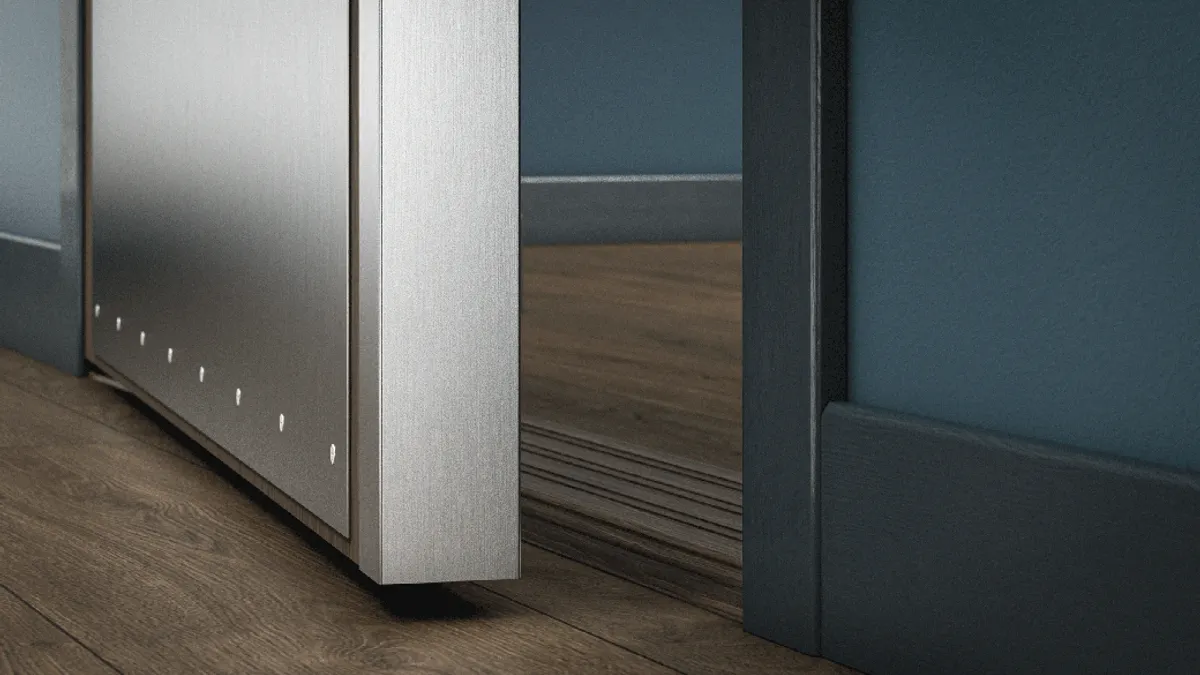
Hardware manufacturers like Rockwood provide door protection that fully support daily operations while helping facilities teams manage long-term risk. Alongside aesthetic considerations, effective protection strategies are engineered to absorb physical impact, preserve door functionality, and prevent damage before it becomes an issue.
When incorporated thoughtfully during new construction, or renovation, these solutions allow doors and frames to perform optimally even in demanding environments:
- Kick Plates – Kick plates prevent lower-to-mid door damage, reducing splintering, cracking, and other marring to preserve a door’s integrity
- Wrap Around Plates – These durable products are designed to protect against forced entry and reinforce the door’s lock area
- Corner Guards – Effectively protect facility wall corners, shielding them from repeated impacts to minimize structural wear
- Door Edges – Safeguards side of door from frequent contact, preventing deterioration that leads to snags and other door malfunctions
- Protector Bars – Deflects traffic and equipment away from exit device hardware, knobs/levers, trim, and the door itself
In a time when facility directors are tasked with delivering increasingly safe buildings, attention to routine interactions and their cumulative impact matters.
Health and safety in heavily-utilized facilities are not only shaped by emergency systems or operational protocols, they are reinforced by the parts of a building that quietly withstand daily use.