
When severe weather is approaching, facility teams have decisions to make quickly. Who checks the roof before the storm? Which areas of the building need the most protection? How will staff report a leak and who is authorized to request repairs?
Those questions are easier to answer before conditions change. A written storm response plan gives the team clear responsibilities and a shared process for preparing the property, responding safely and documenting what happened.
Before the storm: know the building and assign responsibilities
Start with the information your team would need during a time-sensitive response: roof plans, warranty details, recent inspection reports, service contacts and a record of known trouble spots. Make sure the right people can access those records even if the usual facility lead is unavailable.
Identify areas where water intrusion would have the greatest operational impact, such as equipment rooms, inventory storage, occupied spaces and production areas. Then assign responsibility for pre-storm checks, internal updates, vendor coordination and decisions about building access.
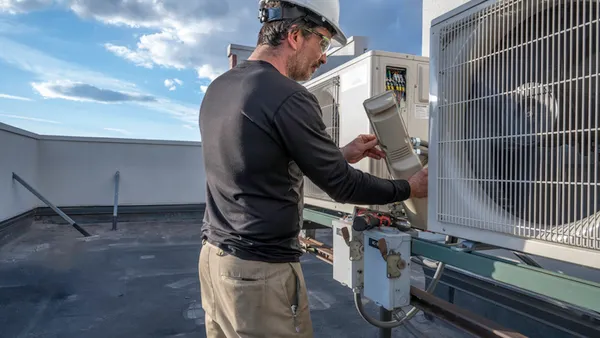
A roof inspection ahead of severe weather may reveal conditions that warrant attention, including blocked drains, loose materials, damaged flashings, or unresolved leaks. Any roof access should follow the facility’s safety procedures and the conditions on site. The goal is to address what can be handled safely before the storm and make a plan for anything that cannot.
During the storm: keep people safe and information clear
Once severe weather arrives, the priority is protecting people. Staff should know how to report water intrusion from inside the building, which spaces or equipment may need protection and whom to contact for decisions. Avoid sending personnel onto the roof during unsafe conditions.
Use one clear channel for reports and updates. Record the location and time of each issue, what is affected and any immediate steps taken inside the building. This helps the response team understand the scope of the problem without relying on scattered calls or messages.
If emergency roofing support is needed, share what you know about the roof, building access, active leaks and sensitive areas. Clear information helps the responding team prepare while allowing facility staff to focus on safe building operations.
After the storm: document first, then prioritize
When conditions are safe, document visible issues before cleanup or temporary repairs obscure them. Take photos of interior water intrusion and affected materials, note when problems were discovered and preserve relevant work orders and communications. A qualified roofing professional can assess roof conditions and recommend the next steps.
Address immediate threats to people, property and operations first. Then distinguish temporary measures from permanent repairs. A temporary response may help stabilize the building, but the team still needs to understand the source and extent of damage.
Bring the findings back into the property’s roof record. An inspection report, repair documentation and photos can support follow-up work, warranty questions, budgeting and future storm planning.
Make the next response easier
After the immediate work is complete, review what the team learned. Were contact details current? Did staff know how to report problems? Could decision-makers find the records they needed? Updating the plan while the experience is fresh can make the next response more coordinated.
Nations Roof’s Storm Response Playbook brings these preparation, response and recovery steps into one resource for commercial facility teams.