Dive Brief:
- Skilled labor demand has almost doubled over the past three years, driven in part by a rise attributed to AI, according to results of a National Fire Protection Association survey released Tuesday. The organization sets standards for fire and electrical safety in the built environment.
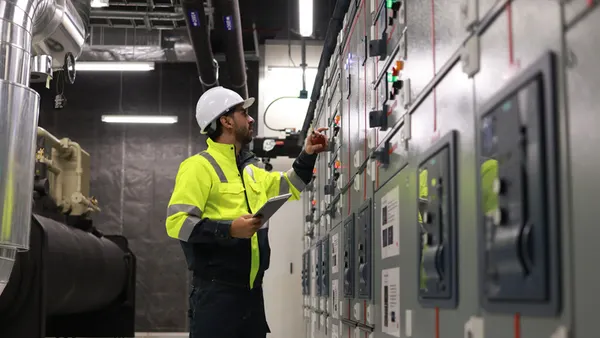
- The survey suggests a rise in demand for skilled labor to work on data centers and other types of AI-related infrastructure, pulling trained professionals away from other settings. Roughly a third of respondents to NFPA’s survey cited increased demand for skilled labor related to AI infrastructure, according to NFPA’s survey of 326 skilled trades workers and others in the field, including facility managers.
- The results cause concern that as AI infrastructure is prioritized, “skilled workers begin leaving other jobsites to satisfy those needs,” Kyle Spencer, director of NFPA LiNK, said in a statement. At the same time, AI could help workers adapt to these rapid shifts and fill those gaps, with workers already using AI to quickly ensure their work meets the latest code requirements, NFPA says.
Dive Insight:
The rapid scaling of data centers and digital infrastructure in the U.S. is exacerbating challenges in hiring skilled labor across industries, according to a March report by Randstad North America, which analyzed more than 150 million job postings for key roles between 2022 and 2026 to identify labor demand.
For example, it’s now more time-consuming to hire an HVAC professional or an electrician than a software developer. Contributing to that shortage is a generational shift, with seasoned workers retiring and taking the skills that have helped prevent downtime and costly errors with them, Randstad says.
Despite a looming retirement cliff for the engineering and technical workforce, vocational training pipelines haven’t kept pace with demand. Conservative estimates suggest a 30% skills gap emerging over the next few years while at the same time AI is fundamentally altering what work looks like, according to Sanjay Rishi, CEO of Work Dynamics of the Americas and head of global industries at JLL.
Currently, 88% of skilled trades workers surveyed by NFPA said demand for their work overall has increased over the past three years.
Amid these shortage pressures, however, skilled trade workers are increasingly waking up to the value of AI and digital tools for streamlining administrative work, documentation and access to technical knowledge, NFPA says. An overwhelming number of respondents, or 87%, agree that technology has made their job easier in the last five years, according to their survey.
AI and automation tools had the greatest impact on work, according to 39% of respondents, with 36% saying they drew the most value from digital tools and software platforms, like NFPA LiNK, which provides access to the organization’s library of more than 300 codes and standards.
Earlier this year, NFPA launched AI updates to the platform that Spencer says will help facility managers and other skilled trades workers keep buildings up to code.
“Now is the time for skilled trade workers to start adopting AI, not as a replacement for their craft, but as a tool that helps them do more and stay competitive,” Spencer said at the time.