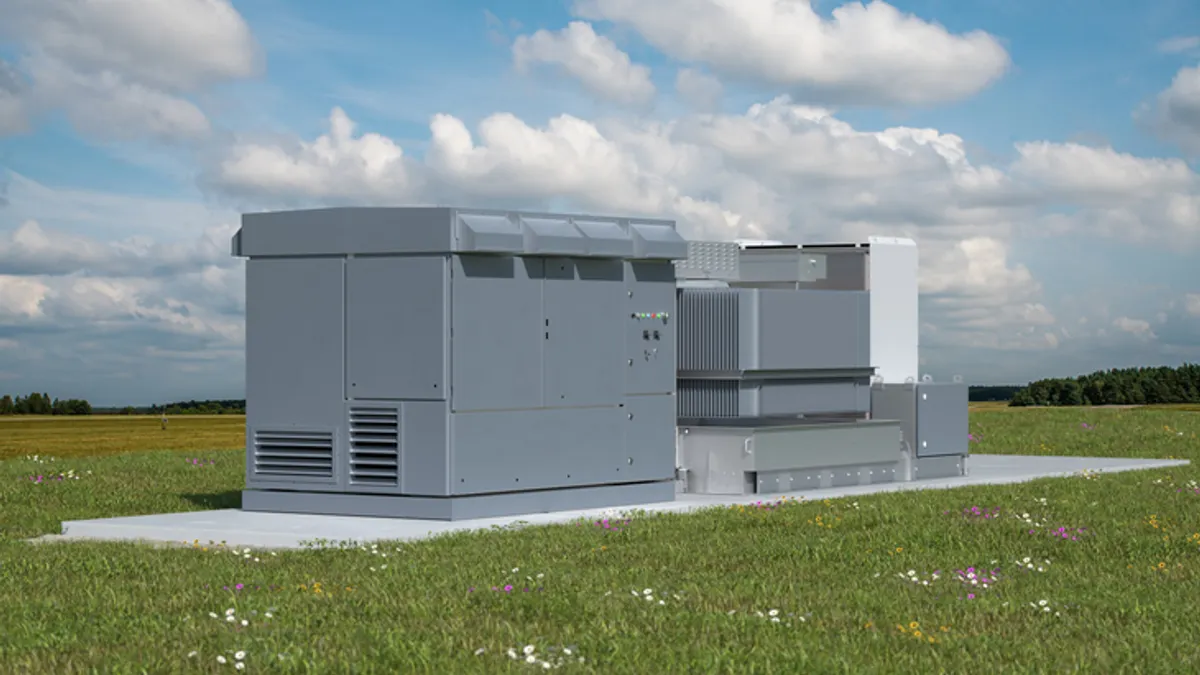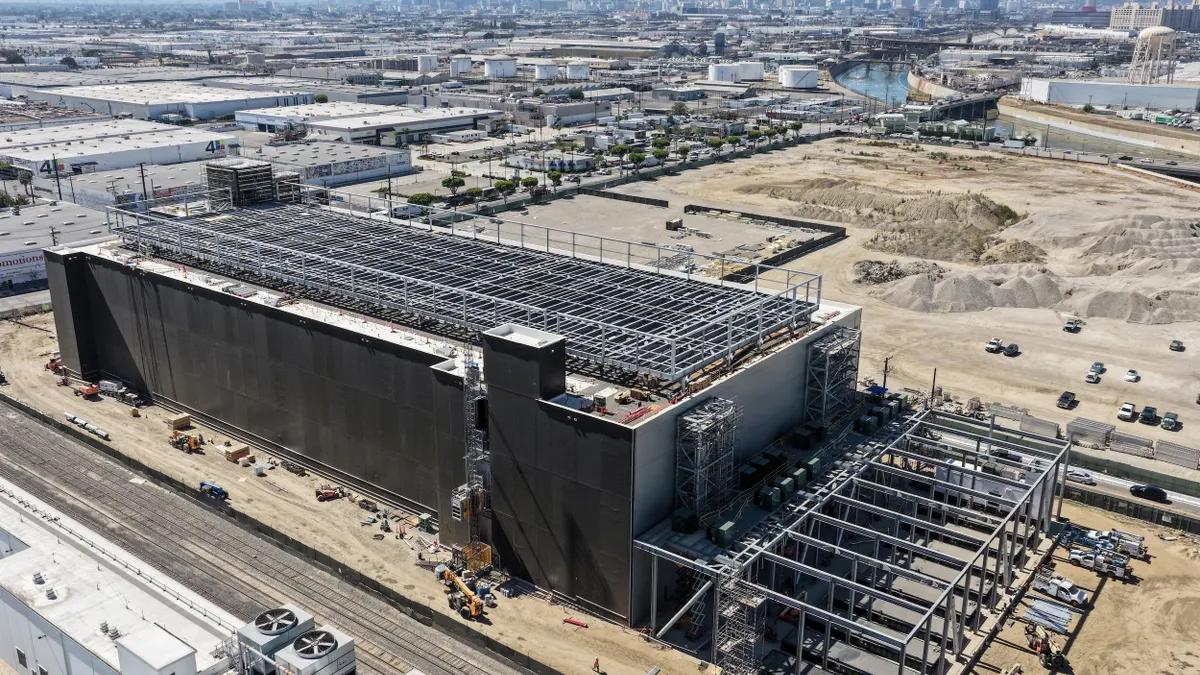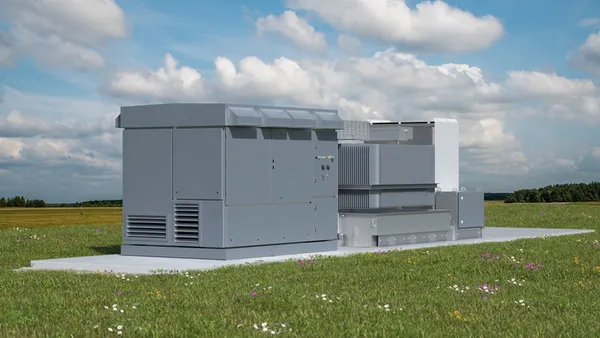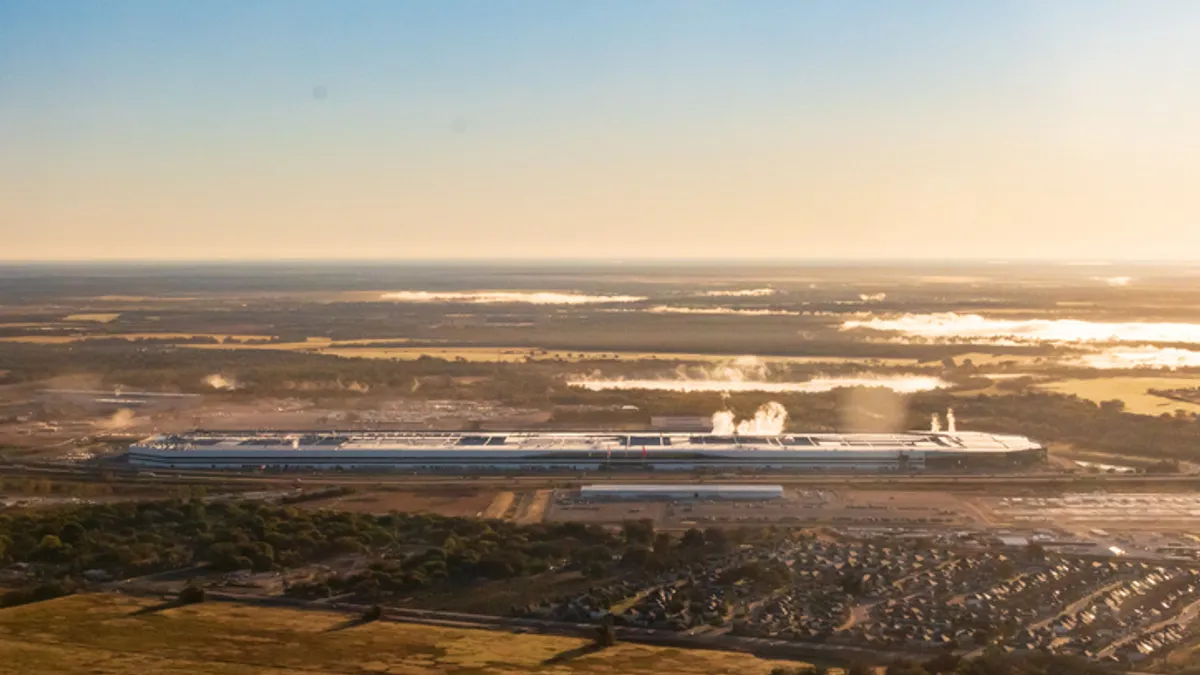
SpaceX’s plan to build the world’s largest facility — 100 million square feet in Grimes County, Texas, near Houston — to do advanced computing and also manufacture, test and package silicon chips for its own use and by other Elon Musk-owned companies, will be self-powered using a gigawatt-scale natural gas power plant and battery storage, according to the company.
The operations “are not expected to use electricity from the grid,” the company said in a tax abatement agreement it entered into with the county in June.
The plan to use on-site power didn’t surprise tech commentators, given lead times for large operations to connect to the grid can stretch to several years and concerns over the impact of large loads on energy prices. But some were surprised the plans included no solar power, since Musk’s Tesla, through its Tesla Energy affiliate, is a solar power generation company.
“The cleaner option lives inside Musk’s own companies,” Fred Lambert, a founder and editor in chief of clean energy news company Electrek, said in an article. “Tesla is literally marketing solar-plus-storage as an answer to AI power demand.”
There’s likely a practical reason for leaning on gas, according to a Tech Times report. Solar comes with a disadvantage compared to gas because of the high precision that chip manufacturing requires.
“Semiconductor fabrication equipment … is extraordinarily sensitive to power disturbances,” the report says. “Industry specifications require voltage stability within ±1–2% of nominal and total harmonic distortion below 3–5%.”
Even the smallest fluctuation in voltage can trigger faults in the production process, the report said.
“A voltage fluctuation lasting eight milliseconds can trigger faults across an entire production bay,” the report said. “A single power interruption can scrap an entire batch of wafers worth millions of dollars.”
Solar power is a problem because the inverters it relies on to convert its DC power to AC are disruptive, the report said. “Inverters inherently introduce harmonic distortion into the power signal,” it said.
Gas turbines, by contrast, have built-in advantages: their shafts spin with little vibration and they don’t require conversion to AC. “Gas turbines [act] as a buffer against power spikes and changes in frequency,” a 2024 Power article says.
When backed by the batteries that the SpaceX plan calls for, the gas turbines can be expected to meet the demands of precision manufacturing, Neil Osnato, founder of Persistence Analytics Group, told Data Center Knowledge. “Gas provides energy and sustained capacity; batteries provide speed, stability, and continuity,” Osnato said. Data Center Knowledge is published by Informa TechTarget, the publisher of Facilities Dive.
SpaceX has said it wants the first phase of Terafab’s operations running before the end of 2027, an ambitious goal, specialists say, given the complexities of chip manufacturing. But it could help that at one time the Grimes County site had a coal power plant on it, which means the site already has some heavy infrastructure in place.
That’s “the detail that got buried,” said Lambert. “The plant sits on the site of a former coal-fired power plant.”
“The engineering reason for that [and other details of the plan] is real,” said the Tech Times report.
It’s also near Tesla’s Gigafactory in Austin and within proximity to broader Musk-led operations, according to a Data Center Knowledge article, which details how the Terafab plans are impacting the AI infrastructure debate.
It could also help that Musk earlier this year acquired APR Energy, an operator of mobile gas and diesel turbines.
“The company offers 30- to 60-day turnarounds for infrastructure that would otherwise take years,” a Moneywise article says.
Even with on-site energy and the company’s plan to be self-supporting, there’s a good chance the system will still be connected to the grid, which is within the service area of the Electric Reliability Council of Texas, or ERCOT, even if that electricity never gets tapped.
“The county agreement says the facilities are “not expected to use electricity from the grid,” rather than saying they will have no grid connection,” the Data Center Knowledge article says.
“Behind-the-meter generation does not eliminate the reliability problem,” Osnato said in the article. “It relocates the reliability boundary.”
Despite the pieces SpaceX has in place to meet its energy needs, completing the $17-billion first phase of the project before the end of next year will be tricky, Patrick Moorhead, founder and CEO of Moor Insights & Strategy, said in an X post.
“You can’t build a 2-nanometer fab without a production-ready process flow from someone,” said Moorhead, adding that the company doesn’t have a process flow in place yet. “This isn’t a detail. It’s the foundation.”