Operators of large facilities often have on-site energy assets they can tap to generate revenue through load management efforts, but if they choose to make money that way, they need to step up their ability to give the grid the amount of energy that they commit to — or face an increased risk of penalties, a facility energy specialist says.
Regional transmission organizations, independent system operators and utilities that offer facilities demand response opportunities are paying more attention to when facilities, if they’re registered to participate, don’t cut their grid energy use to the extent that they say they will, says Victor Hoerst, director of business development at OnSite Partners, an energy consulting company.
“If you tell the grid … ‘I’m going to take 1 megawatt off of the electrical grid,’ and then you don’t, if you miss that too much, there will be penalties associated” with that, Hoerst said last week at the APPA annual conference. “In the last couple of years, there are more of these penalties that are coming around. They’re certainly paying a lot more attention to those who do not meet their obligations to help out.” APPA is a national organization of college and K-12 school facility managers.
Lowering your grid use or generating power that you can provide to the grid during high-value events, called coincident peaks, can make a facility a lot of money, Hoerst said.
The rate during the 10 highest-value coincident peaks in the PJM and ASTI regions last year, for example, topped out at $21,000 per kilowatt-hour, hundreds of times higher than the typical 14 cents per kWh in the area.
“Those 10 hours are impacting your annual electricity bill 146 times more than your average hour,” he said.
Improving your ability to predict when these high-value coincident peaks occur can help you better match your grid use reduction to what you commit to, Hoerst said.
“You don’t know when these high-value events are going to happen,” he said. “You only know when they happen by looking back.”
If it’s the case that coincident peaks in the previous year were mainly in June or July, at 5 or 6 p.m, then it can make sense to shift operations that don’t have to be done at those hours to cheaper times during the day.
“Maybe you don’t want to shut down the HVAC, but maybe you have the ability to turn it off for a little bit or move the temperature up a little bit so it’s not drawing nearly as much electricity during those hours,” he said.
Last year in the PJM area, there was a cold snap that was pushing the grid close to its megawatt limit, so at around 6 p.m. on Jan. 23, 2025, the RTO alerted registered facilities of a demand-response opportunity. At the $12,000 kWh rate, the savings could be substantial.
“The grid was calling on help at the tune of close to $50,000 per MW,” he said. “So if you had registered to help … then you have the ability to get a check from the grid operator for nearly $50,000 per MW of electricity that you pull off the grid.”
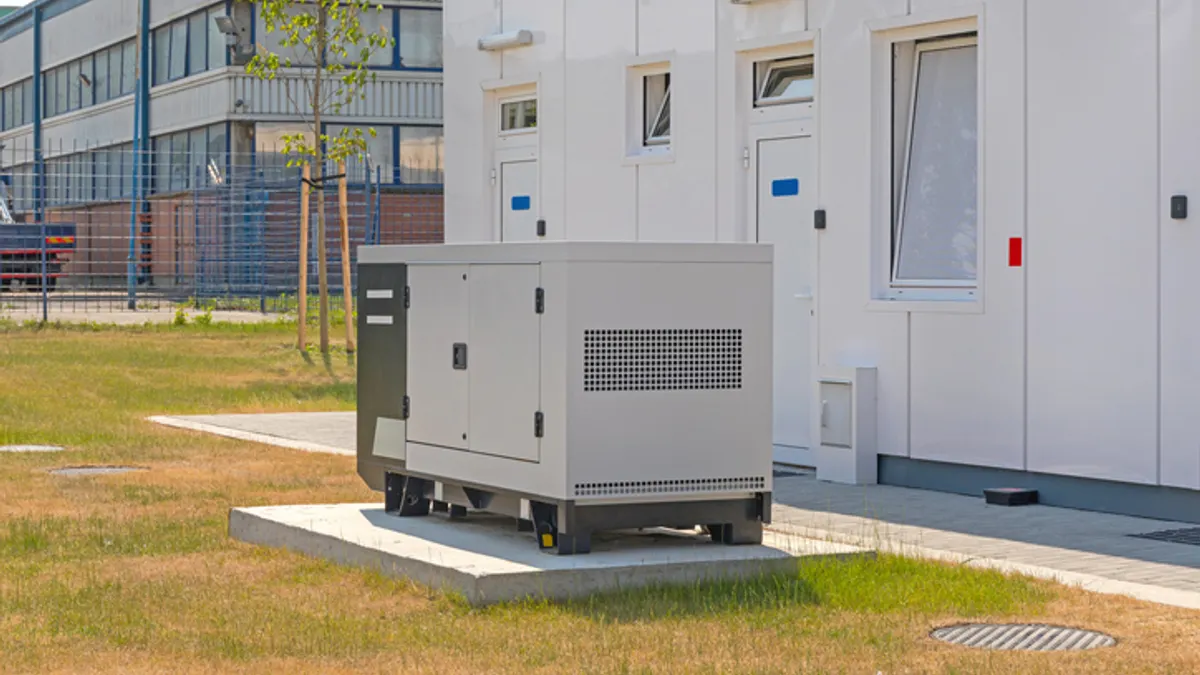
If you lean into on-site energy generation, there are limits to what you can do if you’re thinking of using a gas or diesel generator, he said. These have to meet federal emission standards, and there are other limits depending on where in the RTO or ISO the facility is located.
“You may already have [a clean generator] because your facility has certain sustainability targets,” he said. “But if you don’t, that’s something to consider. That generator should be clean enough to meet EPA’s standards.”
The generator also has to have paralleling infrastructure, which enables it to run when the facility is also using electricity from the grid.
“A lot of generator infrastructure is designed, electrically speaking, to run when the grid is off,” he said. “If you’re going to use the backup generator for economic purposes [rather than for backup] and turn it on during these high-value hours, your microgrid setup has to be such that the generator can operate at the same time as the grid.”
Hoerst recommends combining each piece of backup power and savings opportunity you have, to the extent possible, to take the most advantage of coincident peaks when they occur.
“Run everything that you can,” he said. “Even the backup — the one that’s a spare to be used just in case. Because every kW that you’re generating through those high-value hours is impactful to your bottom line.”