Dive Brief:
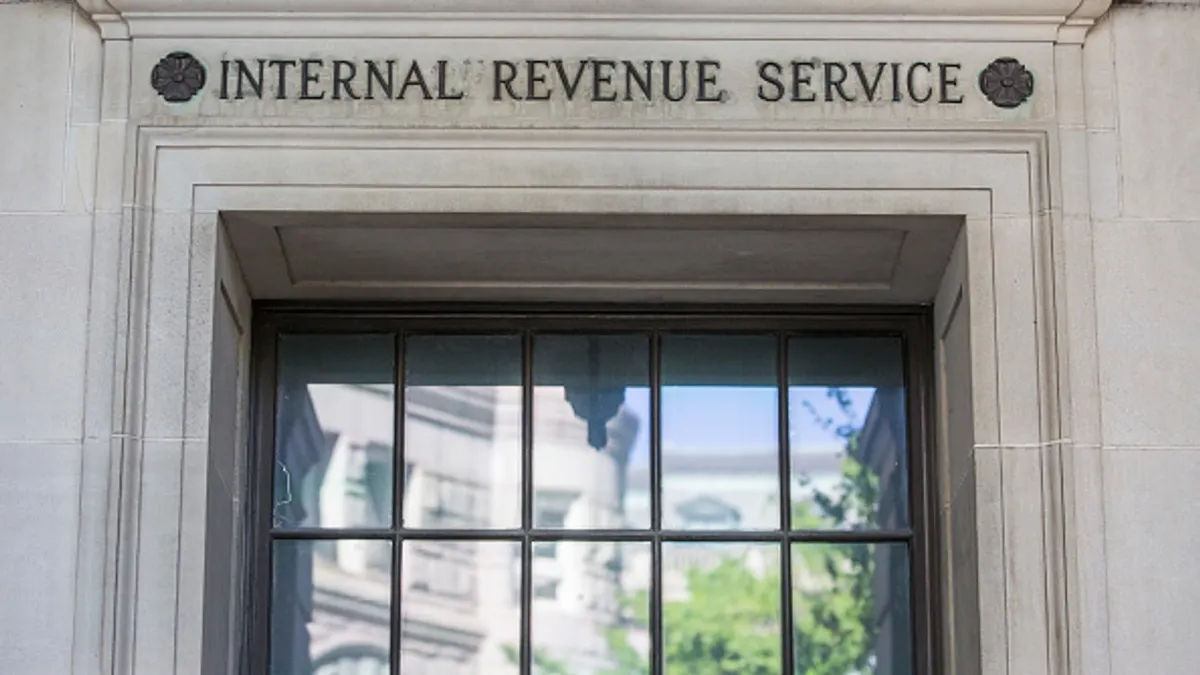
- Since the Internal Revenue Service launched a security review of its roughly 500 facilities in 2022 in response to what it feared would be stepped-up violence, the agency has made hundreds of safety improvements, the U.S. Treasury Department Inspector General for Tax Administration says in a report. But it won’t release publicly what the improvements are, or where they were made.
- “Information determined to be restricted from public release has been redacted from this document,” says the report, released July 29. Federal Freedom of Information Act rules grant an exemption to public disclosure of information that could “reasonably be expected to endanger the life or physical safety of any individual,” a FOIA information page says.
- Looking ahead, funding for remaining improvements could be an issue. The agency has gone through multiple “defend the spend” campaigns to justify its use of money for security upgrades, the IG said, and hasn’t always been successful.
Dive Insight:
The agency launched the security review after Congress increased IRS funding by $80 billion to step up tax enforcement, sparking concerns over employee safety.
“Threats against the agency increased after [two congressmen claimed] that the additional funding would lead to a massive increase in the number of armed IRS agents and that enhanced enforcement would be aimed at middle-income taxpayers,” Bloomberg Tax reported at the time.
In announcing the review, then-IRS Commissioner Charles Rettig said the security of the agency’s facilities need to be aligned with the risks they faced.
“Given the current environment [we need to assess] perimeter security, designations of restricted areas, exterior lighting, security around entrances to our facilities and other various protections,” he said in an internal memo that ABC News reported.
Concerns over violence extended to employees’ homes. “Taxpayers and anti-government or anti-tax groups with malevolent intent may use the Internet or social media to track down and identify IRS employees, their families, their homes, and personal information to threaten, intimidate, or locate them for physical violence,” the IG said in a 2023 report
Based on the review it launched in 2022, the IRS identified almost 600 changes it could make to its facilities to improve security, and more than 500 of them have been made, the inspector general said in the latest report.
The agency’s Facilities Management and Security Services, which oversees the improvements, told the IG that the remaining recommendations might not need to be made.
“FMSS officials noted that they plan to review each open recommendation and evaluate whether the projects remain necessary, feasible, or can be reduced in size,” the report said.
A video surveillance system that is operating adequately, for example, might not need to be replaced even though it’s out of date, FMSS told the IG.
The agency has also made progress on several dozen improvements the IG recommended between 2022 and 2024, but descriptions of the tasks and how many have been completed are blacked out in the report.
The report made four recommendations, of which one is publicly available: for the acting chief of FMSS to finalize the process to prioritize and request funding for previously planned security improvement projects.
The IRS has lost some funding previously allocated for corrections, the IG said. “Corrective actions were initially sponsored with Inflation Reduction Act of 2022 funding,” the report said. “However … in July 2024, $19 million in funding for corrective actions was cancelled.
John Pekarik, acting chief of FMSS, said in a memo that it is developing the charter for a review board that will be used to prioritize the remaining out-of-cycle review recommendations, pending funding approval.
“FMSS will finalize the charter for the Project Review Board (PRB). The PRB will meet at least quarterly to review all FMSS projects, including security projects, assigning them a priority and recommending them for funding,” FMSS said in its corrective action plan.