Dive Brief:
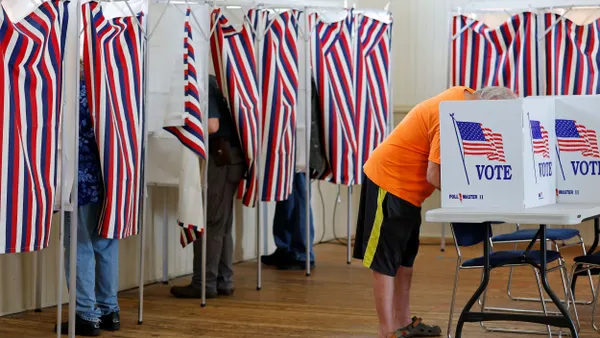
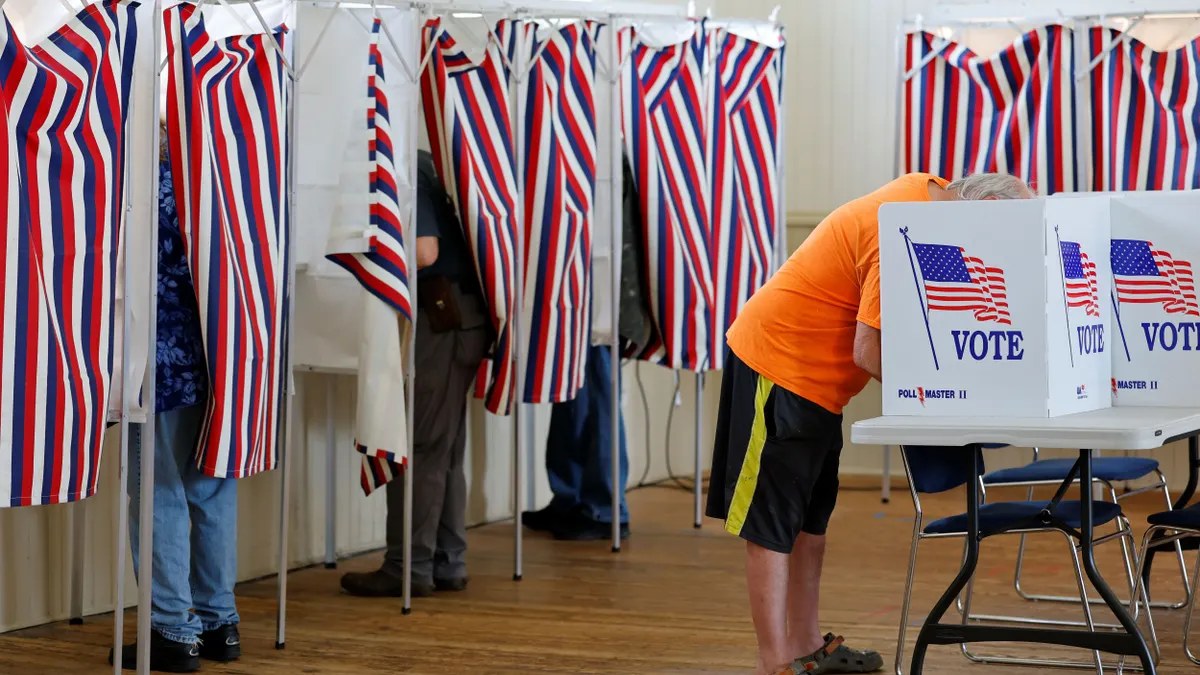
- The 2026 U.S. midterm elections aren’t expected to impact the commercial real estate market significantly, but a divided government raises broader economic risks, according to a report by Cushman & Wakefield.
- Having Congress and the executive branch divided by political party raises the risk of a debt-limit standoff, government shutdown or unilateral executive trade action, the firm said in a report released Wednesday.
- “Most of these policy changes are unlikely to materially affect property markets directly,” the report says. “Instead, their influence will largely be transmitted through the broader economic environment, particularly interest rates and inflation. Investors will see the effects in cap rates, valuations and debt availability, while occupiers will see them in borrowing and fit-out costs, expansion decisions and supply-chain footprint choices.”
Dive Insight:
As of Nov. 6, Democrats had secured 253 House seats and 54 Senate seats, the Associated Press reported.
In addition to a possible debt-limit standoff, government shutdown or unilateral executive trade action, the Iran war is a primary swing factor for inflation and interest rates, Cushman & Wakefield said.
The war, now in its eighth month, has disrupted the flow of oil through the Straight of Hormuz, keeping crude oil near $100 per barrel.
“Further escalation of the conflict remains an important downside risk for inflation, interest rates and economic growth,” Cushman & Wakefield said.
Although Federal Reserve actions and the economy are the strongest factors affecting interest rates, Congress can affect rates through legislation that influences fiscal policy, the report said. If Congress can’t move legislation on economically sensitive matters like tariffs, the Trump administration may take unilateral action beyond what it already has on tariffs and other matters impacting prices, Cushman & Wakefield said.
Despite this, party control has historically made little difference to occupancy, per the report.
“The percentage of space leased changed by less than half a percentage point, on average, in the year following [past] midterm elections, but [rather] has tracked real GDP growth relatively closely,” Cushman & Wakefield said. “This suggests that the broader economic environment is a more important driver of occupancy than election outcomes.”
While questions remain around fiscal, trade and regulatory policy, “the election does not fundamentally alter our economic or commercial real estate outlook,” Cushman & Wakefield said.
“We continue to expect gradual improvement in property fundamentals, supported by economic growth and constrained new supply, even as financing costs remain elevated,” the firm said. “For occupiers, continued economic growth should support healthy demand for space across most property types. With new construction limited, improving demand should put upward pressure on rents, particularly for the highest-quality space.”