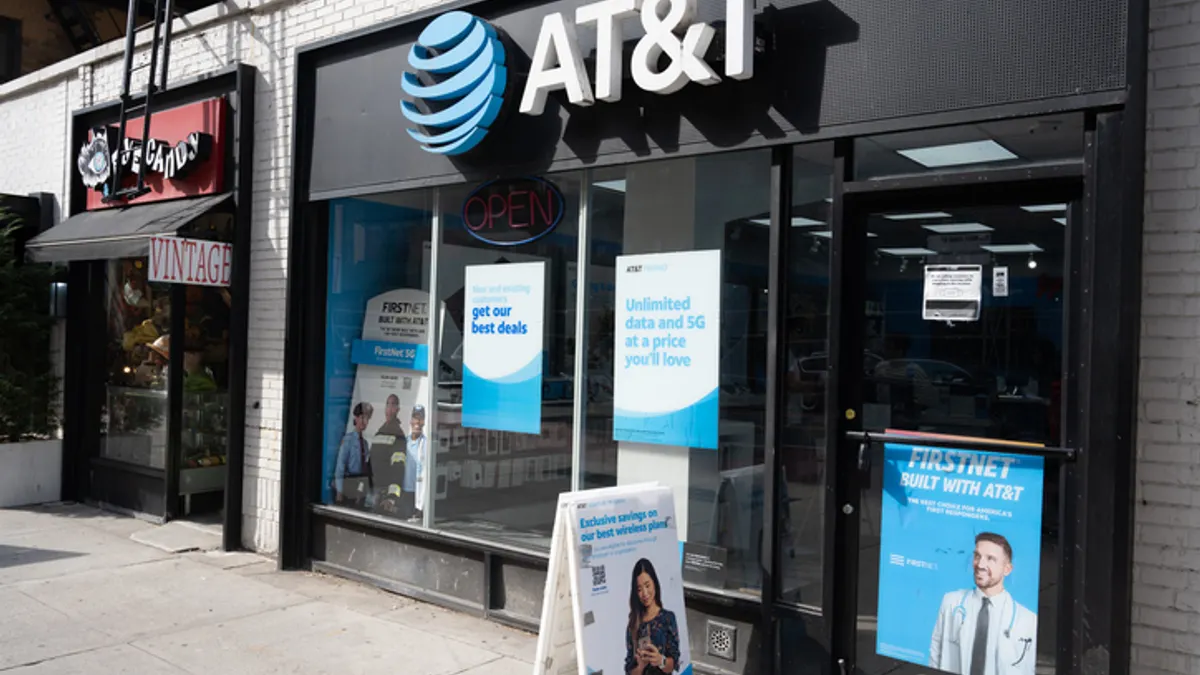
When AT&T announced in April it was no longer servicing legacy POTS networks in some parts of the United States, it was the latest step taken by telecoms to make the copper wiring that has traditionally enabled phone and other communication services a thing of the past.
The Federal Communications Commission has been helping to speed up the shift away from POTS — plain old telephone service — to fiber, wireless and satellite networks with a series of deregulatory actions that began a decade ago but has accelerated this year with the release of several rules easing telecom requirements.
“These legacy networks that were first used to deliver voice services in the 19th century are costly to maintain and increasingly difficult to repair and replace,” the FCC said March 26.
Organizations that have seen their telecom bills jump by as much as 200% might not mourn the loss of copper networks, but ensuring the continued operation of the critical devices that rely on the networks is a growing problem, says Clinton Fitch, senior director of strategic partnerships at internet communications provider Ooma.
“When that line gets cut and it happens to be the phone line in your elevator or your fire alarm panel, you’re out of business,” Fitch said in a Facility Executive webinar June 24.
Most organizations’ phone service is wireless or fiber today, so facility managers are mainly concerned about the devices that have remained tethered to copper lines as a legacy matter, Fitch said. These include fire alarm panels, door access systems, boiler room sensors, security cameras, elevator phones, gate entry systems and blue light phones, among other things.
The high volume of fax machines that hospitals and insurers rely on also tend to be on legacy networks, Fitch said. “We have some hospital customers that have 800 fax machines,” he said.
The telecoms want to get rid of their copper lines because they’re expensive to maintain and customers have shown a preference for alternative types of connectivity, according to an analysis by the International Center for Law and Economics. “Americans have largely abandoned landlines,” the analysis says.
For the carriers, the cost of maintaining the copper lines has become exorbitant, the analysis says. “It materially drains [their] revenue,” it says. “AT&T reported spending about $6 billion in 2023 — roughly 5% of total revenue — to keep its copper network operating.”
It will only get more expensive for the telecoms as the technicians who know how to service the lines retire without having replacements in the wings, and as thieves, who see the price of copper hitting record levels, according to the International Energy Agency, dig it up for scrap sales.
“There are literally millions of miles of copper in the ground across the United States powering telephones or the electric lights on the streets,” Fitch said. “AT&T has multiple billions of dollars invested in this copper network, so … they want to recoup that money by literally pulling the copper out of the ground. Thieves know this as well.”
The big bills that organizations are seeing reflect these trends, but the telecoms are also being deliberate about price hikes to help push customers off the fence about transitioning away from the old networks, Fitch said. “They’re making this a pain point to make it happen,” he said.
In the webinar, Fitch shared a customer’s bill for legacy network connectivity that skyrocketed between July and August 2023, from $2,100 to $16,000. “This is an extreme case,” he said, “but it’s not uncommon to see 50%, 75%, 100%, 200% increases in bills consistently month over month.”
The telecoms can get away with these big increases because the FCC, as part of its deregulatory effort, has “pulled the handcuffs off,” Fitch said. “From a pricing perspective, it used to be very regulated. Carriers could only increase it so many percentage points a year. That’s all gone now, so a carrier can not only increase the price at whatever rate it wants to but as fast and as often as it wants to.”
Some facility managers might think they must keep their critical communications devices like elevator phones and fire alarm panels on copper wire networks to comply with code requirements or adhere to industry standards that mandate guaranteed connectivity, but voice over internet protocols and other alternative communication systems can meet these requirements as well, Fitch said.
Any managed facilities-based voice network, or MFVN, can offer a continuous service guarantee because it doesn’t rely on public networks but connects directly to LTE providers like AT&T and Verizon. “That’s what’s required for some of the certifications,” he said.
LTE, or long-term evolution, refers to the 4G wireless broadband technology that powers the high-speed cellular connectivity that digital technology relies on.
In its announcement about ending legacy servicing, AT&T said it’s aiming to be out of copper by 2029. Verizon is operating on a similar timeline. Through June of this year, it closed 50 legacy networks, the company’s public network disclosures show. Lumen (previously CenturyLink) is also quickly shutting down copper lines, its public network disclosures show.
The ending of these services means facilities with devices still on copper networks will see their devices shut down. If the devices are critical, like fire alarm panels or elevator phones, a shutdown can mean a shutdown of the business; it can be a compliance violation to allow people into a building without a working fire alarm panel or in an elevator without emergency phone service. “It becomes a knock-on effect for them,” Fitch said.
Organizations rushing to transition their devices off of legacy networks could cause a traffic jam over the next several years, so it’s better to act sooner rather than later, according to a bulletin New York-based telecom MetTel released in May.
“The demand for copper replacement products will begin to surge,” the bulletin says. “Plan ample time for a transition to digital solutions which can be affected by increased demand.”
For many facilities, just knowing what is and isn’t connected to a legacy network will take some time, Fitch said.
“We had one situation where the customer [was] paying for a copper line that had actually been walled up and they had no idea it was there,” Fitch said. “They hadn’t checked their phone bill, because it really wasn’t a worry until the cost started going up.”