Dive Brief:
- Columbus, Ohio, has become the first city to provide free period products in restrooms across all of its major sports venues, the city announced Tuesday.
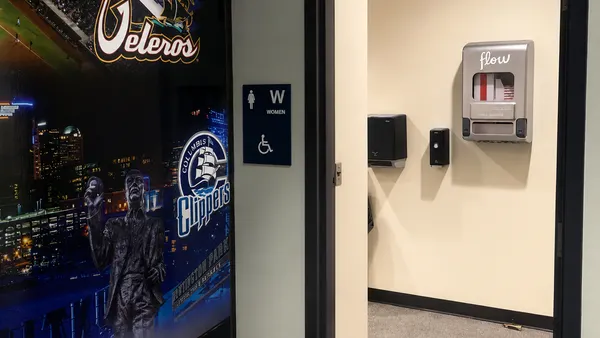
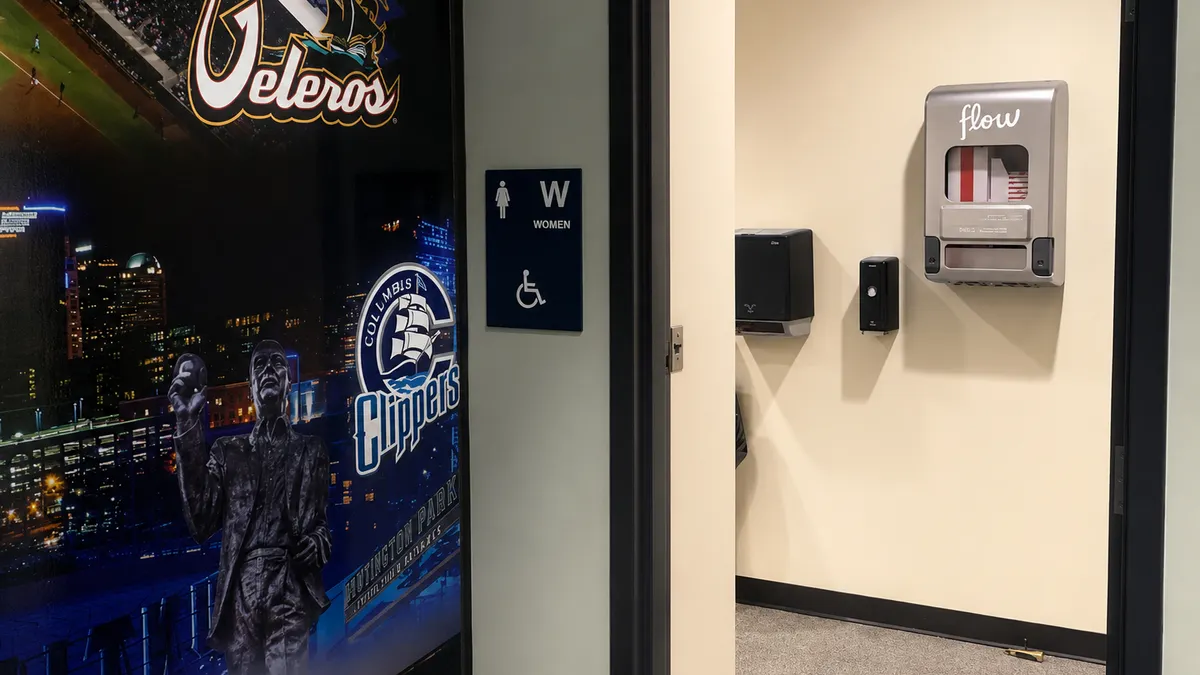
- There are now 165 free period product dispensers in restrooms across seven venues in the city, according to a release from the city and Aunt Flow, the city’s vendor partner. The dispensers feature a display window that lets cleaning teams and facilities managers know when refills are required, the company says.
- As of August, 27 states and Washington, D.C., have passed laws mandating free menstrual products in some combination of schools, public buildings and workplaces, according to Unicorn Hygiene, a company that provides washroom and hygiene products. Coliumbus is the first to focus on stadium venues.
Dive Insight:
The state laws differ in their specifics — where products have to be provided, how much funding the governments provide to help facilities meet the mandates — but they require products to be free, according to Unicorn. Coin-operated dispensers don’t satisfy requirements unless they’re converted to free-vend or replaced, according to the company.
Columbus’ efforts to expand access to period care products in its sports venues builds on a 2017 pilot program at city recreation centers and homeless shelters.
Huntington Park, the city’s minor league baseball stadium and home to the Columbus Clippers, is the most recent stadium to add period products, joining Ohio Stadium, Nationwide Arena, ScottsMiracle-Gro Field, Historic Crew Stadium, the Schottenstein Center and the Greater Columbus Convention Center.
Columbus’ effort highlights a trend among sports venues and public facilities to prioritize guest experience, fan comfort and “access to period products as an ADA-compliant restroom essential,” Aunt Flow says. It also ties into a citywide initiative, IgniteHER, to increase participation in girls’ and women’s sports and attract investment in these sports, according to the city.
“Providing free period products across all our major sports venues helps remove another barrier girls and women face, while actively … helping them feel supported, valued and confident,” Columbus Mayor Andrew Ginther said in a statement.
“A restroom user shouldn’t have to wonder whether they will be able to access period products or whether a dispenser will be stocked,” Aunt Flow founder Claire Coder said in an email. “And a facilities team requires a practical approach to keep it that way.”
For the facilities team at Huntington Park, “We treat period products like toilet paper, soap and other restroom essentials,” said Tom Rinto, director of ballpark operations for the Columbus Clippers. “Our operations staff check cleanliness every day and make sure the products are stocked. We have additional checks and refills during events which can draw big crowds. That’s how we keep products available for guests without creating a separate staffing operation.”
“As Columbus continues to grow as a premier destination for women’s sports, we are being intentional to ensure the best experience for all athletes, visitors, fans and participants,” said Sarah Townes, chief marketing officer and innovation officer for Experience Columbus and the Greater Columbus Sports Commission. “Providing access to free period products across our major sports venues is a key part of that experience.”
Multiple bills have been proposed in state legislatures in the past two years to require public municipal bathrooms to be stocked with menstrual hygiene products.
In Maryland, House Bill 941 was introduced earlier this year to require publicly supported transit stations, terminals, parks and recreation centers to provide free menstrual hygiene products, including tampons, pads and sanitary napkins. The legislation faced opposition over cost and requirements that men’s bathrooms also be stocked.
Products would be offered in the men’s bathrooms to help women with disabilities who receive help from male partners or if women need to use the men’s bathroom during busy events, such as a game at Baltimore’s M&T Bank Stadium, said the bill’s sponsor, Del. Terri Hill. The bill’s fiscal and policy note says that each menstrual product dispenser would cost approximately $600 to install, plus the cost of restocking products, Southern Maryland News reported in April.