
Most facilities managers oversee buildings that are 20, 30, even 40+ years old. The original hardware on those doors has performed one of two ways: it's either failed and been replaced reactively, or it's limping along on borrowed time. Then a major capital project arrives: new flooring, updated HVAC, refreshed lighting, code compliance upgrades. In the planning chaos, hardware specification often becomes an afterthought. The default decision is the cheapest option available, or "replace like-for-like" with whatever was there before, while facilities teams move on to the next crisis. That decision defines the next 20 years of maintenance headaches.
Why renovations are different
Renovation projects are rare in facilities management. Unlike reactive maintenance (a broken hinge, an emergency fix) or ongoing upkeep (a squeaky door, a quick service call), a renovation is planned, budgeted, discretionary spending. You have time, budget and engineering input. Yet most facilities teams still treat hardware specification as a commodity checklist item.
A building constructed in 2006 had doors and hardware specified for 2006 conditions, code requirements and usage patterns. Twenty years later, the building's actual use has likely shifted, codes have evolved and access control has gone digital. The original hardware may have been perfectly adequate for 2006, but that doesn't make it the right spec for 2026. Renovation is your chance to specify hardware for the building as it actually exists today, not as it was built two decades ago.
The cost of getting it wrong
Most facilities managers already understand the math of deferred maintenance. Emergency repairs run 3-5 times more than planned work once you factor in expedited labor and rush parts. What's less obvious is the version of that same trap that shows up during renovation: specifying cheap or generic hardware on a planned project quietly creates the next maintenance crisis, just on a longer fuse.
Say an office renovation gets approved and the cheapest compliant door hinges available make the cut. The project finishes on schedule, everyone moves on and five years later (past the renovation budget, outside the warranty period and now somebody else's problem) those hinges start failing. What follows is emergency repairs, piece-purchasing, staff time, tenant complaints and in some cases a compliance gap nobody wants to explain. The original "savings" turns into a cost multiplier down the road.
Specify engineered hardware instead, and the math changes. Slightly higher upfront cost, but the hinge isn't failing at year five. It's still performing at year fifteen, with no emergency calls, no surprise budget hits and compliance that's already documented.
The specification moment
Renovation is essentially the only point where most facilities managers can influence hardware specification at scale. Day to day, you're managing failures and responding to breakdowns; during a renovation, you're designing the next decade of performance. That calls for different questions than the emergency-maintenance mindset defaults to — what are the actual door types in this building and what hardware do they need, have code requirements shifted since it was built, is access control now integrated with egress, are there fire-rated doors that require certified hardware and what does the realistic maintenance environment for these doors look like over the next 15-20 years?
None of this is about bells and whistles. It's about specifying code-compliant hardware for your building's actual conditions, occupancy type and occupancy load, rather than whatever technically clears code inspection at the lowest price.
The right time to specify
If a major renovation is on your facility's horizon, hardware specification shouldn't land on your desk as a last-minute checklist item. It belongs in the engineering conversation from the start, alongside the code compliance review, the access control audit, the life-safety assessment and the accessibility requirements — because the goal isn't matching what the building used to be. It's specifying for what the building is now.
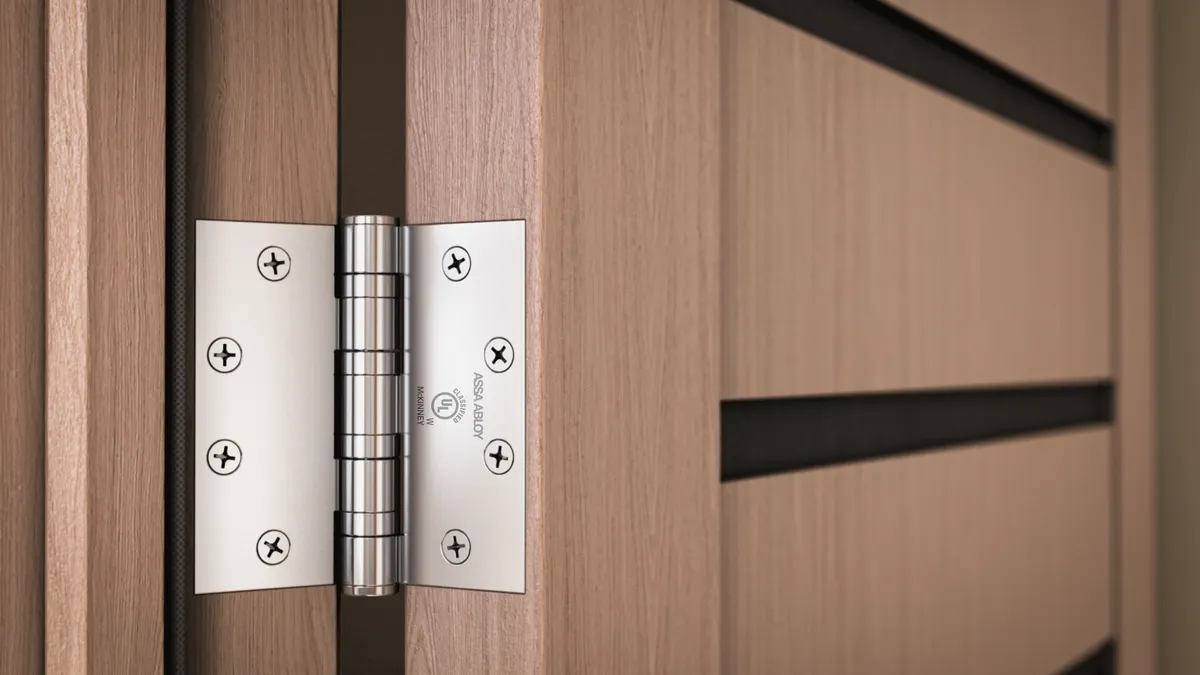
McKinney is an ASSA ABLOY company steeped in over 160 years of experience and durability. Offering commercial-grade hinges for long-lasting doors, the McKinney portfolio is engineered to the highest certification standards to deliver reliable, aesthetic solutions. Learn more at mckinneyhinge.com.