Gabe Phillips is CEO of Catalyst Power. Views are the author’s own.
For years, on-site solar offered businesses a way to hedge against higher energy bills and generate revenue by leasing land or rooftop space to a solar developer. With the passage last year of the One Big Beautiful Bill Act, which reshaped the federal clean energy tax credit landscape and shortened the timelines for their availability, business owners face firm deadlines that will determine whether they can access these significant federal benefits — or miss them entirely.
What changed
Whether you're considering leasing your rooftop or land to a solar developer, purchasing a system, or exploring a power purchase agreement, the federal investment tax credit has been the financial engine that has made many of these solar investments pencil out. The 30% base tax credit has enabled developers to offer attractive lease rates, competitive PPA pricing and compelling economics for business owners who choose to own their systems.
The legislation establishes two critical paths to qualify for the commercial solar ITC:
Path 1 requires you to begin construction on a solar project before July 4 of this year. Projects that meet this deadline remain eligible for the full 30% tax credit with no placed-in-service deadline, provided construction is continuous and in good faith.

Path 2 enables projects to qualify if they can’t start construction by the July deadline as long as they're completed and operational by December 31, 2027.
If you miss these windows, the opportunity for full federal incentives disappears. For business owners, this means the economics of every solar option — whether you're leasing space, buying power or purchasing the system — will shift. Developers won't be able to offer the same lease rates or PPA prices without the ITC. And for businesses buying systems outright, losing that 30% credit can render solar completely uninvestable, pushing payback timeframes from five years to 10 or more.
And here's the hard truth: while the incentives are time-limited, your energy bills aren't getting any cheaper. The businesses that lock in solar deals now — whether through leases, PPAs or direct ownership — will benefit from projects developed with federal support. Those that wait will still need to address rising electricity costs; they'll just miss the financial leverage the ITC provides.
Beyond tax savings
The ITC has enabled multiple pathways for businesses to address rising energy costs.
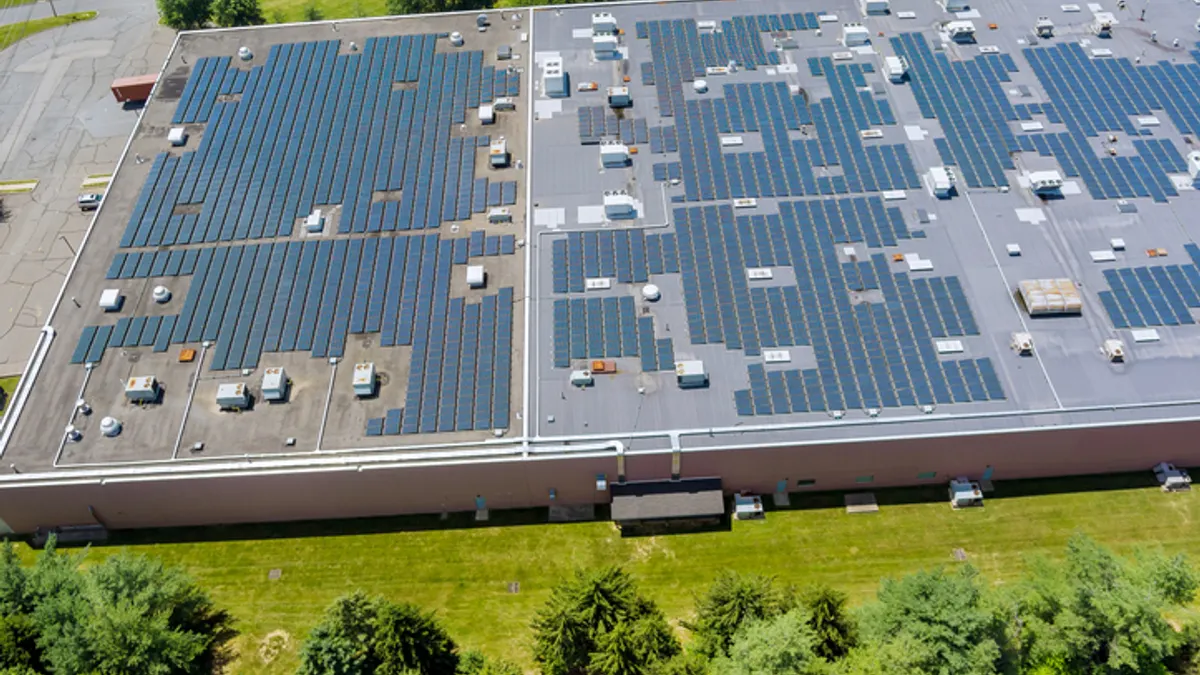
For businesses leasing out space to solar developers, developers can offer more attractive lease payments, turning unused rooftops or land into revenue streams while helping the businesses meet sustainability goals without requiring capital investment.
For businesses purchasing power, PPAs become more competitive when developers can capture the ITC, allowing their partners to lock in rates below utility pricing without upfront costs.
For businesses buying systems, the 30% tax credit improves ROI and shortens payback periods, making ownership economically compelling for companies with the capital.
Regardless of which model you choose, the underlying value proposition is the same: protection from utility rate volatility and reduced volatility in energy costs for decades. And for facilities with consistent thermal loads — like hospitals, food processing plants or manufacturing operations — combining solar with cogeneration systems that produce both electricity and heating or cooling can enhance economics and resilience.
These integrated distributed energy strategies give businesses a number of benefits:
- Locked-in predictable energy costs for 25+ years, insulating businesses from utility rate volatility.
- New revenue streams from underused assets like rooftops and parking lots.
- The opportunity to demonstrate environmental leadership to customers and stakeholders.
- Improved property values and higher-quality tenants.
- Reduced exposure to electricity price increases and potential carbon pricing.
Without the ITC, solar remains a sound long-term investment — but the economics shift. The businesses that act now will gain a competitive advantage over those that wait.
Timeline constraints
Many business owners underestimate how long it takes to develop a commercial solar project, regardless of the business model. Between site assessments, engineering studies, utility interconnection processes, permitting, equipment procurement and construction, even straightforward projects can require 12-18 months from initial planning to breaking ground, and longer for larger or complex sites.
That means businesses exploring solar today for a July 2026 start-of-construction deadline are already working against a tight timeline. Negotiating leases or purchasing systems must begin well before the deadline. When adding the fact that solar developers and installers are experiencing unprecedented demand as these deadlines approach, scheduling constraints are becoming very real.
Recent regulatory guidance has also raised the bar for what qualifies as "beginning construction," making early and thorough project preparation more critical than ever.
What to do
The window is narrowing fast, but it's not closed. If your business owns its facilities and pays significant electricity bills, now is the time to explore your options — whether that's leasing space to a developer, entering a PPA or purchasing a system outright.
Here's a workflow you might use:
- Assess your property's potential. Get a preliminary assessment of your rooftop, parking areas or land. Understanding what's possible — and what different business models could deliver — is the essential first step. Many developers offer this at no cost.
- Compare your options. Analyze leasing, PPAs and system ownership relative to your capital position, tax situation, operational capabilities and long-term plans.
- Move quickly to secure your position. With demand surging as deadlines approach, developers' pipelines are filling rapidly. Even if you're still evaluating options, initiating conversations now prevents you from being squeezed out by scheduling constraints later.
- Consider your specific operational needs. If you have consistent thermal loads — for heating, cooling or process heat — explore how cogeneration might integrate into your energy strategy alongside solar. For the right facilities, the bundling services can be transformative.
- Don't wait for policy changes. Some business owners are hoping deadlines might be extended or that the policy might change. That's a risky bet. These legislative changes were hard-fought, and there's no indication Congress will revisit them favorably for solar in the near term.
The bigger picture
Over years of helping businesses navigate the energy transition through various models — from site leases to PPAs to direct system ownership, one pattern has become clear: the most successful organizations don't wait for perfect conditions — they recognize windows of opportunity and act.
This is one of those windows.
Solar may not be a viable solution for rising energy costs after these incentives expire until costs rise 100-200%, causing businesses substantial financial strain. But the businesses that act now, even if only leveraging a smaller solar solution, will lock in economics that won't be available to those who wait. Whether you're earning lease revenue, buying discounted power or capturing tax credits, the financial math is strongest with federal support.
If you miss the solar deadline — or if solar isn't feasible for your facility — there are other onsite generation solutions worth exploring. Cogeneration systems, for example, can be compelling for facilities with consistent thermal loads, as they produce both electricity and useful heating and cooling with high efficiency.
Your energy costs aren't going down. The only question is whether you'll address them while incentives are still available — or pay full price later.