Dive Brief:
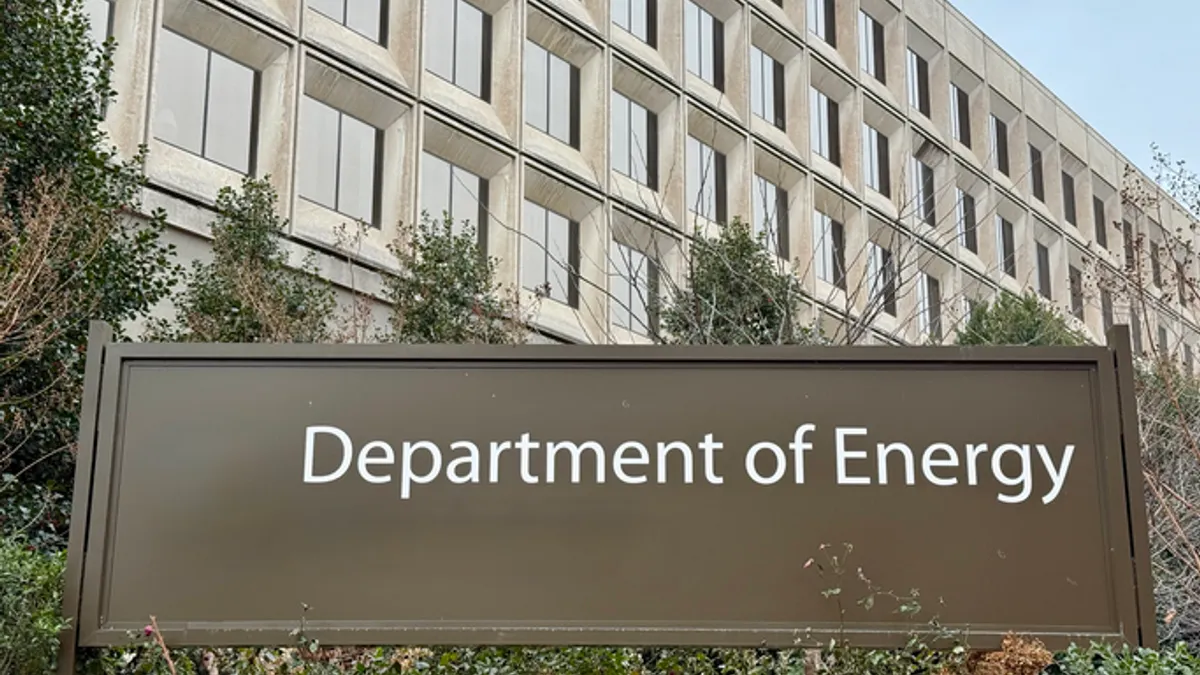
- A bill that would prevent the U.S. Department of Energy from setting an appliance efficiency standard unless it would save owners money within three years is scheduled to go to a House floor vote this week.
- The goal is to “prevent future administrations from prioritizing a radical rush-to-green agenda over the affordability and availability of reliable … appliances,” the bill’s sponsor, Rep. Rick Allen, R-Ga., said in a statement when the bill cleared a committee vote in December.
- Energy efficiency advocates say the Home Appliance Protection and Affordability Act, HR 4626, will raise costs by keeping inefficient appliances on the market and hamstring future efforts by states to take their own action. “If President Trump successfully gutted a product’s efficiency standard under the bill, states would be specifically prohibited from setting their own standards for the product,” the Appliance Standards Awareness Project, or ASAP, says in an information sheet. The bill would impact commercial as well as residential appliances.
Dive Insight:
In addition to prohibiting DOE from setting an appliance standard if the upfront cost would not be paid back within three years, the bill favors maintaining the availability of older appliances rather than requiring their phase-out in favor of newer, more efficient technologies.
Among other things, It would prohibit DOE from updating a standard if it would save less than 0.3 quadrillion Btu of energy and reduce energy or water use by less than 10%. And it would eliminate a regular review cycle that DOE uses to update its standards based on technological advances.
The three-year payback period is unrealistic because many efficiency upgrades take longer than that before savings are realized, says ASAP.
The advocacy group cited a 2014 standard for commercial refrigeration equipment that was estimated to save businesses $900 over the life of the appliance but it took almost six years to reach the payback period. “It would have been prohibited … even though the product lasts an average of 10-15 years,” the group said.
To prevent states from setting their own, higher standards, the bill would give DOE the authority to declare when a single national base standard, rather than separate standards, is appropriate. In these cases, the authority of a state to enforce a separate standard would terminate and the state “shall be subject to the revised base national standard,” the bill says.
In an analysis, the non-partisan Congressional Budget Office indicated the provision raises a federalism issue. “H.R. 4626 would impose an intergovernmental mandate … by prohibiting state and local governments from enforcing their own energy and water conservation standards on manufacturers of appliances previously regulated by DOE,” the CBO said.
“For decades, states have set standards to protect consumers when there is no federal standard,” ASAP said.
The bill, previously called the Don’t Mess With My Home Appliances Act, passed out of the House Energy and Commerce Committee in December on a party-line vote, with 26 Republicans voting to send the bill to the floor and 22 Democrats voting not to. If the bill is taken up on the House floor this week as scheduled and there’s a similar party-line vote, the bill would pass.
There’s no companion bill in the Senate but that would change if the bill passes the House.