Industrial occupiers are prioritizing locations with reliable power, shorter utility lead times and existing infrastructure, according to Stephanie A. Rodriguez, national director of industrial services for the U.S and executive managing director of Florida and Atlanta at Colliers.
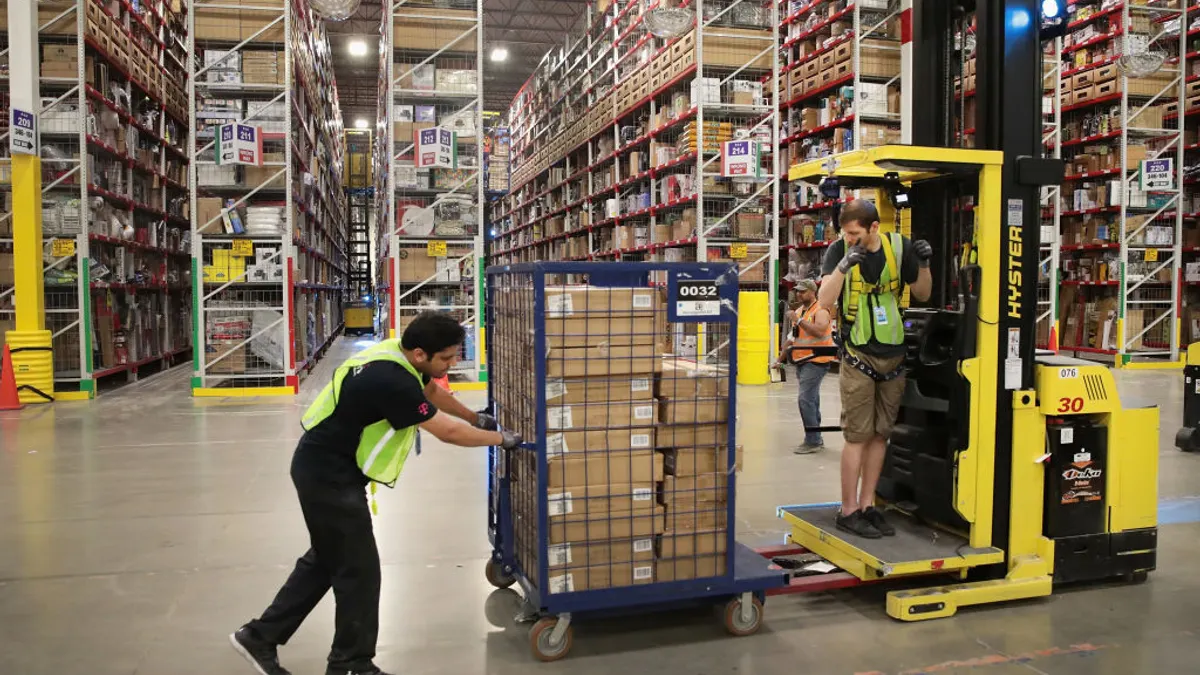
Occupiers want modern, well-located buildings that offer operational flexibility, particularly Class A properties with high clear heights, ample parking, strong transportation access and infrastructure that supports automation and higher power requirements, Rodriguez said in an email.
From the developer’s standpoint, that market demand means certain sites, particularly modern big-box facilities of 200,000 square feet or larger in industrial hubs, are the most attractive.
“As demand from data centers, AI infrastructure, and energy-intensive industries grows, utilities in some markets are facing longer timelines to deliver new capacity,” Rodriguez said. “As a result, industrial occupiers are increasingly prioritizing locations with reliable power, shorter utility lead times, and existing infrastructure.”
Power availability is key
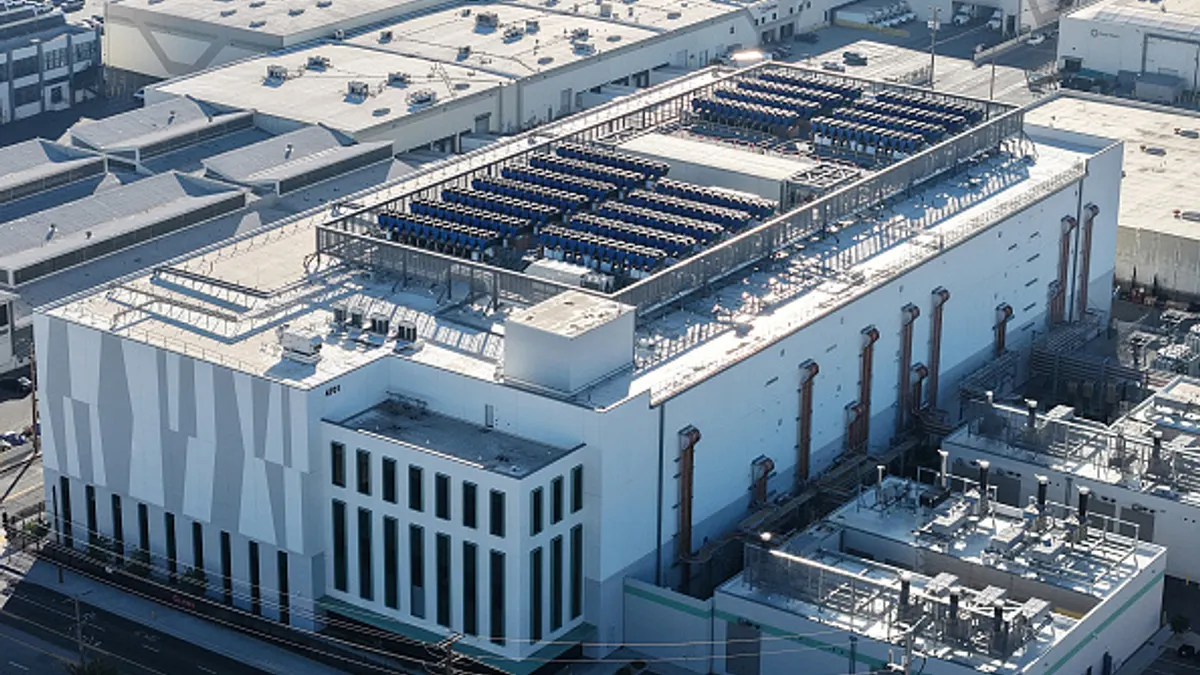
Rodriguez said there is also growing interest among data center developers in acquiring industrial properties with existing power infrastructure or favorable interconnection positions, particularly in power-constrained markets. Developers are also securing utility commitments earlier and marketing available power alongside traditional building specifications.
“Sites with access to substantial electrical capacity, substations or utility commitments can offer a significant advantage by shortening development timelines and reducing uncertainty around power delivery,” she said. “In certain power-constrained markets, access to electrical capacity can significantly increase a property's redevelopment potential and, in some cases, create greater long-term value than its existing logistics use.”
In other words, power availability is increasingly a key factor in how some industrial assets are evaluated, acquired and repositioned, she said.
Companies’ increasing use of automation in their industrial operations is further driving the need for power in industrial facilities, David Weissman, managing partner at Greek Real Estate Partners, told Facilities Dive. His company manages about 23 million square feet across buildings in the industrial space, mostly in the northern New Jersey.
“They’re using automation to speed up the throughput,” Weissman said in an interview. “That’s been a huge driver for them: doing more with less people but better equipment. They have a requirement to stay on top of that. Whether it’s old technology or new technology.”
“As occupier needs evolve, facilities that can support a variety of uses, accommodate automation, and adapt to changing operational requirements are better positioned to attract tenants, maintain occupancy, and remain competitive over time,” Rodriguez said.
Next market cycle
Occupiers’ need for big spaces that can accommodate automation-driven power requirements in key industrial markets is setting the stage for the next market cycle, according to a Colliers’ report.
In Q1, national net absorption rose 5.2% year over year to a total 186 million square feet, the report shows.
Vacancies decreased in eight of the 25 major markets Colliers analyzed, while the remaining 17 continued to rise, albeit at slower rates, according to the report.
Average rents in the 25 largest industrial markets rose 0.8% to $9.72-per-square-foot in Q1, with year-over-year price hikes in 15 of those markets, illustrating the increased demand. Outside those key markets, demand has yet to take off. Average U.S. warehouse and distribution asking rents declined 0.5% year over year to $10.46-per-square-foot. That reflects the ongoing normalization following the record rent growth the sector saw between 2020 and 2023, the report states.
The legacy effects of the post-pandemic over-building remained through last year, according to Weissman.
“It came to a point where [the market] was over-built,” Weissman said. “We started seeing a lot of vacancies…. New development wasn’t getting approved, and lots of capital stayed on the sidelines waiting for the right opportunities. Tariffs didn’t help the situation.”
The current market, by contrast, “seems a bit more promising,” Weissman said. “We definitely see some uptick. I think we’ve gone past that hump and are really starting to move forward with our construction aspirations.”
Net absorption is up 19% over the past year across the 25 largest U.S. industrial markets. More broadly, nearly 70% of U.S. markets saw positive absorption in Q1.
That demand highlights an increasingly broad-based recovery in occupier activity, Rodriguez said.
“While an older facility in the right location remains desirable to tenants across many industries, a flight to high-quality, modern, institutional-grade facilities has accelerated over the past couple of years,” she said.
Importance of location
How well an area is doing and what its speed to the next cycle will be depends on the market, the Colliers report shows.
Occupier demand exceeded new supply in 11 of the largest industrial markets, which helped tighten market conditions in some locations. Indianapolis, for example, only put 3.9 million square feet on the market but had 15.7 million square feet of net absorption. Demand also significantly outpaced deliveries in Phoenix, Columbus, Ohio, and Memphis, Tennessee, per the report.
Dallas-Fort Worth led all major markets in net absorption, followed by Phoenix, Indianapolis, Chicago and Houston, which continue to benefit from their roles as key distribution, manufacturing and population-growth hubs, Colliers said. Demand fell in nine markets over the last year, with the steepest decline in Philadelphia, with only seven of the 25 largest markets experiencing negative net absorption in Q1.
The New York City Metro saw 8.4 million square feet of new supply in Q1, with another 10.9 million square feet under construction, compared with just shy of six million square feet of net absorption. Vacancy rose 48 basis points to 6.9% and net rental rates inched up to $17.06, the highest price per square foot in the country.
Only seven large markets saw move-outs exceed new occupancies: San Francisco Bay Area, Seattle/Puget Sound, Detroit, St. Louis, Portland, Oregon, South Florida, and Minneapolis-St. Paul.