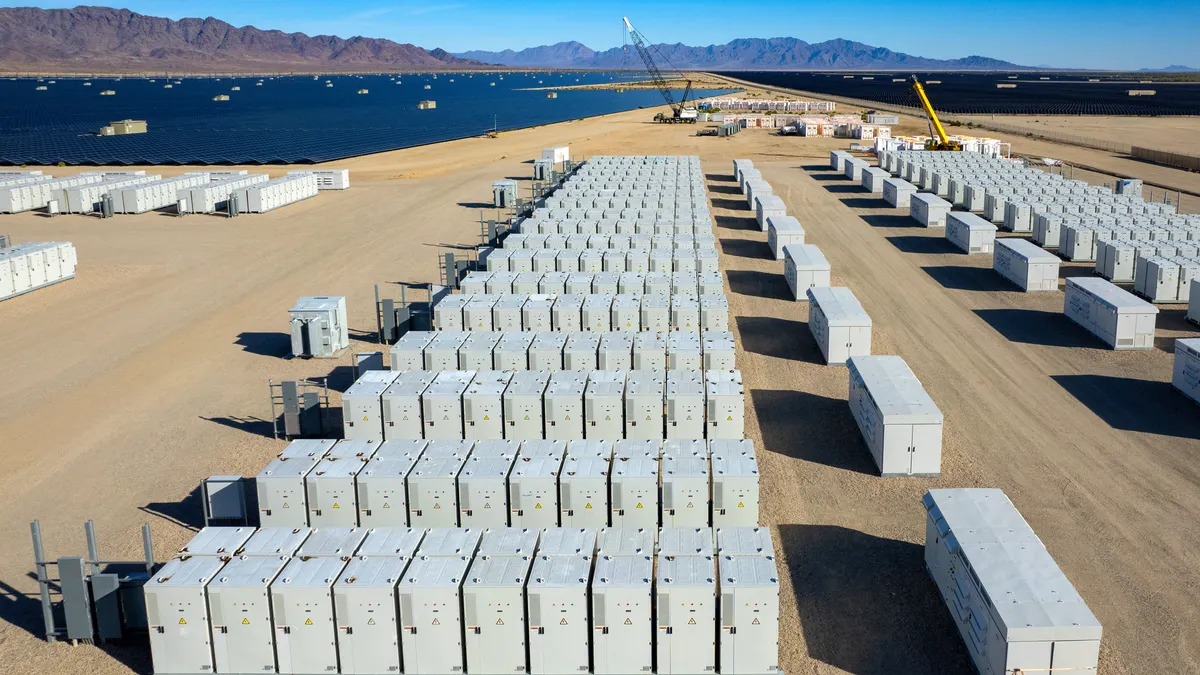
Battery energy storage is shifting from a source of backup power to a way to reduce variability in the cost of electricity and earn a return on investment, according to Ardes Johnson, CEO of NeoVolta, a company that designs, develops and manufactures battery energy storage systems.
The technology is benefiting from the One Big Beautiful Bill Act, which maintains tax incentives for it through 2032 as a qualifying facility, Johnson said in an interview. That enables owners to reduce their costs 30-50% if they meet foreign entity of concern requirements.
“If you own … or are managing a facility today, you want to be less concerned about the variability of the cost of electricity and [less] reliant on electricity that may not be reliable,” Johnson said. “Energy storage is something people think about.”
Foreign entity of concern provisions limit clean energy tax credits to projects that contain components, minerals or technology from China, Russia, Iran, North Korea or other covered countries.
A battery energy storage system, or BESS, has tended to be thought of as just another way to ensure backup power, but that’s changing, according to Johnson. “Most facilities have a need for some form of backup power, even if it is small critical loads, lighting and whatnot, all the way up to operational backup power and storage,” he said.
When that was their only purpose, BESS seemed expensive compared to diesel generation sets that were in the market, he said. But now, these energy storage systems provide an opportunity for facilities managers to get a return on investment through a number of mechanisms, including demand management, peak shaving, common use arbitrage and reliability risk factors, Johnson said.
“In most regions … where there’s higher electricity costs, you have opportunities to get on rates that allow you to do arbitrage,” Johnson said.
For example, in states like California, where grid load tends to rise in the afternoon, operators can use their battery systems to shave energy use during those times to help reduce the cost of electricity, he said.
“Many facilities I've worked with in the past would have 4- or 5 megawatts of diesel [generator sets] … that they never operate, but they would have to maintain them,” Johnson said. “They have to start them, they have to run them, and over time, they have to replace them, even if they aren’t using them. Batteries are something that facilities can put in today and use every day for the next 10 to 15 years of the life of that battery.”
Battery energy storage is also complementary to utilities, he said. He contrasted that with on-site solar generation, which has been at odds with grid operators over its lifetime.
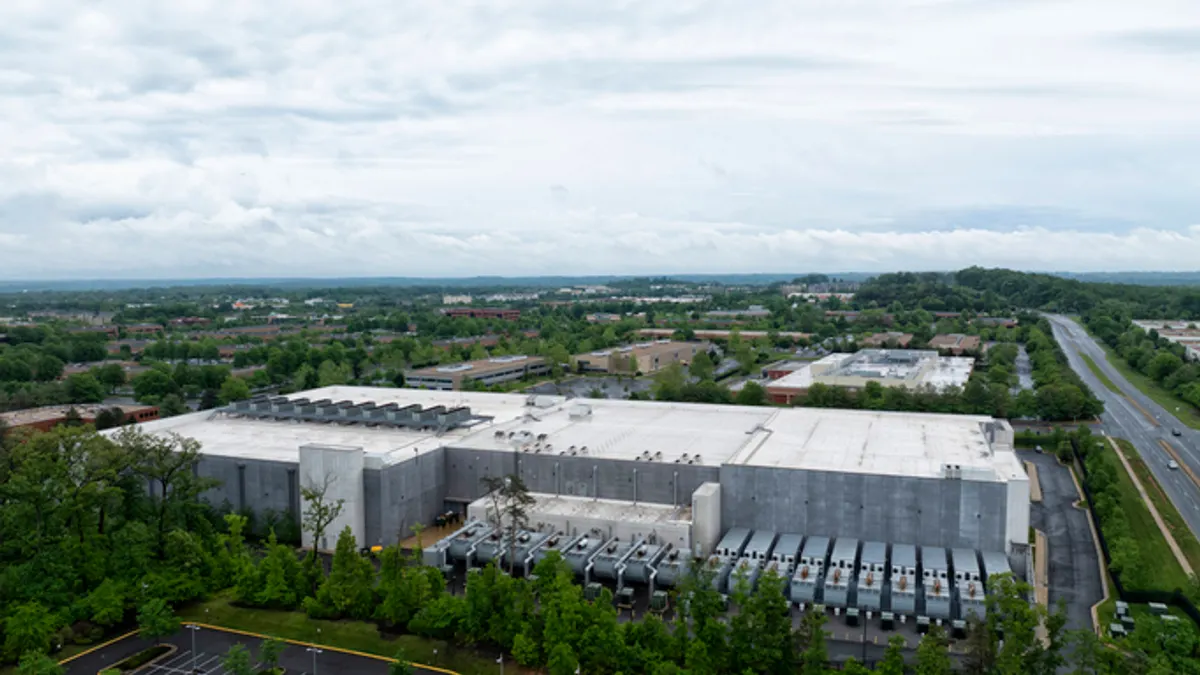
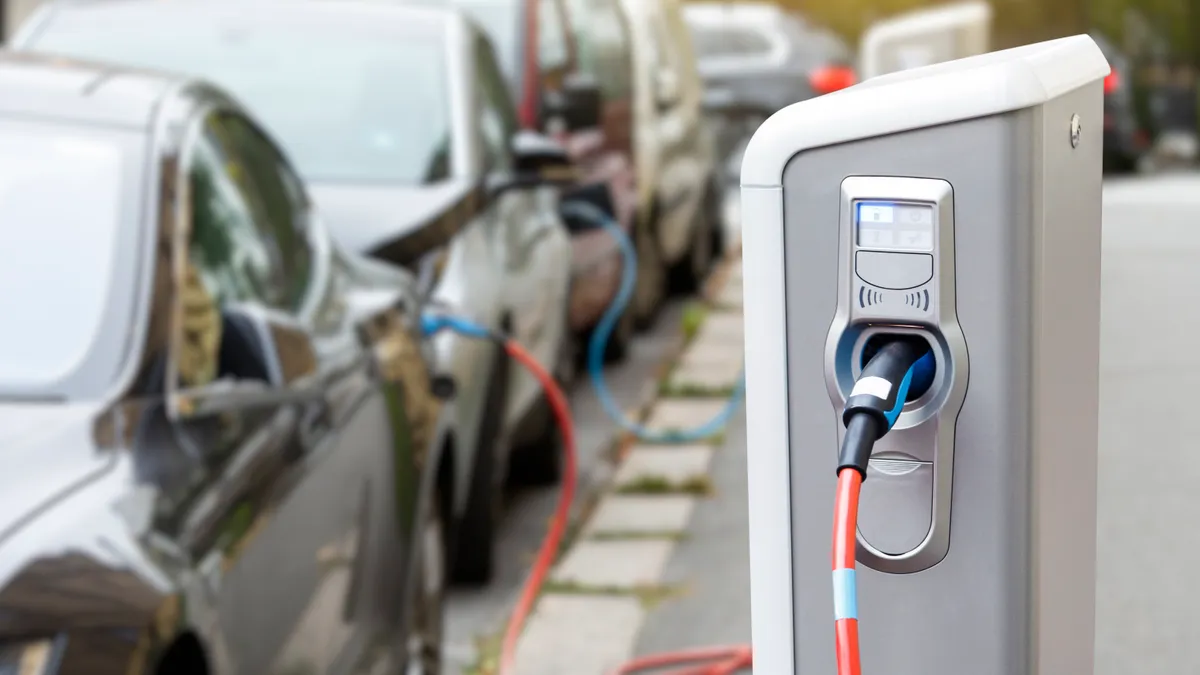
“Not only is there a benefit to the business owner, but there’s a benefit to the utility to have that [storage],” he said. “Because at the end of the day, with the electrification of our businesses, [and] with the oncoming need for energy support for data centers and AI hyperscalers, the reliability of the grid is something that’s going to be at the forefront of everyone’s thought process over the next decade or two.”
NeoVolta previously focused on the residential market, but it’s now working to break into the commercial and industrial sectors, which are seeing growth in demand for BESS, Johnson said.
For commercial businesses today, it’s less about resiliency and more about return on investment, he said. “[It’s] not only [about] the assets that they could own, but the ability to have leasing options, third-party ownership models,” he said. “So these facilities can start saving money on their electric bills day one.”
OBBBA’s treatment of BESS is critical to the technology’s ROI, Johnson said. “It’s going to play a lot in the decision making,” he said. “The changes that happened with [OBBBA] really incentivizes a lease mechanism. So we’re putting together creative leases throughout the period for depreciation – if you think about the first six years – and then giving options to the facilities where they can take it on.”
This method lowers the cost, essentially taking 30-50% off the cost of the system that can be passed on the NeoVolta’s clients, Johnson said. “In many places in the country, the numbers work without it, but it works better with it, of course,” he said.
To meet OBBBA’s foreign entity of concern requirements, NeoVolta in January partnered with PotisEdge on a joint venture to develop a BESS manufacturing platform in Pendergrass, Georgia. The launch of this domestic manufacturing capacity will represent “a transformational expansion” of its business model, and position the company to serve utility-scale and commercial and industrial energy storage markets as a U.S. manufacturer, NeoVolta said at the time.