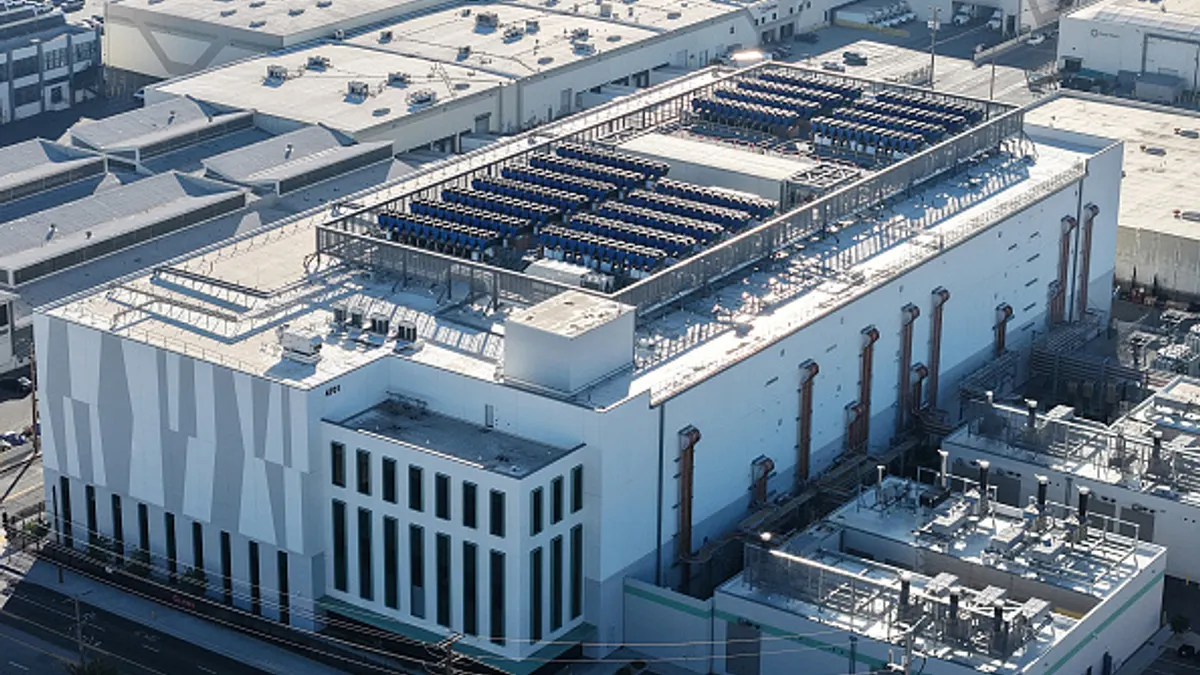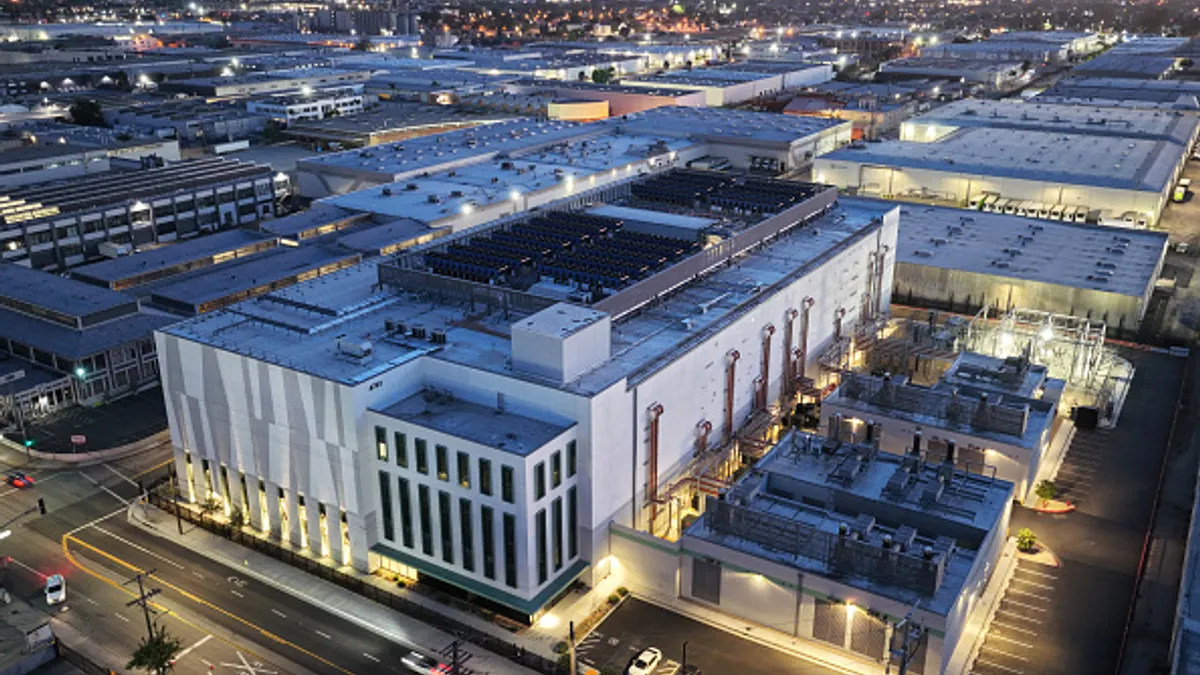
WASHINGTON – Clusters of small data centers requiring only 5-20 MW of power are the future of the AI boom, a veteran data center builder said at Data Center World here this week.
Pete Sacco, founder and CEO of PTS Data Center Solutions, gave several reasons Tuesday for why he believes the days of giant data centers are winding down. Developers are canceling projects because of interconnection waits of up to five years and because of community pushback, he said.
Just as important, he said, is that data centers are shifting to inference work — answering prompts — and away from training, which means new facilities have to be located where the users are.
It can take a far-away data center something like 10 milliseconds to answer a query — far too long for inference computing, he said. A time lag of that magnitude is OK when the data center is focused on training large language models, but when it’s focused on inferencing — responding to queries — a lag of one millisecond is closer to what’s expected, and that requires the data center to be physically near where the queries are coming from.
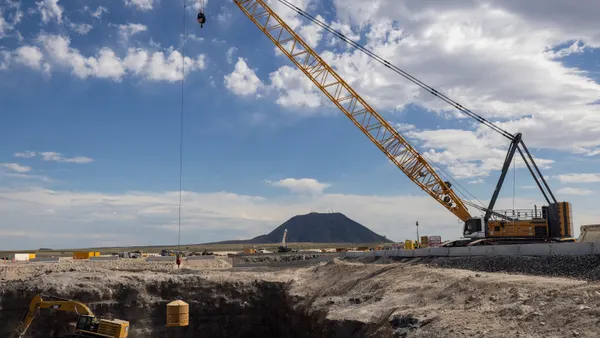
“You can’t have 500-MW data centers sitting in the New Mexican desert and be able to deliver real-time inferencing within millisecond scale,” said Sacco, whose company has focused much of its business on building data centers for federal agencies.
Inferencing is projected to surpass training as the dominant use of data centers for the first time by next year, when it will exceed 55% of all AI computing demand, he said. “That requires a different infrastructure model.”
Sacco launched a company, Gray Wolf Data Centers, to lay the groundwork for what he says a new model of data centers will look like. Instead of the current model, in which hyperscalers and other big organizations own big data centers, computing will occur at clusters of small data centers owned by independent operators, he said. Each one will interact with the others to create a distributed computing system.
“Instead of having a 1,200-MW data center — which there are no more places for — I can build 120 10-MW data centers in a region [and] glue them all together,” he said. “The idea is to be the Starbucks of the data center industry. Some of them will be company-owned. The majority will be franchised-owned. Some will be independent, but they will all operate as a [distributed autonomous organization], and they’ll all operate using that same cloud approach.”
A distributed autonomous organization has distributed, non-hierarchical decision-making, management and entity ownership. DAOs often use blockchain for transparency in the organization’s votes and actions, according to Investopedia.
In this decentralized data center model, each data center will build its own power source that will be based on whatever makes sense for the area, according to Sacco.
They will be powered either through a grid interconnection or a microgrid that could be powered by solar and behind-the-meter batteries, he said. There also will “probably be a proliferation of hydrogen” used to generate electricity that eventually will be replaced by small nuclear reactors, he said. “Small nukes are probably eight years away: five years of development and three years of certification.” In the longer term, Sacco expects nuclear fusion will power data centers.
Regardless of the electricity generation source, “the days of the centralized utility are gone,” he said.
Gray Wolf is building its first data center based on the new model in Connecticut as a proof of concept, Sacco said. There are few data centers in the state because of its high cost of energy, but it sits at the heart of the Northeast corridor of the United States, where much of the demand for inferencing is located.
“Connecticut … has a power problem,” he said. “Thirty cents per kilowatt-hour? Who would build a data center for 30 cents per kWh?”
Sacco is building a plant on the site that will convert carbon-based waste — including tires, food and medical waste — into energy. In addition to powering the initial data center and others that get built in the area, the excess power can be sold, he said.
“In essence, I can produce electricity at sub 10 cents a kWh. I can compete against utilities…. I can sell it to a manufacturer. I can sell it for 20 cents a kWh, and I look like a hero because it’s 29 cents a kWh normally.”
In 2025, the average residential cost of electricity in the U.S. was 17.3 cents per kWh, according to the U.S. Energy Information Administration.
Some 2,000 people are attending Data Center World this week.
Editor’s note: Data Center World is hosted by Informa, parent company of Informa TechTarget, of which Facilities Dive is a part. Facilities Dive makes editorial decisions independent of Informa.