Yann Bottoli is global sales manager at IEC Low Voltage Motors, ABB. Views are the author’s own.
For industrial companies, the transition to net-zero is a question of when, not if. How quickly and easily they will get there is the pressing issue. Their HVAC systems are part of the solution. According to the World Green Building Council, the energy used to heat, cool and power buildings is responsible for 28% of global energy-related carbon emissions.
Decarbonizing HVAC hinges on whether energy-efficient technologies for these systems can be embraced and rolled out at scale. The motors used to power fans, air conditioning units, heat pumps and compressors are central to this issue.
Fixed-speed induction motors have been the dominant choice for many decades, but they are often run at full capacity, with speed typically regulated by mechanical means. It’s like driving a car with one foot on the gas and the other pumping the brake to adjust the speed. It burns maximum fuel, wastes energy and results in unnecessary emissions. A new generation of variable speed drive (VSD) motors has a part to play in solving this problem.
Variable speed control
VSDs control energy output by adjusting motor speed to actual demand, ensuring that only the necessary amount of energy is used. By moving from a fixed- to variable-speed operation, energy consumption can be reduced by as much as 50%. It decreases heat and mechanical wear and tear between components, resulting in fewer replacements and repairs, and an extended shelf-life. Fewer maintenance needs also translate into a lower demand for new materials and the energy required to manufacturer them — reducing the machine’s carbon footprint.

Though the benefits might be clear enough, ABB estimates that only around one in four motors in operation is controlled by a VSD. The HVAC sector faces a similar situation. Many operators fear the logistics of adopting variable speed control, including installation complexities, system downtime and equipment integration. Because of these concerns, upgrading equipment is often seen as an inconvenience. ABB thinks its LV Titanium Variable Speed Motor (VSM) can eliminate these installation barriers.
Making decarbonization accessible
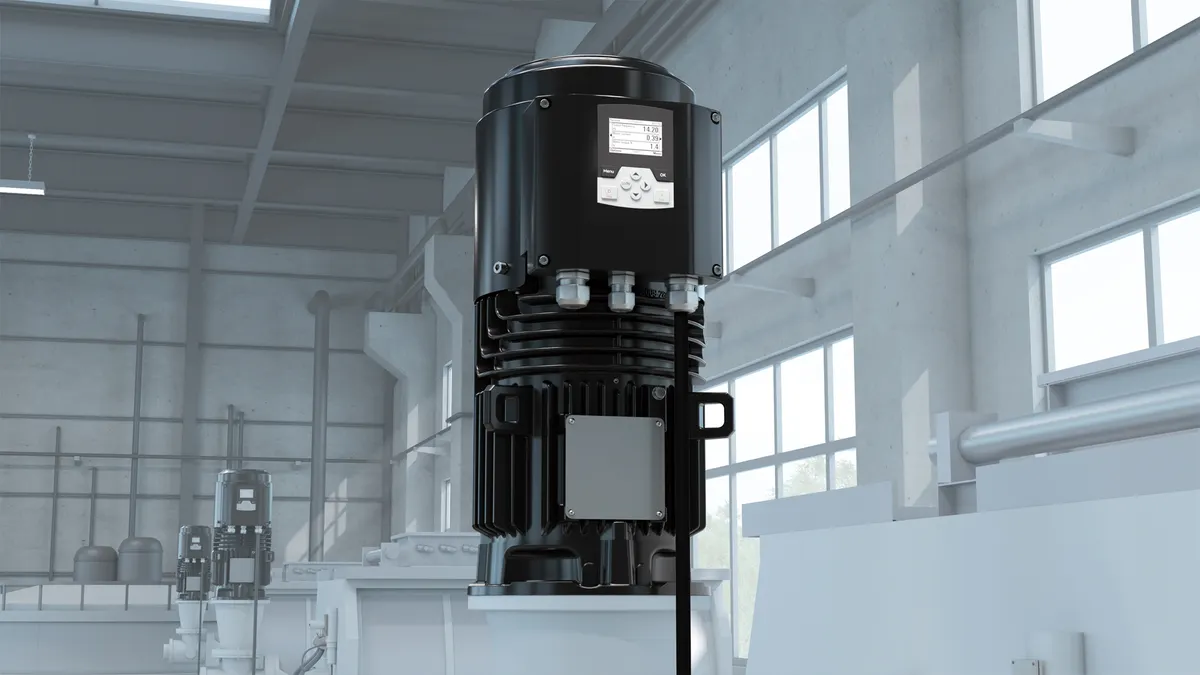
The LV Titanium was engineered as a streamlined solution. It combines an IE5 ultra-premium efficiency permanent-magnet motor with a purpose-designed drive, in a single, compact unit. It effectively automates energy savings through embedded variable speed control.
Data ABB has compiled show the LV Titanium cuts energy losses by up to 40% compared to a standard IE3 motor and can lower carbon emissions by 11,600kg per year. For a motor working 6,000 hours annually, that equates to approximately $140,026 and 174,000kg of carbon saved over a 15-year lifetime.
Equally important is addressing the practical barriers to adoption. It is up to three times smaller than comparable induction motors, and it has plug-and-play functionality for easy installation and commissioning. With its design, LV Titanium adapts to diverse installation needs, delivering improved efficiency whether operators are implementing a new system or upgrading an existing one.
Where earlier models needed two individual components connected on site, LV Titanium comes as one preconfigured, factory-assembled unit that's ready for deployment. Ease of installation is especially valuable for teams that are under-resourced for complex installation. It also cuts down the lengthy downtime typically associated with equipment upgrades. This matters in temperature- and air-flow-sensitive infrastructure like hospitals, hotels, data centers or office buildings, where interrupted operation isn't negotiable.
Investing in tomorrow
The global push towards decarbonization isn’t going away. Rising temperatures are creating the need for efficient HVAC systems, while sustainability regulations continue to tighten. Easy-to-adopt motor technologies are vital for meeting this demand at the speed operators now expect.
The LV Titanium shows that future ready performance doesn’t have to be complex; it simply has to be built in from the start. Any operator of a fan, pump, chiller or boiler can boost productivity and guarantee long-term operational stability. ABB believes the path to decarbonization starts with smarter decisions at the heart of every HVAC system.